Skip to content
Welcome, thoughtbot's Giant Robots listeners!Start here
Russia-Ukraine War 2026
24JUN

Aramco cuts Europe off for October

4 min read
16:16UTC

Saudi Aramco told every European term customer on Friday 18 September that no Saudi crude reaches them in October, and sent roughly 60 million barrels to Asia instead. Dated Brent hit $130.80 while the futures contract refiners hedge with settled at $103.87.

ConflictAssessed
Key takeaway

Europe lost its October Saudi barrels, and the physical price now runs $26 above the hedge.

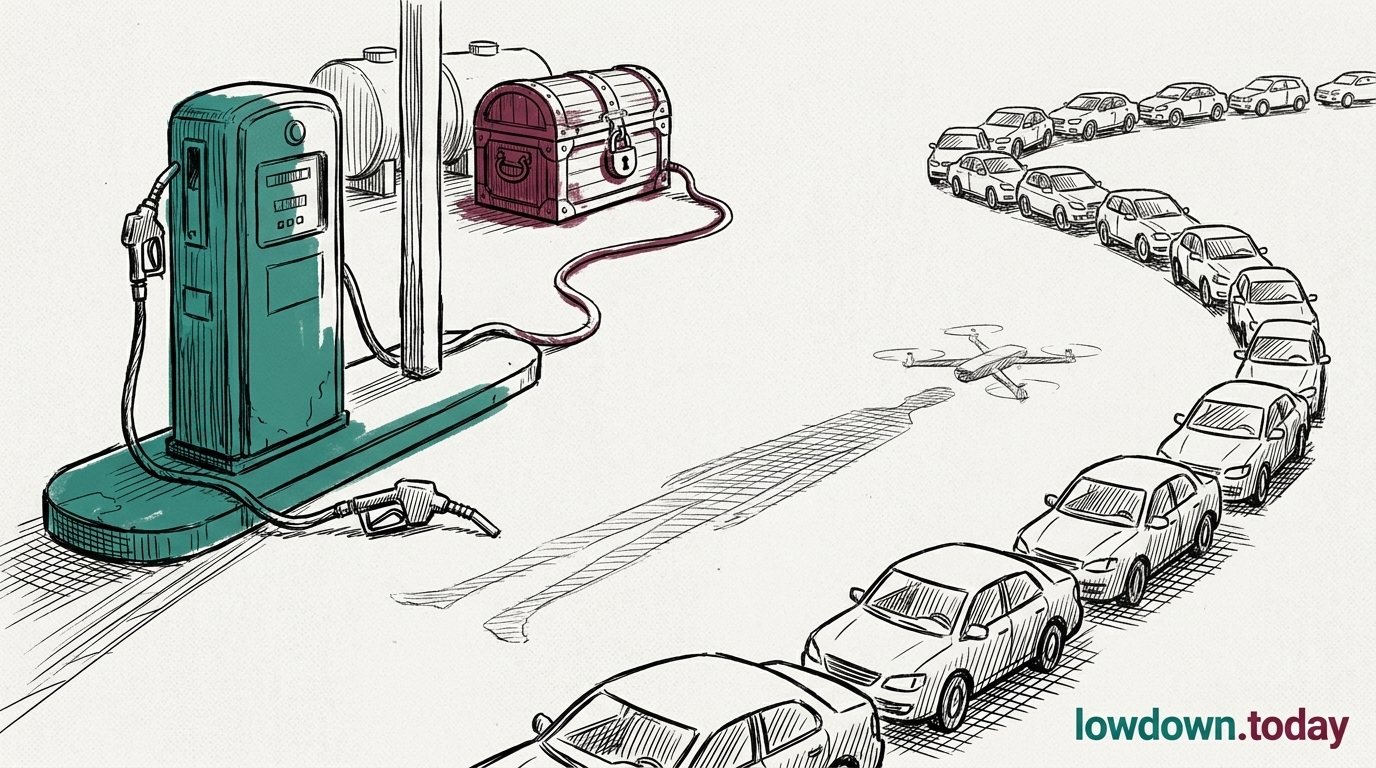
Saudi Aramco told every European term customer on Friday 18 September that they will receive no Saudi crude at all in October, and rerouted roughly 60 million barrels through its Gulf terminal at Ras Tanura and ship-to-ship transfers off Sohar, Oman, to buyers in China, South Korea, India and Japan⁠1. Those are the barrels European refiners had already planned their October runs around. The East-West pipeline, the Aramco line also known as Petroline, normally carries them to the Red Sea and is still down after the drone strike that shut it on 10 September. Europe's replacement cargoes must now clear Hormuz, clear the Red Sea, or sail five weeks around Africa.

The price of that reallocation shows up in one number that looks like a typing error until the mechanism is attached. Dated Brent, the benchmark for physical European cargoes, reached $130.80 on Tuesday 15 September⁠2, yet Brent futures on the Intercontinental Exchange (ICE) settled at $103.87 on Friday 18 September⁠3, a gap of roughly $26 per barrel. A Rotterdam refiner pays the first number and hedges against the second. Its hedge no longer covers its cost. Physical and paper normally trade within a couple of dollars of each other: the spread was minus $1.83 on 26 June, and the physical premium had already collapsed to near parity in May.

The gap widened inside this window; it did not open in it. It already stood at $13.45 on Wednesday 9 September. We reported a $14.20 physical premium on Thursday 19 March as the widest on record, yet the present gap is roughly double that mark. ORLEN is already buying North Sea, US and Kazakh crude in place of Saudi barrels⁠4. The cost does not stay in Rotterdam: that substitution tightens the North Sea and Kazakh pools in turn, and reaches every other Atlantic buyer bidding for the same cargoes.

US pump prices show the same market from the other side. Retail petrol averaged $4.455 per gallon in the week of 14 September on the Energy Information Administration's all-grades series⁠5, a third consecutive weekly rise that has added about 25 cents in a fortnight, or roughly $4 on a full tank. That series tracks West Texas Intermediate (WTI) and domestic refining margins rather than Dated Brent, and WTI futures moved only from $100.05 to $100.30 across the week⁠6. The extreme number belongs to Europe, not to the American motorist. US Energy Secretary Chris Wright said on Tuesday 15 September that the East-West line "should be flowing within days"; by Friday, people familiar with Aramco's plan put half capacity within days and full capacity six weeks out⁠7. Aramco's Yanbu loadings had already tilted 62% towards Asia in July.

Deep Analysis

In plain English

Saudi Arabia's state oil company, Aramco, normally sends a large share of its European-bound crude through the East-West pipeline (also called Petroline), a pipe that crosses Saudi Arabia to loading points on the Red Sea. That pipeline is out of action. Instead of finding another way to reach Europe, Aramco has told its European customers they will get zero Saudi crude in October, and has sent about 60 million barrels that would normally go west out to buyers in China, South Korea, India and Japan instead. The reason is simple geography: reaching Asia doesn't require the broken pipeline or the dangerous Strait of Hormuz shipping lanes, so it was the easier oil to sell. European refiners now have to buy replacement crude from elsewhere, likely at a higher price.

Deep Analysis
Root Causes

Aramco's routing choice is constrained by geography, not preference: with the Petroline down, the only way to reach Europe is via the strait of Hormuz and either the Red Sea, itself under attack, or the roughly five-week voyage around Africa. Gulf-loaded barrels bound for Asia require neither route, so rerouting Gulf-loaded crude to Asian buyers and leaving European term customers unserved is the shortest available path to market, not a deliberate reallocation of loyalty.

That asymmetry means the cost of the pipeline outage falls disproportionately on Europe even though the damage originated in a war Europe is not a direct party to, because Asia-bound cargoes never needed the pipeline or the contested strait in the first place.

What could happen next?
  • Consequence

    Orlen and other European term buyers must source replacement volumes from North Sea, US or Kazakh grades at spot-market pricing for at least the October loading cycle.

  • Risk

    If Asian buyers lock in the rerouted volumes under new term arrangements, European refiners may face a harder time regaining Saudi allocation even after the Petroline pipeline is repaired.

First Reported In

Update #179 · Russia and China kill Iran's UN monitor

OilPrice.com· 21 Sept 2026
Read original →
Different Perspectives
Belgium
Belgium
Belgium blocked outright confiscation of the roughly EUR 210bn in frozen Russian assets held at Euroclear in December 2025, because Euroclear would carry the legal liability. Ukraine has since proposed moving custody to the EU instead.
European Commission
European Commission
The Commission said on 2 September that Ukraine has drawn EUR 3.2bn against an EUR 8.35bn annual target, and that a revenue-mobilisation law stuck in the Rada is one of twelve conditions for the next EUR 3.7bn payment.
Steve Witkoff and Jared Kushner
The US envoys met Putin in Moscow on 5 September and Zelenskyy in Kyiv on 6 September without an announced result from more than three hours of talks. Their mediation continues with no public outcome to show for this round.
Robert Brovdi
Robert Brovdi
Brovdi said on 12 September that his Unmanned Systems Forces struck 285 Russian tankers in ten weeks. His own monthly breakdown sums to 79, and he has given no account of the remaining 206.
Sergei Lavrov
Sergei Lavrov
Lavrov said on 12 September that Russia is ready to negotiate but will not suspend military operations while it does. He treats talking and fighting as compatible policies, ruling out a ceasefire as a precondition for further talks.
Belarus
Belarus
Minsk announced completion of its own 37th Separate Airborne Assault Brigade near Gomel, under plans dating to August 2025 rather than a response to any single frontline event this window, keeping its hedge of hosting the war without formally joining Russia's mobilisation drive.
