Skip to content
You can now search across every topic, entity and event.What's new
Russia-Ukraine War 2026
16JUN

Ukraine hits Siberia, 2,000 km deep

3 min read
10:25UTC

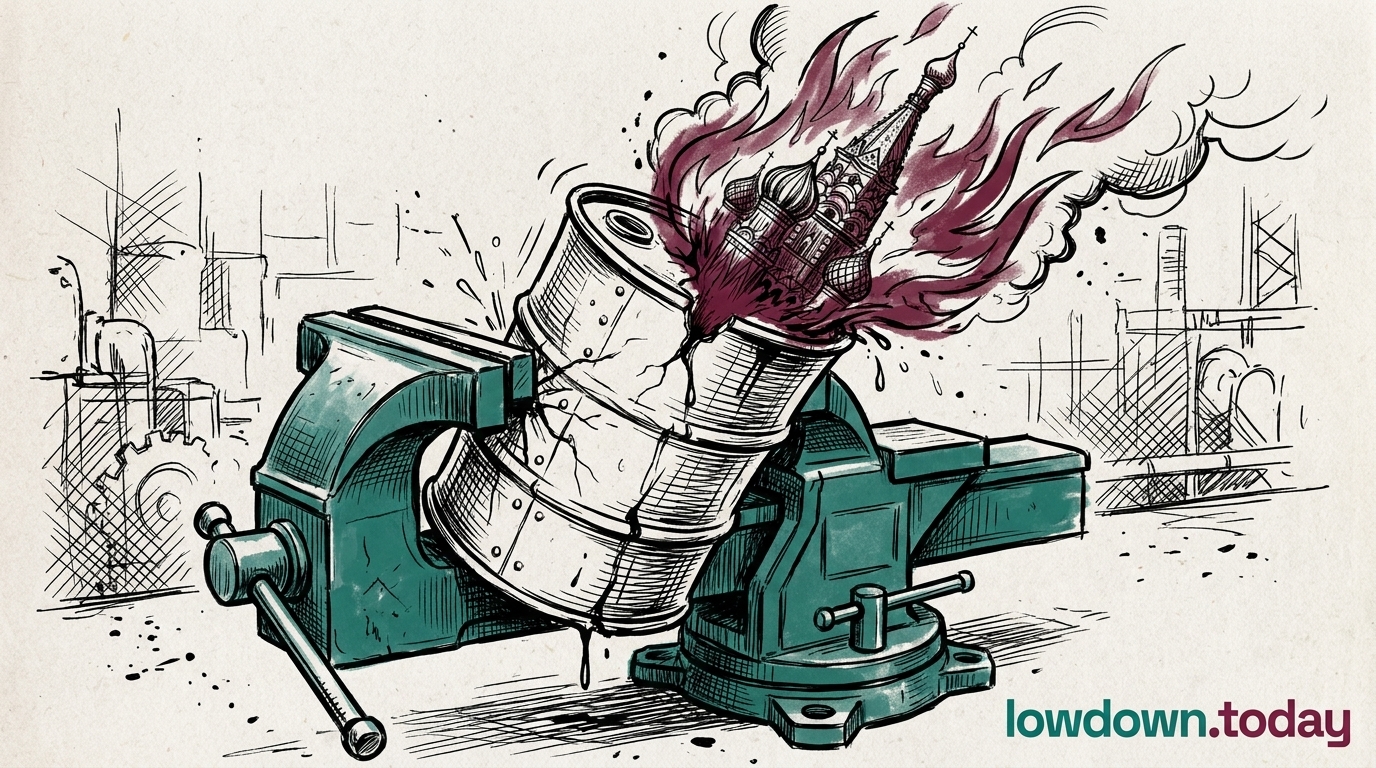
The 20 June strike on the Tyumen refinery in western Siberia became the deepest Ukrainian attack of the war, putting a plant 2,000 km from the border within reach.

ConflictDeveloping
Key takeaway

Hitting Tyumen 2,000 km away ends the sanctuary that protected Siberian refineries.

A Ukrainian drone raid hit the Tyumen refinery in western Siberia on 20 June, at roughly 2,000 km from the border the deepest attack of the war 1. The plant processes about 9 million tonnes of crude a year, and its location had until now placed it beyond the range Ukraine could credibly threaten. Tyumen's governor said the attack was repelled while residents reported explosions, so the damage is not independently verified.

For three years Russia ran its Siberian refining heartland on the assumption that 2,000 km of distance did the defending, dispersing sensitive capacity far from a front it expected to stay in the east. The Tyumen hit removes that assumption. A plant 2,000 km from Ukraine is no longer a safe plant, which forces air-defence planners to thin already-stretched coverage across a far larger map.

The strike fits a campaign that has steadily extended its reach since the Baltic-port phase and the Crimean fuel squeeze , and it ran alongside the same sanctions arc tracked by the oil-market desk . One refinery loss in Siberia does not collapse Russian output. It signals that no refinery is now off the targeting map, and that is the development Moscow's defenders have to absorb.


Deep Analysis

In plain English

Ukraine hit an oil refinery in western Siberia on 20 June. The distance is the striking thing: this plant sits roughly 2,000 km from Ukraine, about the same as London to Moscow. Before this strike, Russia's Siberian refineries were considered safe because Ukrainian drones could not reach them. The Tyumen plant converts roughly 9 million tonnes of crude oil into petrol, diesel, and other products every year. Repairing a refinery takes months, not days: the distillation towers and processing units that were damaged cannot be quickly replaced. If Tyumen is out of action for an extended period, that product has to come from somewhere else, at a time when many of Russia's other refineries have also been attacked.

Deep Analysis
Root Causes

Tyumen's vulnerability rests on a structural gap in Russia's air-defence architecture. Soviet-era doctrine positioned intercept belts around Moscow and St Petersburg, leaving the zone east of the Urals uncovered because no western threat was expected to reach there. The 3,000 km range Zelenskyy confirmed on 21 June directly addresses that coverage gap.

Russian refineries built in the Soviet period were designed around throughput optimisation: the fixed processing towers, distillation columns, and catalyst units that define a refinery's capacity cannot be relocated or buried when they become targets. No civil-defence dispersal of refining capacity followed the 2014 Crimea annexation or the 2022 invasion.

Escalation

Qualitative escalation: the 2,000 km strike extends the conflict's physical geography to Siberia, previously outside any realistic threat envelope. It validates the 3,000 km range claim Zelenskyy made the following day.

What could happen next?
  • Precedent

    Ukraine's first confirmed strike in Siberia establishes a new geographic envelope that places Russian energy infrastructure across the entire European and western Siberian territory within operational reach.

    Long term · Assessed
  • Risk

    Russia will face increased pressure on its refining capacity at the same time as domestic rationing from the Kapotnya shutdown, raising the risk of a compounded fuel supply crisis.

    Short term · Reported
  • Consequence

    Russian operators of major industrial installations east of the Urals will need to reassess their emergency planning assumptions, which were built on the premise of geographic sanctuary.

    Medium term · Reported
First Reported In

Update #21 · Ukraine's drones reach Russia's petrol pumps

bne IntelliNews· 24 Jun 2026
Read original
Different Perspectives
Belgium
Belgium
Belgium blocked outright confiscation of the roughly EUR 210bn in frozen Russian assets held at Euroclear in December 2025, because Euroclear would carry the legal liability. Ukraine has since proposed moving custody to the EU instead.
European Commission
European Commission
The Commission said on 2 September that Ukraine has drawn EUR 3.2bn against an EUR 8.35bn annual target, and that a revenue-mobilisation law stuck in the Rada is one of twelve conditions for the next EUR 3.7bn payment.
Steve Witkoff and Jared Kushner
The US envoys met Putin in Moscow on 5 September and Zelenskyy in Kyiv on 6 September without an announced result from more than three hours of talks. Their mediation continues with no public outcome to show for this round.
Robert Brovdi
Robert Brovdi
Brovdi said on 12 September that his Unmanned Systems Forces struck 285 Russian tankers in ten weeks. His own monthly breakdown sums to 79, and he has given no account of the remaining 206.
Sergei Lavrov
Sergei Lavrov
Lavrov said on 12 September that Russia is ready to negotiate but will not suspend military operations while it does. He treats talking and fighting as compatible policies, ruling out a ceasefire as a precondition for further talks.
Belarus
Belarus
Minsk announced completion of its own 37th Separate Airborne Assault Brigade near Gomel, under plans dating to August 2025 rather than a response to any single frontline event this window, keeping its hedge of hosting the war without formally joining Russia's mobilisation drive.


