Skip to content
You can now search across every topic, entity and event.What's new
Russia-Ukraine War 2026
16JUN

UK uranium deal cuts Russia's fuel lever

2 min read
10:25UTC

Britain announced a £210m export-finance deal on Tuesday 16 June for Urenco to supply Ukraine's Energoatom enough enriched uranium to run its Soviet-era reactors for two years, ending dependence on Russian fuel.

ConflictDeveloping
Key takeaway

A £210m UK uranium deal ends Ukraine's reliance on Russian reactor fuel for two years.

The United Kingdom announced a £210m export-finance deal on Tuesday 16 June for Urenco to supply enriched uranium to Energoatom, Ukraine's state nuclear operator 1. Urenco is an Anglo-Dutch-German enrichment consortium, and the supply is enough to run Ukraine's Soviet-era water-water energetic reactor (VVER) units for two years. Those reactors were designed to burn Russian-made fuel, which left Moscow holding a quiet supply lever over Ukraine's nuclear-power base.

Export finance means the UK government underwrites the commercial risk so the deal can proceed at scale. The move addresses fuel supply, a different vulnerability from the grid-power crisis at the occupied Zaporizhzhia plant, where the main line has stayed disconnected through six failed repair truces .

Ukraine's VVER fleet has depended on Russian fuel fabrication for decades, a dependency Moscow could have used as leverage in any negotiated settlement. Securing two years of Western-enriched fuel means a future peace deal no longer has to bargain over who fuels Ukraine's reactors. It complements the European-led diplomatic framework now carrying the war's negotiation track , but works on the energy column rather than the territorial one. It does nothing for the disconnected Dniprovska line; it removes a lever Russia has held since 2022.


Deep Analysis

In plain English

Ukraine's nuclear power plants were built during the Soviet era to use a specific type of nuclear fuel supplied by Russia. After Russia invaded Crimea in 2014, Ukraine started buying some of its nuclear fuel from an American company instead, but the raw enriched uranium still partly came from Russian sources. The new £210m deal announced on 16 June changes that. A company called Urenco, which is jointly owned by the UK, the Netherlands, and Germany, will supply enriched uranium directly to Ukraine's state nuclear company Energoatom, enough to run the reactors for two years. This cuts out Russia from one of the last supply chains Moscow still controlled in the Ukrainian nuclear sector.

Deep Analysis
Root Causes

Ukraine's nuclear fuel dependency on Rosatom predates the 2022 invasion and traces to the Soviet-era construction of all four of its nuclear power plants, which used Russian TVEL fuel assemblies as the only qualified supply source. Post-2014 diversification to Westinghouse addressed the fuel assembly leg but left the enriched uranium feedstock still sourced through Russian supply chains via TVEL's Elektrostal fuel fabrication plant.

The Urenco deal removes the feedstock lever: with Western-enriched uranium available under UK export finance, Ukraine can complete the full supply-chain separation from Rosatom that began in 2014, converting the VVER fleet from a potential Russian leverage point into a secured national asset.

What could happen next?
  • Consequence

    With enriched uranium supply secured from Urenco, Russia loses its last contractual lever over the operating condition of Ukraine's four nuclear power plants, removing a significant implicit threat in any future ceasefire negotiation.

  • Opportunity

    The UK export-finance model, using government-backed credit to fund strategic supply-chain decoupling, provides a template for other European allies to accelerate Ukraine's energy independence in gas storage, grid management, and railway traction power.

First Reported In

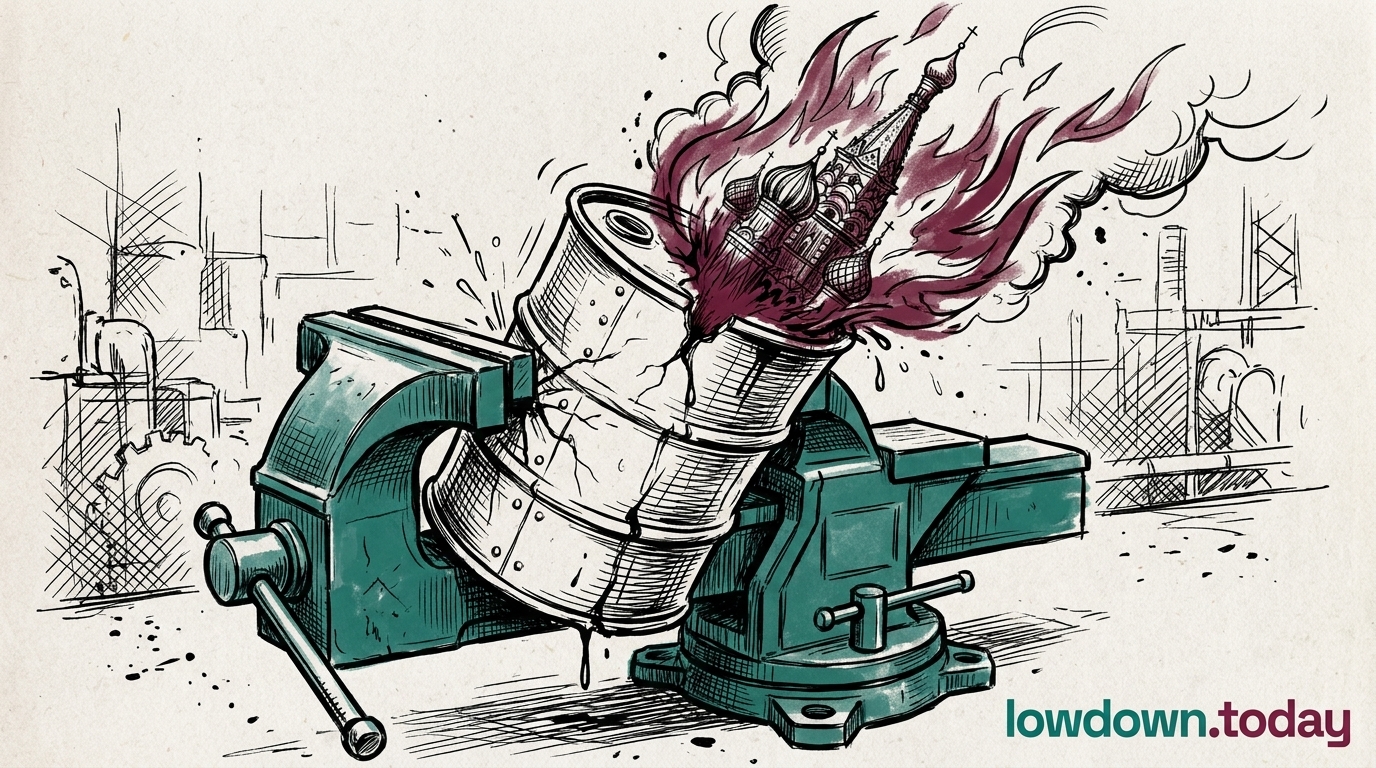
Update #20 · Oil vise shuts as Russia torches the Lavra

Yahoo News / AP· 16 Jun 2026
Read original
Different Perspectives
Turkey
Turkey
Ankara hosts the NATO summit on 7-8 July, the next Western diplomatic convergence that Russia may target with a mass barrage based on the documented pattern of timing strikes to allied events; Turkey's role as the indispensable logistical intermediary between Kyiv and Moscow gives it standing to broker any ceasefire repair at Zaporizhzhia.
IAEA
IAEA
The IAEA's sixth brokered repair ceasefire at ZNPP collapsed within days of enabling initial work on the 750 kV Dniprovska line, leaving Europe's largest nuclear plant on a single 330 kV backup with 19 total blackouts recorded since the Russian occupation began.
European Union
European Union
The EU delayed the €9.1bn first tranche of its €90bn Ukraine loan on unmet technical conditions, while disbursing a separate €2.8bn Facility payment on 8 June; the G7 sanctions-to-talks linkage now runs parallel to EU enforcement.
United Kingdom
United Kingdom
Britain conducted its first maritime interdiction of the Russian shadow fleet, with Royal Marines seizing the Smyrtos in the English Channel on 14 June, and simultaneously announced a £210m Urenco uranium deal to break Ukraine's dependence on Russian nuclear fuel.
United States
United States
Trump called both Putin and Zelenskyy separately on 14 June, pledged to re-engage on Ukraine now the Iran deal is done, and the G7 tied future Russia sanctions to peace-talk progress, giving Washington leverage over both parties' negotiating posture.
Ukraine
Ukraine
Zelenskyy attended the G7 at Evian and proposed a direct Putin summit while 140,000 households in Kyiv lost power and the Lavra's Dormition Cathedral burned; Metropolitan Epiphanius called it an attack "against history, against Christianity." Kyiv's immediate priority is closing the PAC-3 export gap that left 19 of 34 Iskander-M ballistic missiles unintercepted.


