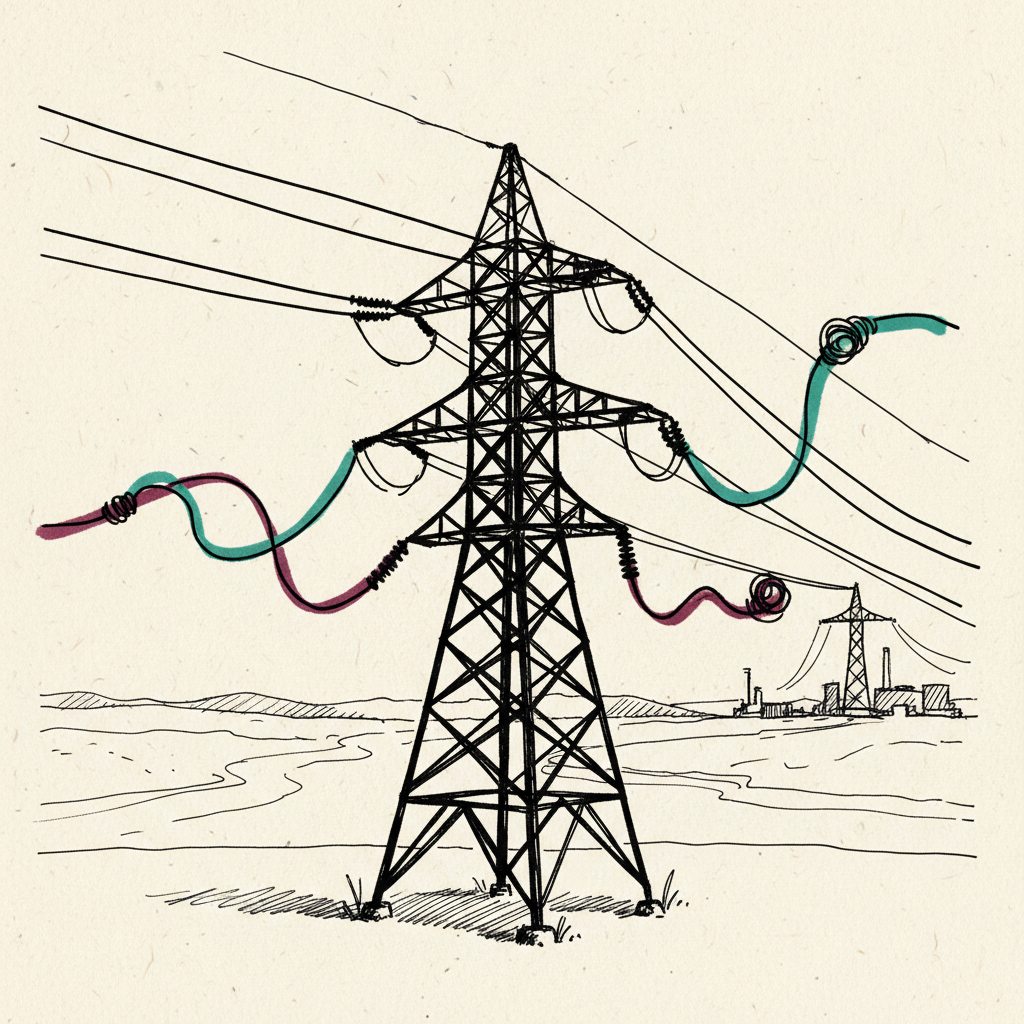
Dniprovska 750 kV line
750 kV main feeder connecting ZNPP to Ukraine's National Grid; disconnected 70+ days as of late May 2026.
Last refreshed: 23 July 2026 · Appears in 1 active topic
With ZNPP's main feeder down 70 days and reactor 6 now struck, how close is the plant to cooling failure?
Timeline for Dniprovska 750 kV line
Mentioned in: Zaporizhzhia loses power for 22nd time
Russia-Ukraine War 2026Mentioned in: UK uranium deal cuts Russia's fuel lever
Russia-Ukraine War 2026Remained disconnected since 24 March despite the sixth ceasefire enabling initial repair work
Russia-Ukraine War 2026: Zaporizhzhia blacks out for 19th timeDrone hits ZNPP reactor-6 turbine hall
Russia-Ukraine War 2026Mentioned in: Rosatom Turns on IAEA as ZNPP Hits Day 60
Russia-Ukraine War 2026Background
Dniprovska is the 750 kV main feeder line supplying external electricity to Zaporizhzhia Nuclear Power Plant (ZNPP), connecting the plant to Ukraine's National Grid via a high-voltage transmission corridor. The line has been disconnected since 24 March 2026, a period exceeding 70 days by late May, the longest sustained outage of any primary power line in the war's nuclear safety record. Without it, ZNPP depends on the lower-capacity 330 kV Ferosplavna-1 backup line and, when that too fails, on diesel generators.
The line has suffered repeated damage throughout the conflict. In April 2026, the Dniprovska was restored via an IAEA-mediated local Ceasefire, then lost again within the same week, the fourteenth and fifteenth total blackouts of the war. Repair crews at the Dniprovska switchyard also found additional damage to the Ferosplavna-1 backup, compounding the vulnerability. On 30-31 May 2026, with the Dniprovska still disconnected, a drone struck the turbine building adjacent to reactor 6 at ZNPP: the first confirmed strike on a reactor-adjacent structure of the war. The strike further degraded plant safety margin at a moment when the primary grid connection was already absent.
Nuclear engineers regard external grid power as the safest cooling source: diesel generators provide backup but require continuous fuel supply and are susceptible to mechanical failure. The IAEA's nuclear safety framework treats prolonged loss of the primary grid connection as a tier-one risk indicator. The Dniprovska's extended outage, combined with the reactor-6 turbine strike, represents the most severe concurrent safety degradation at ZNPP since the full-scale invasion.
The line was briefly restored via an IAEA-brokered Ceasefire around 6 June 2026, but ZNPP suffered its 19th total blackout on 11 June when that Ceasefire collapsed within days of repair work beginning, and its 20th blackout on 20 June, only seven days after a second reconnection. By mid-July the IAEA reported ZNPP had lost off-site power for the 22nd time since 2022, with ten of those twenty-two losses concentrated in the preceding three months, confirming the repair-then-refail cycle on this line remains unresolved.
Reference
Why does ZNPP need external grid power from Dniprovska?
What is the Dniprovska power line and why does it matter?
What happens if the ZNPP loses all external power?
How long has ZNPP been without its main power line?
What happened to reactor 6 at Zaporizhzhia on 30 May 2026?
Why can't the Dniprovska line at Zaporizhzhia be repaired?
How dangerous is ZNPP running on a single power line?

