Skip to content
Briefings are running a touch slower this week while we rebuild the foundations.See roadmap
Russia-Ukraine War 2026
9JUN

Two nuclear sites tested in one week

3 min read
11:54UTC

A Russian Shahed drone struck Chornobyl's spent-fuel building on 7 June; days earlier ZNPP suffered a 15-hour blackout during an IAEA repair ceasefire.

ConflictDeveloping
Key takeaway

A drone hit Chornobyl's fuel store as ZNPP's repair ceasefire collapsed into a 15-hour blackout, its 18th.

A Russian Shahed drone struck the spent-fuel reception building at the Chornobyl site at around 02:00 on 7 June, and the IAEA (International Atomic Energy Agency, the UN nuclear watchdog) confirmed significant structural damage to the facade, windows and doors, with a small fire that was put out 1. No spent fuel was stored in the struck building and radiation stayed within limits, but IAEA chief Rafael Grossi noted large amounts of nuclear material sat metres away.

The first incident of the week was at Zaporizhzhia Nuclear Power Plant (ZNPP), where the safety problem turned from a count into a broken promise. On 5 June the IAEA brokered the war's sixth local ceasefire to repair the main 750kV line, severed since 24 March . Repairs began on 6 June. Within hours the plant suffered a 15-hour total blackout, its 18th and one of the longest of the war, after a drone attack during the agreed window 2.

Rosatom accused Ukraine of striking the repair engineers; Ukraine denied it; the IAEA team on site could not attribute the attack. The pattern repeats the accountability deadlock Rosatom deepened in May when it publicly attacked the IAEA's credibility . Each side has an interest in the other being blamed, which is precisely why the ceasefire-then-incident sequence keeps recurring without resolution.

Deep Analysis

In plain English

Chornobyl (also spelled Chernobyl) is the site of the 1986 nuclear disaster in Ukraine. The destroyed reactor is entombed under a steel dome, but the site still handles spent nuclear fuel (used reactor rods that remain radioactive for thousands of years). On 7 June, a Russian Shahed drone hit the building used to receive spent fuel for storage. The IAEA, the United Nations' nuclear watchdog, confirmed no fuel was in that specific building at the time, but said large amounts of nuclear material were metres away. Zaporizhzhia Nuclear Power Plant (ZNPP) is Europe's largest nuclear station, currently under Russian occupation in southern Ukraine. It has been repeatedly cut off from the electricity it needs to keep its cooling systems running safely. On 6 June it suffered its 18th total blackout. This one happened during a truce the IAEA had negotiated specifically to let engineers repair its main power line, which has been disconnected since 24 March. Both sides accused each other of breaking the truce.

Deep Analysis
Root Causes

ZNPP's main 750kV Dniprovska line has been disconnected since 24 March because both sides accuse the other of targeting it; neither will guarantee protection during repairs.

The IAEA's ceasefire-then-blackout sequence on 5-6 June replicates the pattern of prior repair windows: a local ceasefire is brokered, work begins, then a strike that each side denies occurs and the line goes down again. The pattern is consistent with both parties using nuclear-safety incidents as escalatory signals rather than treating them as shared liability.

Escalation

The Chornobyl strike is the most direct Russian attack on a nuclear waste site since the war began. The IAEA's confirmation that nuclear material sat metres from the strike zone, combined with the ZNPP blackout the same week, creates a paired escalation that increases international pressure for a nuclear-safety ceasefire while giving neither side an incentive to agree to one.

What could happen next?
  • Risk

    ZNPP's backup diesel generators have a roughly 10-day fuel endurance; a 15-hour blackout followed by a generator failure in a future incident could create a loss-of-cooling scenario with radiological consequences.

    Short term · Assessed
  • Consequence

    The Chornobyl strike and ZNPP blackout in the same week make it harder for any party to argue that nuclear sites are implicitly protected in the current conflict.

    Medium term · Assessed
  • Precedent

    Using a brokered ceasefire window to trigger a blackout, then blaming the other party, sets a precedent that IAEA-mediated nuclear truces are not enforceable.

    Long term · Suggested
First Reported In

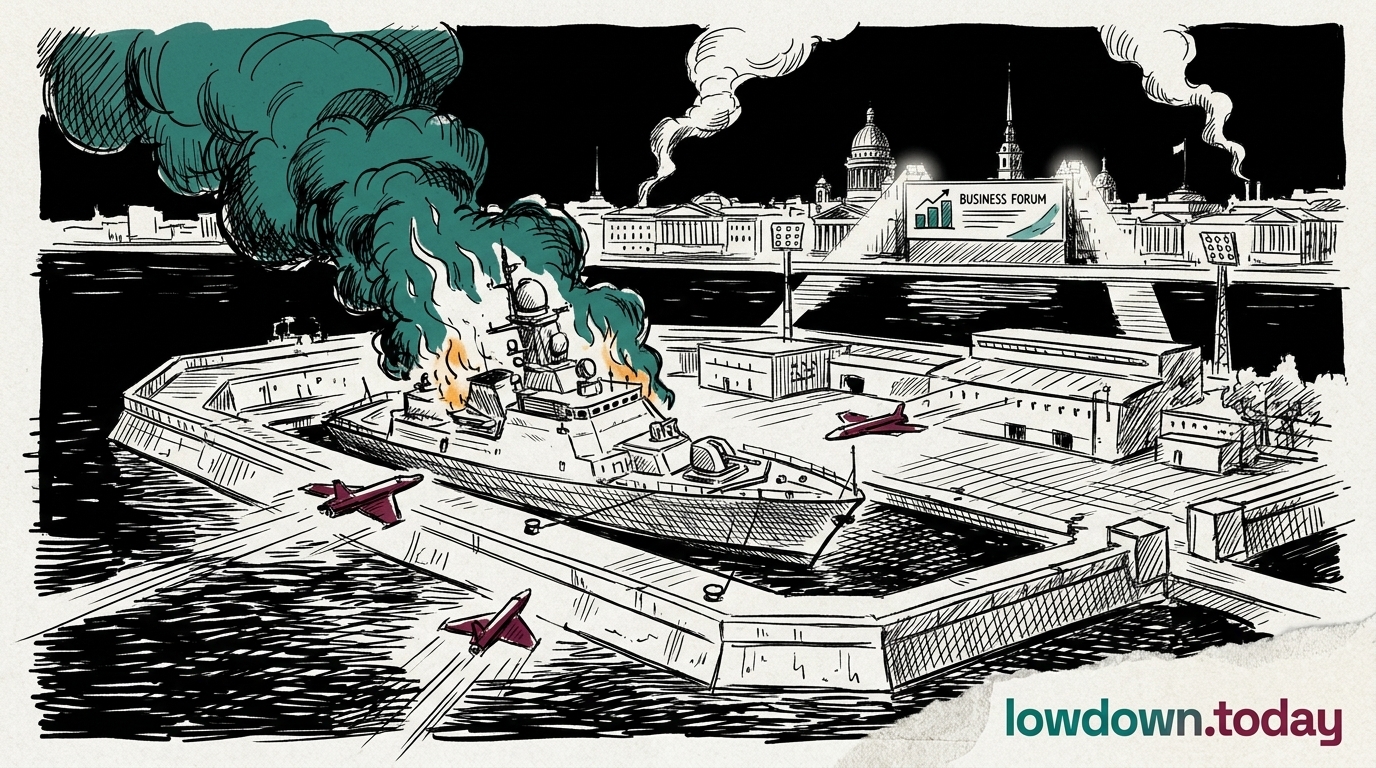
Update #19 · Ukraine burns the Baltic Fleet at Kronstadt

UNN· 9 Jun 2026
Read original
Different Perspectives
North Korea / DPRK
North Korea / DPRK
ISW confirmed the first mounting of DPRK Type-75 MLRS on Russian autonomous UGVs near Kharkiv on 7 June, the latest step in a supply axis that escalated from shells in 2023 to troops in 2024. Pyongyang gains live battlefield data on its ordnance and on Russia's uncrewed-systems programme.
IAEA / Rafael Grossi
Grossi confirmed Chornobyl structural damage with nuclear material metres away and could not attribute the ZNPP 15-hour blackout during the agreed repair window. Six ceasefires brokered and broken at ZNPP, compounded by Rosatom's May attack on IAEA neutrality, have eroded his ability to enforce the windows he negotiates.
Emmanuel Macron / France
Macron co-signed the E3 framework whose line-of-contact baseline marks Europe's first formal acceptance that 1991 borders are not the opening position. France's role carries weight because Macron had previously proposed a European force for Ukraine, and the framework's multinational force point is the vehicle for that.
Keir Starmer / E3
Keir Starmer / E3
Starmer, Macron and Merz met Zelenskyy on 7 June and backed a five-point framework taking the line of contact as the talks baseline, conceding roughly one fifth of Ukraine in exchange for a multinational force and frozen assets. With US mediation ended, the NATO Ankara summit on 7-8 July is the next test.
Vladimir Putin / Kremlin
Putin used SPIEF to reject Zelenskyy's summit letter, citing 'elements of rudeness', and repeated the pre-agreed treaty precondition that has frozen every diplomatic round since May. The SPIEF platform's message of investor confidence was punctured by naval fires visible from St Petersburg, which Moscow declined to dispute in scale.
Ukraine / Unmanned Systems Forces
Commander Brovdi confirmed USF units tracked and set fire to Boikyi at Kronstadt, while Code 9.2 struck the Chonhar Bridge the following day. Ukraine is sequencing strikes for rear-area interdiction and political timing rather than ground gains, trading the Baltic Fleet's home base for the logistics squeeze Russia cannot absorb without rationing its own occupied territory.