Skip to content
Briefings are running a touch slower this week while we rebuild the foundations.See roadmap
Russia-Ukraine War 2026
9JUN

Putin calls solo 32-hour Easter truce

2 min read
11:54UTC

A unilateral Kremlin decree halted combat from 16:00 Moscow time on 11 April until the end of 12 April, landing the quiet window squarely on Hungarian polling day.

ConflictDeveloping
Key takeaway

A unilateral Easter pause timed to Hungarian polling day is message, not mechanism.

At 22:00 Moscow time on 9 April, the Kremlin published a decree declaring a 32-hour Orthodox Easter ceasefire, effective from 16:00 Moscow time on 11 April until the end of 12 April 1. Defence Minister Andrei Belousov and General Staff chief Valery Gerasimov were instructed to halt combat "on all fronts." Kremlin spokesman Dmitry Peskov told TASS the decree was not pre-arranged with Washington.

Putin's published Kremlin calendar for 3 to 11 April contains no phone calls with Donald Trump, no meetings with Witkoff or Kushner, and no bilateral Russia-US activity of any kind. A schedule can be edited, but not retroactively. Putin spent the week on Dagestan flood relief, a call to Chechnya's Ramzan Kadyrov, greetings to Russian space and nuclear anniversaries, and a meeting on artificial intelligence policy. The last substantive Russia-US diplomatic footprint was the sanctioned Duma delegation's visit to US Congress in late March , not any White House channel into this week's decree.

The Dnipropetrovsk regional governor reported two people killed and thirty Russian strikes on Friday 10 April, before the ceasefire formally began. Those thirty strikes fit a messaging exercise rather than a strategic pause. The previous Easter precedent, when both sides accused the other of breaking a similar truce, is not encouraging. What the ceasefire does, instead, is lay a quiet front over the day the next event hinges on.

Deep Analysis

In plain English

Putin announced a 32-hour ceasefire timed to coincide with the Orthodox Easter weekend, claiming he was ordering Russian forces to stop fighting. Ukraine rejected it, and Ukrainian officials reported Russian strikes before the ceasefire even officially started. The announcement was made without any coordination with Washington, Kyiv, or international monitors. There was no mechanism to verify whether Russian forces actually stopped. Ukraine's position is that agreeing to such ceasefires gives Russia time to regroup without conceding any ground.

Deep Analysis
Escalation

The 30 pre-ceasefire strikes reported by the Dnipropetrovsk governor suggest Russian artillery and missiles were firing up to the formal start time rather than standing down in anticipation. The ceasefire window coincides with the end of Hungarian election day, limiting its geopolitical theatre function to a 32-hour window that is already bounded by a significant European political event.

What could happen next?
  • Meaning

    The absence of any Trump-Putin call or Witkoff-Kushner contact during 3-11 April confirms the ceasefire was not a negotiated signal to Washington but a unilateral public relations move.

  • Precedent

    Russia's second unilateral religious-calendar ceasefire in three years establishes this as a repeating tactical tool rather than a genuine diplomatic opening, setting expectations for future such announcements.

First Reported In

Update #12 · Three narrowings of US support for Kyiv

Carnegie Endowment for International Peace· 11 Apr 2026
Read original
Different Perspectives
North Korea / DPRK
North Korea / DPRK
ISW confirmed the first mounting of DPRK Type-75 MLRS on Russian autonomous UGVs near Kharkiv on 7 June, the latest step in a supply axis that escalated from shells in 2023 to troops in 2024. Pyongyang gains live battlefield data on its ordnance and on Russia's uncrewed-systems programme.
IAEA / Rafael Grossi
Grossi confirmed Chornobyl structural damage with nuclear material metres away and could not attribute the ZNPP 15-hour blackout during the agreed repair window. Six ceasefires brokered and broken at ZNPP, compounded by Rosatom's May attack on IAEA neutrality, have eroded his ability to enforce the windows he negotiates.
Emmanuel Macron / France
Macron co-signed the E3 framework whose line-of-contact baseline marks Europe's first formal acceptance that 1991 borders are not the opening position. France's role carries weight because Macron had previously proposed a European force for Ukraine, and the framework's multinational force point is the vehicle for that.
Keir Starmer / E3
Keir Starmer / E3
Starmer, Macron and Merz met Zelenskyy on 7 June and backed a five-point framework taking the line of contact as the talks baseline, conceding roughly one fifth of Ukraine in exchange for a multinational force and frozen assets. With US mediation ended, the NATO Ankara summit on 7-8 July is the next test.
Vladimir Putin / Kremlin
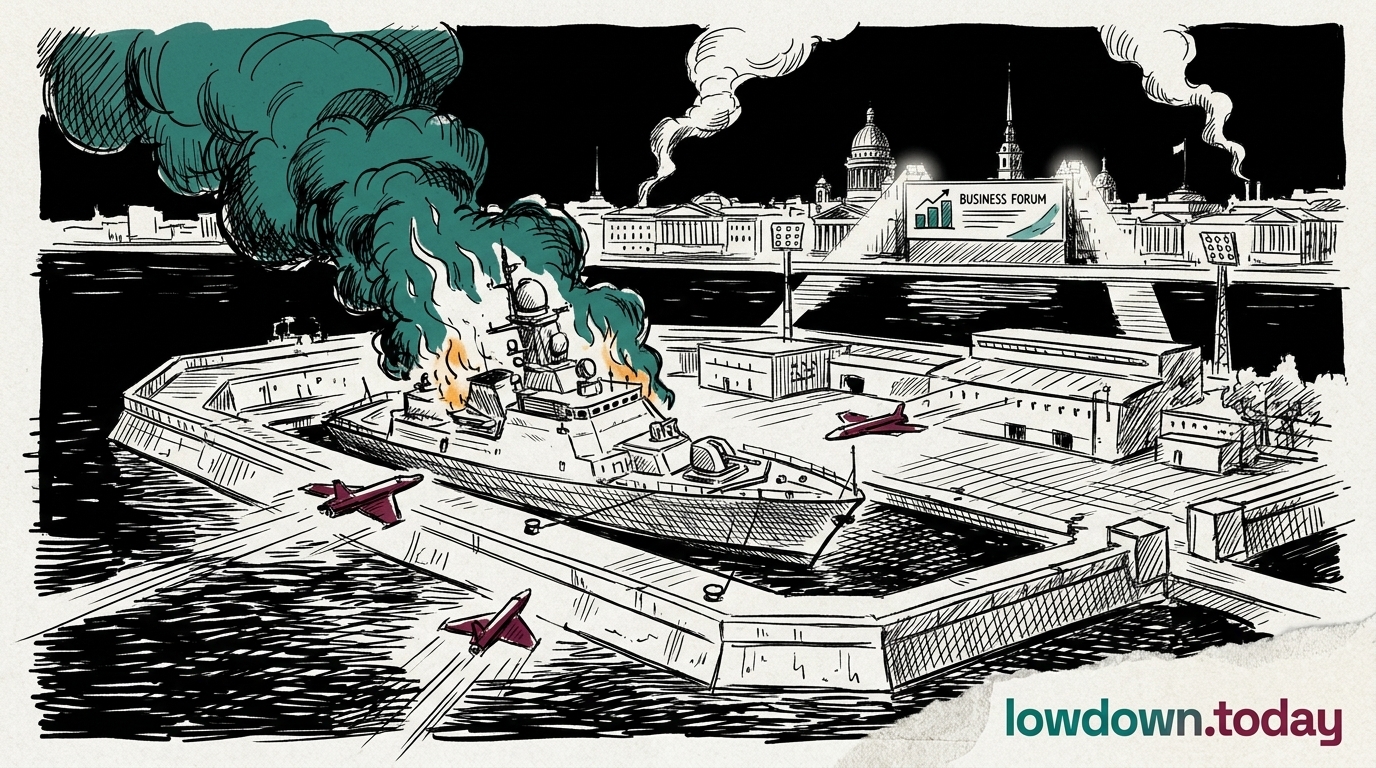
Putin used SPIEF to reject Zelenskyy's summit letter, citing 'elements of rudeness', and repeated the pre-agreed treaty precondition that has frozen every diplomatic round since May. The SPIEF platform's message of investor confidence was punctured by naval fires visible from St Petersburg, which Moscow declined to dispute in scale.
Ukraine / Unmanned Systems Forces
Commander Brovdi confirmed USF units tracked and set fire to Boikyi at Kronstadt, while Code 9.2 struck the Chonhar Bridge the following day. Ukraine is sequencing strikes for rear-area interdiction and political timing rather than ground gains, trading the Baltic Fleet's home base for the logistics squeeze Russia cannot absorb without rationing its own occupied territory.