Skip to content
Briefings are running a touch slower this week while we rebuild the foundations.See roadmap
Russia-Ukraine War 2026
9JUN

Russia fires 324 drones at Ukraine post-truce

3 min read
11:54UTC

The barrage that followed the end of Putin's Easter ceasefire killed five in Dnipro and a child in Cherkasy. Kyiv's tempo data shows the pause moved no operational needle.

ConflictDeveloping
Key takeaway

A ceremonial truce changed the cable television footage, not the drone math.

Russia launched 324 drones at Ukraine overnight on 14-15 April, killing five people in Dnipro, a child in Cherkasy, and others in Zaporizhzhia city. The barrage followed the expiry of Vladimir Putin's 32-hour Easter ceasefire , which ended just before the night-cycle began. Violation tallies on each side for the ceasefire window itself are covered in event 12.

The 324-drone figure is the operational signal. It is a baseline tempo night, similar in scale to strikes on either side of the truce window. Novaya Gazeta Europe, a Russian exile outlet, read the compliance pattern as asymmetric by design: Russia did hold back its long-range arsenal during the pause, giving rear-area cities a genuine respite, though short-range fire carried on at the front. The 14-15 April barrage restored the long-range component the window had paused.

Kremlin spokesperson Dmitry Peskov said any extension would require Ukraine to accept Russia's "well-known" terms, which are the territorial demands Kyiv has consistently rejected. The decree achieved what it was issued to do for a day and a half: public positioning around Orthodox Easter, a closed window on Hungarian polling day, and no commitment to an extension. The overnight strike on Dnipro, Cherkasy and Zaporizhzhia confirmed the pattern. The pause was message; the strike tempo is mechanism.

Deep Analysis

In plain English

Russia launched 324 drones overnight on 14-15 April, hitting three Ukrainian cities and killing civilians including a child. This attack came the night after a 32-hour ceasefire called by Vladimir Putin for the Orthodox Easter holiday ended. During the ceasefire itself, Russia's drone and missile launches paused, but ground fighting continued and Ukraine's military recorded over 10,000 individual violations, mostly artillery fire and small-unit attacks. Russia counted nearly 2,000 Ukrainian violations from its side. The night after the ceasefire ended, Russia returned immediately to its standard attack tempo, indicating the pause was not the beginning of any sustained de-escalation.

Deep Analysis
Root Causes

The 10,721-to-1,971 violation count disparity does not necessarily indicate bad faith by one party, the two sides use different methodological definitions of a ceasefire violation, and Russian MoD counts only Ukrainian fire against Russian-held positions while the Ukrainian General Staff counts all incoming fire. The more structurally revealing figure is the 119 ground assaults Ukraine logged during the 32-hour window, at roughly the same daily rate as the preceding week.

Russia's tactical incentive to accept temporary drone restraint but maintain ground pressure is consistent with the broader offensive strategy: drones are a siege instrument targeting civilian morale and infrastructure, while ground assaults lock in territorial micro-gains that accumulate regardless of ceasefire optics.

What could happen next?
  • Consequence

    The 10,721 ceasefire violation count establishes a reference figure that Kyiv will use in any future ceasefire verification negotiation to argue for third-party monitoring requirements.

  • Risk

    Recurring ceasefire-violation counts without enforcement consequences reduce the operational credibility of any future ceasefire proposal, making front-line commanders on both sides less likely to stand down unilaterally.

First Reported In

Update #13 · Treasury kills the Russian crude waiver

Al Jazeera· 16 Apr 2026
Read original
Different Perspectives
North Korea / DPRK
North Korea / DPRK
ISW confirmed the first mounting of DPRK Type-75 MLRS on Russian autonomous UGVs near Kharkiv on 7 June, the latest step in a supply axis that escalated from shells in 2023 to troops in 2024. Pyongyang gains live battlefield data on its ordnance and on Russia's uncrewed-systems programme.
IAEA / Rafael Grossi
Grossi confirmed Chornobyl structural damage with nuclear material metres away and could not attribute the ZNPP 15-hour blackout during the agreed repair window. Six ceasefires brokered and broken at ZNPP, compounded by Rosatom's May attack on IAEA neutrality, have eroded his ability to enforce the windows he negotiates.
Emmanuel Macron / France
Macron co-signed the E3 framework whose line-of-contact baseline marks Europe's first formal acceptance that 1991 borders are not the opening position. France's role carries weight because Macron had previously proposed a European force for Ukraine, and the framework's multinational force point is the vehicle for that.
Keir Starmer / E3
Keir Starmer / E3
Starmer, Macron and Merz met Zelenskyy on 7 June and backed a five-point framework taking the line of contact as the talks baseline, conceding roughly one fifth of Ukraine in exchange for a multinational force and frozen assets. With US mediation ended, the NATO Ankara summit on 7-8 July is the next test.
Vladimir Putin / Kremlin
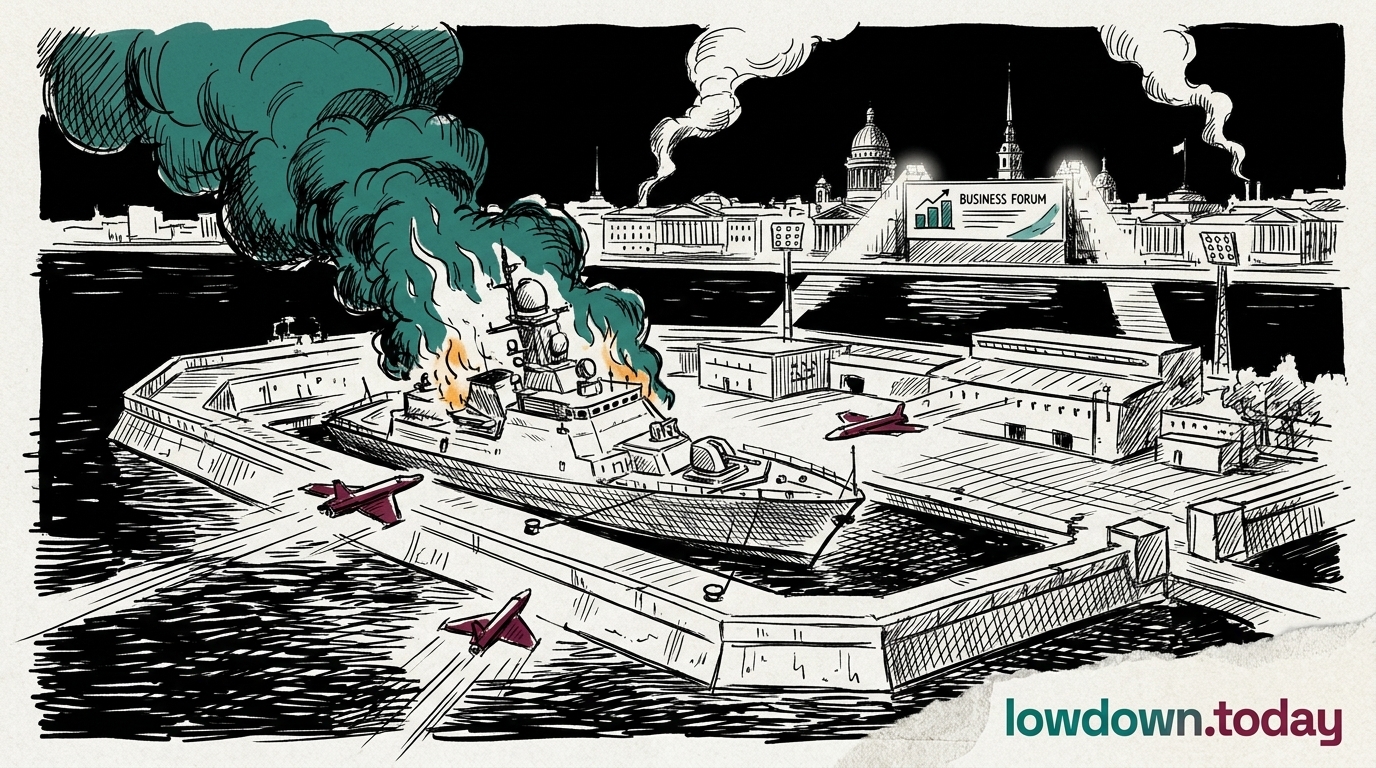
Putin used SPIEF to reject Zelenskyy's summit letter, citing 'elements of rudeness', and repeated the pre-agreed treaty precondition that has frozen every diplomatic round since May. The SPIEF platform's message of investor confidence was punctured by naval fires visible from St Petersburg, which Moscow declined to dispute in scale.
Ukraine / Unmanned Systems Forces
Commander Brovdi confirmed USF units tracked and set fire to Boikyi at Kronstadt, while Code 9.2 struck the Chonhar Bridge the following day. Ukraine is sequencing strikes for rear-area interdiction and political timing rather than ground gains, trading the Baltic Fleet's home base for the logistics squeeze Russia cannot absorb without rationing its own occupied territory.