Skip to content
Briefings are running a touch slower this week while we rebuild the foundations.See roadmap
Russia-Ukraine War 2026
1JUN

Putin-Trump call: one hour, zero deals

4 min read
10:39UTC

Their first call of 2026 produced proposals on Iran from Putin, a redirect to Ukraine from Trump, and agreement on nothing.

ConflictDeveloping
Key takeaway

Putin framed Ukraine as the obstacle to peace, pre-positioning for a settlement on Russian terms.

Putin and Trump spoke by phone on 9 March for one hour — their first conversation of 2026. Kremlin aide Yuri Ushakov described it as "frank" and "businesslike" 1. Putin offered "several" proposals for ending the Iran war. Trump's reply, per Axios: "You can be more helpful by ending the war in Ukraine" 2. Putin responded that Russian forces were "advancing quite successfully" — framing Kyiv, not Moscow, as the party that should concede. Trump called the conversation "very good." Neither side made commitments on either conflict.

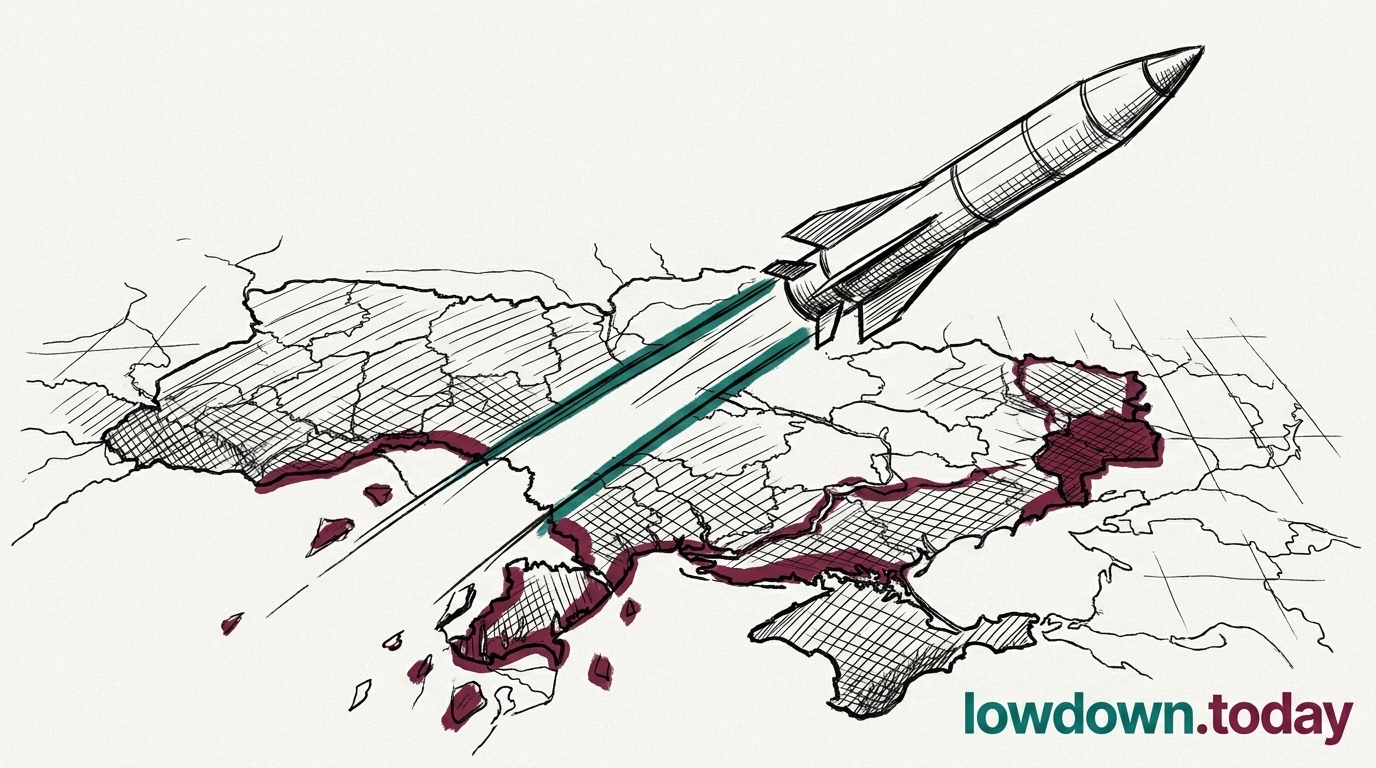
The exchange followed weeks of diplomatic paralysis. Trump told Zelenskyy on 25 February that he wanted the Ukraine war ended "in a month" . Russia's stated position remains "no deadlines." US envoys Witkoff and Kushner pulled out of the planned Istanbul trilateral on 4 March, citing the Iran situation , and no replacement date has materialised. Each leader used the call to press the other on the conflict where he holds less leverage: Trump on Ukraine, where Russia occupies roughly 18% of internationally recognised Ukrainian territory; Putin on Iran, where Moscow's active intelligence-sharing with Tehran undercuts any claim to honest brokerage.

Beijing's Global Times offered a third reading: "The US has some needs from Russia amid oil price surge pressure" — casting Washington as the party seeking help, not offering it 3. The framing fits China's consistent editorial position that American power is overextended across multiple theatres. But it captures something the Western readouts omit. Russian oil revenues fell roughly 32% year-on-year by January , yet global energy markets remain volatile enough that neither Washington nor Beijing can disregard Moscow's capacity as a swing producer. Putin has reason to keep energy prices unsettled; Trump has reason to want them calm before domestic political pressures build.

The call produced no framework for further contact on either front. The trilateral on Ukraine remains suspended — no date, no venue, no agenda. The EU's phased ban on Russian gas imports begins with LNG on 25 April . After that deadline, Russia's residual energy leverage over Europe diminishes, which may reduce Moscow's willingness to negotiate rather than increase it. Each week without talks favours whichever side is gaining ground — and both sides currently claim that distinction.

Deep Analysis

In plain English

This was the first Trump-Putin conversation in 2026. One hour, nothing binding. Putin raised ending the Iran war — where Russia backs Iran — while Trump pushed back on Ukraine. Putin then said Russian forces were doing well, which is not the language of someone ready to compromise. Both leaders called it a good call, which typically means neither moved. China read the exchange differently: it suggested the US needs Russian help to keep oil prices down, implying Washington has less leverage over Moscow than it publicly claims.

Deep Analysis
Synthesis

The Beijing framing — that the US needs Russia on energy — is significant precisely because it inverts the stated Western power dynamic. If Washington is oil-price-constrained and Russia holds influence over Iranian supply decisions, the call is less a US diplomatic opportunity and more a Russian demonstration of leverage. Trump describing a zero-output call as 'very good' is consistent with a leader who received — or expects — something that cannot be publicly acknowledged.

Root Causes

The deeper structural barrier is that the two sides have no agreed baseline for what a ceasefire would look like. Russia wants territorial recognition; the US has not signalled willingness to pressure Ukraine into that. Without a forcing mechanism — a US aid cutoff or a Russian military setback — neither side has an incentive to make the first concession. Phone calls substitute for policy when interests do not align.

Escalation

Putin's 'advancing quite successfully' framing is structurally incompatible with a genuine peace offer. A party negotiating from stated battlefield strength signals no need to concede first. The call reduces the probability of near-term substantive talks rather than advancing them.

What could happen next?
  • Meaning

    Putin's battlefield-success framing signals Russia sees no immediate need to negotiate, extending the conflict's expected duration.

    Short term · Assessed
  • Risk

    If the US is tacitly seeking Russian help on oil markets, Moscow gains leverage convertible into Ukraine concessions without formal diplomatic process.

    Medium term · Suggested
  • Consequence

    The call's lack of output further freezes the multilateral diplomatic track, as other actors await US-Russia bilateral progress before re-engaging.

    Short term · Assessed
  • Precedent

    Warm rhetoric masking zero-outcome calls could normalise diplomatic stasis as a substitute for genuine negotiation across both conflicts simultaneously.

    Medium term · Suggested
First Reported In

Update #4 · Ukraine pivots to drone exporter

Axios· 15 Mar 2026
Read original
Causes and effects
This Event
Putin-Trump call: one hour, zero deals
The call demonstrated that neither leader will offer concessions on the conflict the other prioritises, leaving both the Ukraine war and the Iran conflict without an active diplomatic track.
Different Perspectives
China
China
Beijing has not publicly commented on the dual Oreshnik launch. China's declared position of urging restraint and dialogue sits awkwardly alongside its continued economic ties with Russia; the weapons escalation tests whether Beijing's neutrality framing can survive a European IRBM normalisation event.
IAEA
IAEA
Director General Grossi condemned the ZNPP reactor-6 turbine building strike and stated "there should be no attack of any kind from or against the plant." The agency confirmed normal radiation levels but has not resolved attribution; Rosatom CEO Likachev warned the region is "one step closer to an incident."
Turkey
Turkey
Ankara hosted Istanbul Round 2 at Ciragan Palace on 2 June and secured a 1,200-for-1,200 prisoner exchange, consolidating Turkey as the war's sole diplomatic venue after Rubio confirmed US mediation has ended. Erdogan's leverage over both parties grows with each round.
European Union
European Union
EU Ambassador Mathernova answered Lavrov's evacuation demand with "We stay in Kyiv. We stay with Ukraine." The Verkhovna Rada approved the EUR 90bn EU loan on 28 May; the EUR 9.1bn first tranche, the EU's first explicit defence-procurement financing, arrives mid-June.
United States
United States
Rubio declared US mediation stagnated on 22 May and confirmed no talks were occurring, then received Lavrov's evacuation demand three days later without ordering embassy drawdown. Washington's leverage now runs through the GL 134C sanctions cliff on 17 June rather than any active diplomatic channel.
Ukraine
Ukraine
Zelenskyy called Russia's 2-3 day ceasefire counter-offer at Istanbul Round 2 "shortsighted" and submitted a full peace memorandum covering EU membership, international guarantees, phased sanctions relief and frozen-asset reparations. Kyiv's position is that a partial ceasefire freeze aids Russian reconstitution; only an all-domain 30-day pause is acceptable.
