Skip to content
Briefings are running a touch slower this week while we rebuild the foundations.See roadmap
Russia-Ukraine War 2026
1JUN

Brent $108 as CENTCOM seizes more tankers

3 min read
10:39UTC

Brent crude rose to $108.11 on Monday across the same two-session window that produced Araghchi's three-capital diplomatic circuit. CENTCOM's cumulative vessel-intercept count reached 38, including the LPG SEVAN seized in the Arabian Sea.

ConflictDeveloping
Key takeaway

Brent at $108 and 38 CENTCOM intercepts price the war ahead of the talks; markets read no-deal.

Brent Crude rose from $105.33 on Saturday 25 April to $108.11 on Monday 27 April 1, a 2.64 per cent move higher across the same two-session window in which Abbas Araghchi met Sultan Haitham in Muscat and Vladimir Putin in St Petersburg. Brent is the North Sea benchmark used to price roughly two-thirds of internationally traded crude; the contract had been trading inside a $96-108 band since the Ceasefire extension last week. Monday's close put it at the top of that band on the most active negotiating day of the war so far.

United States Central Command, the Pentagon's combatant command for the Middle East and Arabian Sea, reached a cumulative blockade-phase intercept count of 38 vessels on Monday, up five from the prior two-session readout , the highest two-session pace in available CENTCOM tallies for the conflict 2. The LPG SEVAN, an Iranian-flagged liquefied petroleum gas carrier, was seized in the Arabian Sea on 25 April and folded into the count CENTCOM announced on Monday. The seizure expands the kinetic profile beyond crude tankers to LPG carriers, a category the blockade had not visibly touched before.

The price action contradicts the negotiating optics. Brent at the top of its trading range during the most public diplomatic window of the war tells traders what Tehran's offer cannot: the apparatus to receive the offer does not appear to exist before Friday's legal expiry, and the wind-down on the only signed paper of the war runs to 24 May. Markets discount probability-weighted outcomes; the rise is consistent with shippers and refiners pricing the next two dated triggers as binding rather than performative. P&I insurers (the protection-and-indemnity mutuals that cover third-party liability for tanker traffic) hold Hormuz exposure at war-rate premia and have not adjusted on the diplomatic news.

For UK drivers, $108 Brent translates to forecourt diesel and petrol stabilising roughly a tenth above March levels on the four-to-six-week pass-through pipeline through the Antwerp-Rotterdam-Amsterdam refining complex. Operation Epic Fury is running its blockade and the price screen is reading the result: the diplomacy is not yet inside the price.

Deep Analysis

In plain English

Oil prices went up while Iran's foreign minister was travelling to meet world leaders with a peace offer. The market does not believe the offer will lead to a deal. The US Navy seized five more ships in two days, including a gas tanker. For UK drivers, the oil price at this level means petrol and diesel prices will stay 8-12 per cent above March prices through May.

What could happen next?
  • Consequence

    CENTCOM reaching 38 cumulative intercepts, with five in 48 hours, sets the operational precedent that the blockade actively widens even during diplomatic peaks, removing any market expectation that talks pause kinetic activity.

  • Risk

    The LPG SEVAN seizure raises South Asian and East African LPG supply exposure; India, Pakistan and Bangladesh source residential cooking fuel via Gulf LPG exporters whose shipping routes now pass through CENTCOM's intercept zone.

First Reported In

Update #82 · Iran writes Phase 1; Washington still has no pen

Trading Economics· 28 Apr 2026
Read original
Different Perspectives
China
China
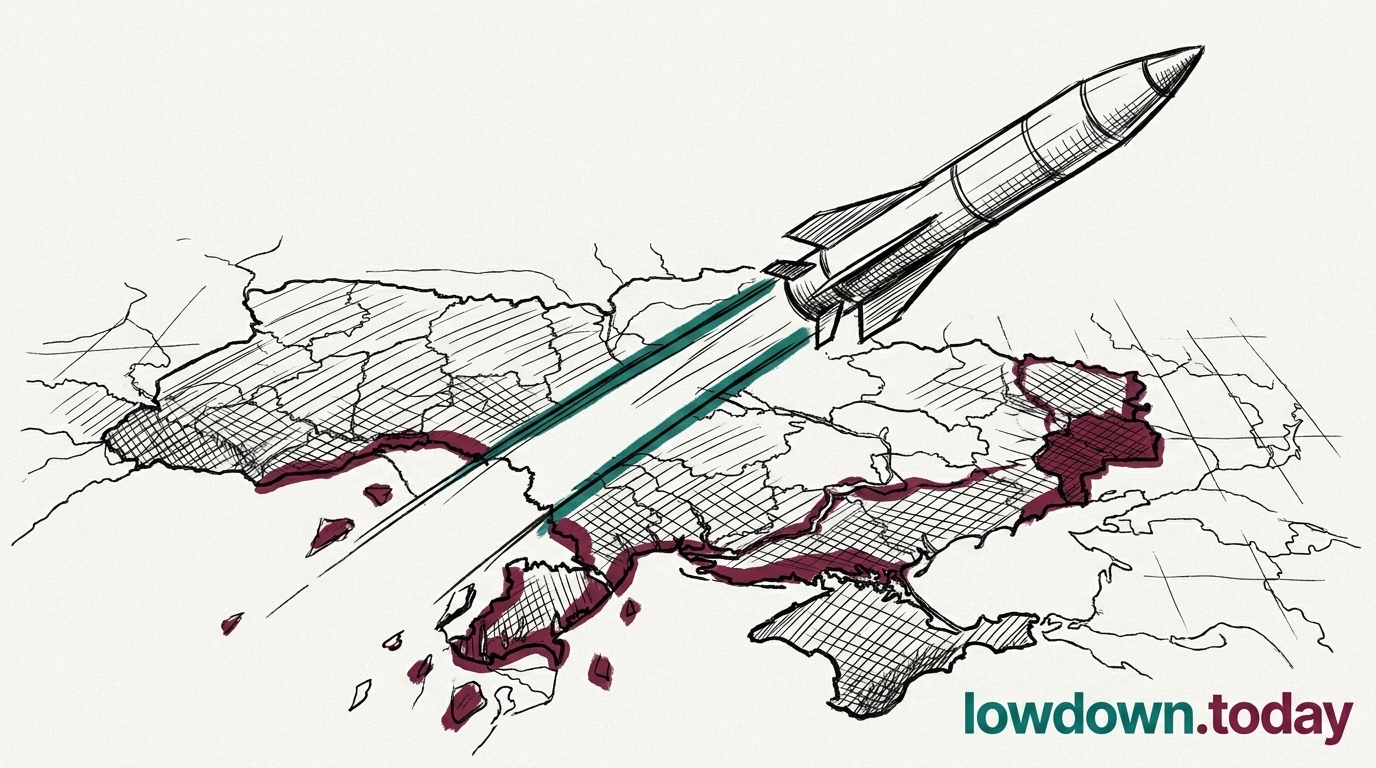
Beijing has not publicly commented on the dual Oreshnik launch. China's declared position of urging restraint and dialogue sits awkwardly alongside its continued economic ties with Russia; the weapons escalation tests whether Beijing's neutrality framing can survive a European IRBM normalisation event.
IAEA
IAEA
Director General Grossi condemned the ZNPP reactor-6 turbine building strike and stated "there should be no attack of any kind from or against the plant." The agency confirmed normal radiation levels but has not resolved attribution; Rosatom CEO Likachev warned the region is "one step closer to an incident."
Turkey
Turkey
Ankara hosted Istanbul Round 2 at Ciragan Palace on 2 June and secured a 1,200-for-1,200 prisoner exchange, consolidating Turkey as the war's sole diplomatic venue after Rubio confirmed US mediation has ended. Erdogan's leverage over both parties grows with each round.
European Union
European Union
EU Ambassador Mathernova answered Lavrov's evacuation demand with "We stay in Kyiv. We stay with Ukraine." The Verkhovna Rada approved the EUR 90bn EU loan on 28 May; the EUR 9.1bn first tranche, the EU's first explicit defence-procurement financing, arrives mid-June.
United States
United States
Rubio declared US mediation stagnated on 22 May and confirmed no talks were occurring, then received Lavrov's evacuation demand three days later without ordering embassy drawdown. Washington's leverage now runs through the GL 134C sanctions cliff on 17 June rather than any active diplomatic channel.
Ukraine
Ukraine
Zelenskyy called Russia's 2-3 day ceasefire counter-offer at Istanbul Round 2 "shortsighted" and submitted a full peace memorandum covering EU membership, international guarantees, phased sanctions relief and frozen-asset reparations. Kyiv's position is that a partial ceasefire freeze aids Russian reconstitution; only an all-domain 30-day pause is acceptable.
