Skip to content
Briefings are running a touch slower this week while we rebuild the foundations.See roadmap
Russia-Ukraine War 2026
22MAY

EU joins US chip pact, France objects

3 min read
10:57UTC

EU ambassadors cleared the Commission on 3 June to join the US-led Pax Silica alliance and buy at least $40bn in American AI chips. France was the lone holdout; Germany, Italy and the Netherlands carried it.

ConflictDeveloping
Key takeaway

EU ambassadors backed a $40bn US AI-chip buy over French objections, deepening Europe's silicon dependence.

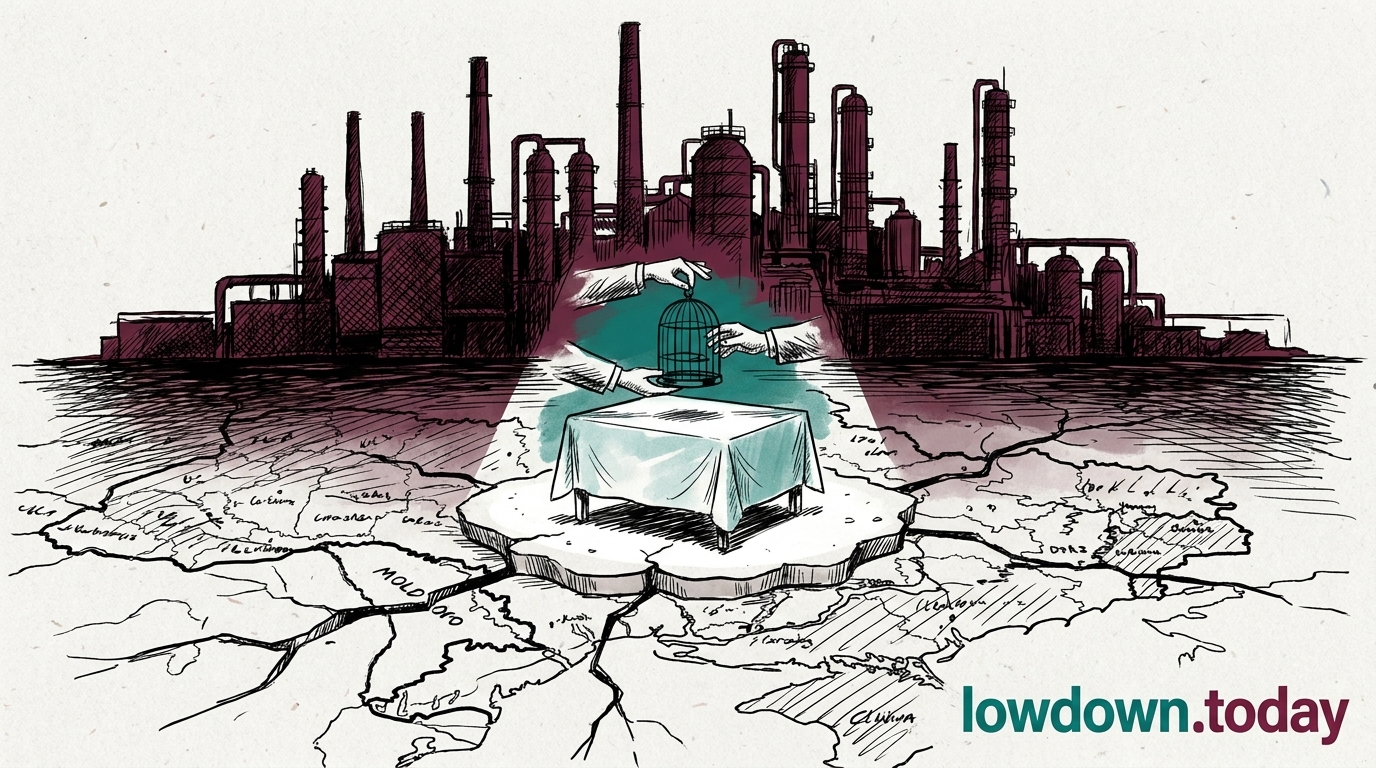
COREPER, the committee of EU member-state ambassadors, authorised the European Commission on Wednesday 3 June to join the US-led Pax Silica semiconductor alliance, committing the bloc to purchase at least $40bn (€37bn) in American AI chips under the EU-US trade framework 12. France opposed the move and asked the Commission to clarify the Council's steering role; Germany, Italy and the Netherlands backed it 3. Council validation followed on Monday 8 June.

Pax Silica launched in Washington in December 2025 as a State Department effort to coordinate AI-chip supply and export controls among allied nations against China. The UK, Japan, South Korea, India and Australia had all joined before the bloc moved, so the EU enters a club already shaped without it. Euronews described France's stance as treating the Alliance as an attempt to colonise Europe; no named French official used that phrase 4.

The commitment lands the same afternoon Brussels adopted its Cloud and AI Development Act , a sovereignty law for the cloud layer. One act asserts control where European alternatives exist; this one accepts dependency where they do not. Europe makes no leading-edge AI accelerator, and its one advancing volume fab at Dresden will turn out mature chips, not the silicon the gigafactories need. Chips Act II, adopted in the same package with new fab-equity authority , is the capital tool meant to close that gap, though it produces no wafer before the $40bn buy lands. France's objection now becomes the test case for how Council oversight of the Alliance is governed.

Deep Analysis

In plain English

Pax Silica is a club of countries, led by the United States, that coordinates who gets access to the most powerful computer chips used for artificial intelligence. On 3 June, EU ambassadors cleared the way for Europe to join, committing the bloc to spend at least $40 billion on American AI chips. Europe has no domestic AI accelerator and no timeline for one before the early 2030s. Buying from the US under an alliance arrangement is cheaper and safer than having no guaranteed supply. France objected, worrying that the arrangement gives Washington too much economic leverage over European technology decisions. Germany, Italy and the Netherlands voted it through anyway.

Deep Analysis
Root Causes

Europe's structural position on AI accelerators has no short-run exit. TSMC holds approximately 90% of global advanced-node foundry capacity, and no European fab targets below 16nm before the early 2030s. This means the EU cannot credibly threaten to source leading-edge AI chips elsewhere, which is precisely what makes the Pax Silica commitment possible to extract.

Germany's automotive tariff exposure under the EU-US trade framework created the structural veto. That framework triggered CADA's three delays and is the same instrument under which Pax Silica accession is conditional. Berlin's refusal to risk the auto-sector deal while its EV transition is incomplete makes German support for any US-irritant sovereignty move unreliable, and COREPER votes reflect that arithmetic.

What could happen next?
  • Consequence

    The $40bn purchase commitment converts Europe's chip dependency from a structural vulnerability into a contractual one, reducing the Commission's leverage in any future EU-US trade dispute touching semiconductor supply.

    Medium term · Assessed
  • Risk

    France's objection over Council steering creates a governance gap: if the $40bn mechanism is operationalised without a Council oversight protocol, it sets a precedent for COREPER authorising trade commitments that bypass Parliament's co-decision role on international agreements.

    Short term · Reported
  • Precedent

    Joining Pax Silica makes the EU the first bloc (rather than a bilateral state) to enter the US chip-alliance architecture, establishing a template for collective allied semiconductor commitments that Washington may now seek to extend to other technology domains.

    Long term · Reported
  • Opportunity

    Pax Silica membership may secure EU firms access to the most advanced US AI export-control exemptions, giving European cloud and AI providers a competitive edge over non-member buyers for the newest accelerator generations.

    Short term · Reported
First Reported In

Update #8 · Sovereignty law adopted; $40bn US chip buy

Euronews· 10 Jun 2026
Read original
Different Perspectives
North Korea / DPRK
North Korea / DPRK
ISW confirmed the first mounting of DPRK Type-75 MLRS on Russian autonomous UGVs near Kharkiv on 7 June, the latest step in a supply axis that escalated from shells in 2023 to troops in 2024. Pyongyang gains live battlefield data on its ordnance and on Russia's uncrewed-systems programme.
IAEA / Rafael Grossi
Grossi confirmed Chornobyl structural damage with nuclear material metres away and could not attribute the ZNPP 15-hour blackout during the agreed repair window. Six ceasefires brokered and broken at ZNPP, compounded by Rosatom's May attack on IAEA neutrality, have eroded his ability to enforce the windows he negotiates.
Emmanuel Macron / France
Macron co-signed the E3 framework whose line-of-contact baseline marks Europe's first formal acceptance that 1991 borders are not the opening position. France's role carries weight because Macron had previously proposed a European force for Ukraine, and the framework's multinational force point is the vehicle for that.
Keir Starmer / E3
Keir Starmer / E3
Starmer, Macron and Merz met Zelenskyy on 7 June and backed a five-point framework taking the line of contact as the talks baseline, conceding roughly one fifth of Ukraine in exchange for a multinational force and frozen assets. With US mediation ended, the NATO Ankara summit on 7-8 July is the next test.
Vladimir Putin / Kremlin
Putin used SPIEF to reject Zelenskyy's summit letter, citing 'elements of rudeness', and repeated the pre-agreed treaty precondition that has frozen every diplomatic round since May. The SPIEF platform's message of investor confidence was punctured by naval fires visible from St Petersburg, which Moscow declined to dispute in scale.
Ukraine / Unmanned Systems Forces
Commander Brovdi confirmed USF units tracked and set fire to Boikyi at Kronstadt, while Code 9.2 struck the Chonhar Bridge the following day. Ukraine is sequencing strikes for rear-area interdiction and political timing rather than ground gains, trading the Baltic Fleet's home base for the logistics squeeze Russia cannot absorb without rationing its own occupied territory.
