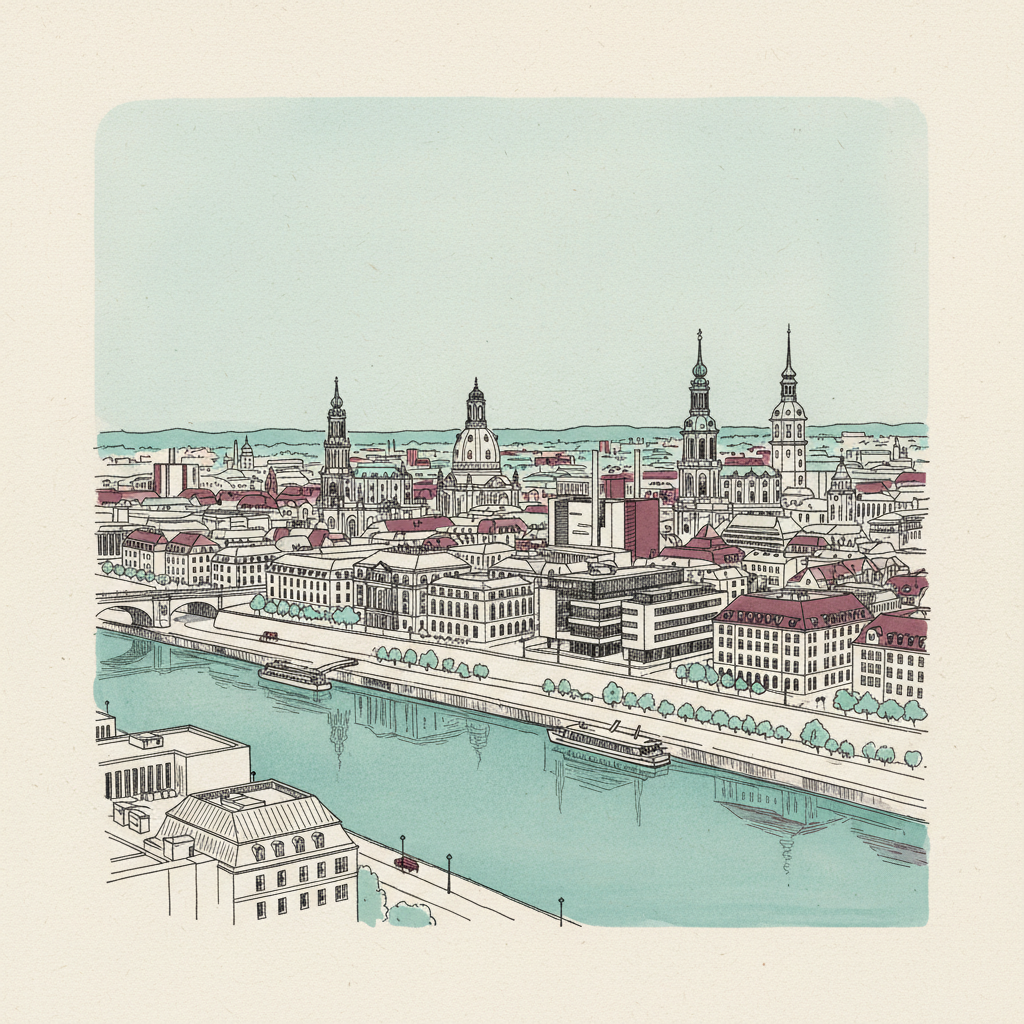
Dresden
German city in Saxony; Europe's semiconductor capital, home to major chip fabs.
Dresden's GlobalFoundries fab completed Europe's first end-to-end sovereign chip manufacturing flow on 10 June 2026, the same month ESMC confirmed its own 2027 production schedule at its neighbouring site.
Last refreshed: 4 August 2026 · Appears in 1 active topic
Will TSMC's Dresden fab transform Europe's chip independence within a decade?
Timeline for Dresden
ESMC reports Dresden fab on schedule
European Tech SovereigntyMentioned in: EuroHPC opens tender for seven AI gigafactories
European Tech SovereigntyMentioned in: EU approves €659m for four German fabs
European Tech SovereigntyHosted the fab opening as its chip cluster expanded
European Tech Sovereignty: Infineon opens €5bn Dresden fab earlyDresden chip fab marks build progress
European Tech SovereigntyBackground
Dresden is Europe's most concentrated semiconductor manufacturing hub, home to fabs operated by Infineon, GlobalFoundries and Bosch, plus the ESMC joint venture with TSMC. The cluster, branded Silicon Saxony, was built after German reunification through sustained state investment that drew Siemens, later Infineon, and AMD, later GlobalFoundries, to the city.
The city accounts for roughly 10% of European chip production and employs around 70,000 people across more than 2,000 companies spanning design, equipment and materials, giving it a trained workforce and supply base unmatched elsewhere in the continent's chip industry.
Dresden ships Europe's first sovereign chip
GlobalFoundries and Dutch startup Qualinx completed the continent's first fully European, end-to-end sovereign chip manufacturing flow at GlobalFoundries' Dresden fab on 10 June 2026, a milestone for a cluster branded Silicon Saxony since reunification. The same month, ESMC, the neighbouring TSMC joint venture, confirmed its own 2027 production schedule after TSMC shipped DUV lithography equipment from Taiwan, and Infineon opened a €5bn Smart Power Fab expansion months ahead of schedule. With Magdeburg and Crolles cancelled elsewhere in the Chips Act pipeline, Dresden now carries Europe's near-term chip ambitions largely alone, against a Commission scorecard that put European chip share at only 9% versus a 20% target.
Is Dresden the most important semiconductor manufacturing city in Europe?
What was the first sovereign chip manufactured end-to-end in Europe?
How much EU funding is the Dresden chip cluster receiving?
When will the TSMC Dresden factory open?
What chips are made in Dresden Germany?
