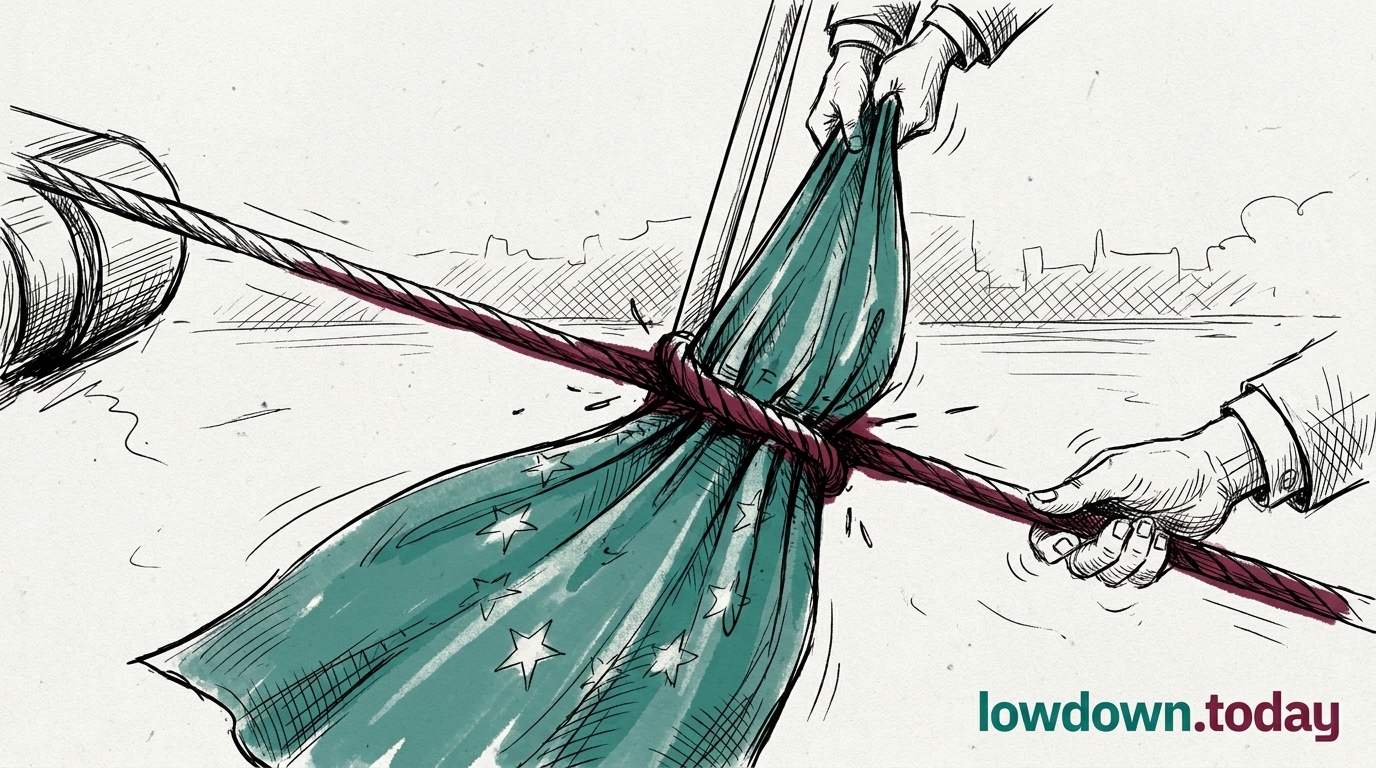
The Cloud and AI Development Act (CAIDA, the EU law that would bar US cloud giants from hosting sensitive public-sector data) did not reach the College of Commissioners on Wednesday 27 May 2026, the date the Commission itself had locked for adoption. The package slipped a third time, to a tentative 3 June, extending a sequence that now reads 25 March, 15 April, 27 May. Andrew Puzder, the US Ambassador to the EU, gave the proximate reason this time, and it was not industrial: he warned the package "crosses a red line" and is inconsistent with the EU-US trade framework1. Politico, separately, reported the 400-page text was simply not ready2.
For readers arriving cold: CAIDA is the centrepiece of the Tech Sovereignty Package, bundled with a revamped Chips Act II that would hand Brussels direct equity authority in semiconductor fabs. Alexandra Geese, a German Green MEP, put the trade link on the public record: the EU kept digital rules out of last August's framework, but Washington has kept pressing on the Digital Services Act (DSA, the EU's platform-accountability law) ever since3.
For five updates the binding constraint on European sovereignty was an implementation gap: the right diagnosis, the right prescriptions, and an 11.2% delivery rate against the recommendations in Mario Draghi's 2024 competitiveness report. That constraint has changed character. Europe's problem is no longer only that it cannot build; it is that it cannot legislate sovereignty without tripping the trade framework, and the veto runs through Berlin. France favours the protectionist line. Germany, exposed to a threatened US tariff package on its automotive and luxury exports worth up to $200bn, does not4.
The charitable reading deserves a hearing: reconciling procurement law, competition rules and international agreements across hundreds of pages is genuinely slow, and reading a US veto into a routine delay over-reaches. It does not survive the calendar. A third slip on a date the Commission locked, coinciding with a named ambassadorial red line and a documented Paris-Berlin split, means the package lacks the consensus to ship whatever the proximate cause. The instrument built to escape US dependence was pre-defeated diplomatically before a word of it reached the College.





