Skip to content
Briefings are running a touch slower this week while we rebuild the foundations.See roadmap
Russia-Ukraine War 2026
22MAY

China activates 2021 Blocking Rules against OFAC

3 min read
10:57UTC

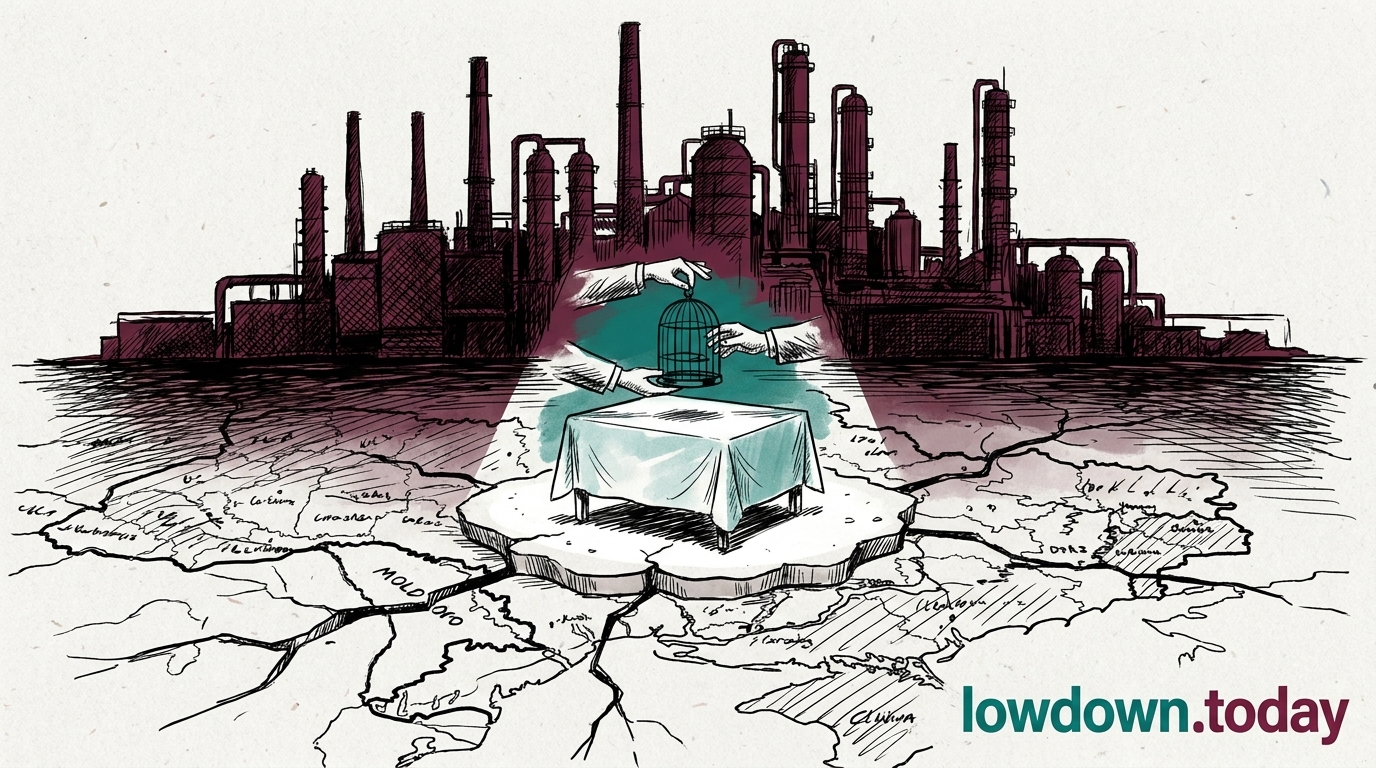
Beijing's MOFCOM named five refineries as legally barred from honouring OFAC's Iran sanctions, the first activation of the 2021 statute and the first Chinese countermeasure to outpace Brussels.

ConflictDeveloping
Key takeaway

Beijing has armed Article 9 of the Blocking Rules; the first foreign bank to test it will set the precedent.

MOFCOM, China's Ministry of Commerce, activated its 2021 Blocking Rules for the first time on Saturday 2 May, naming five refineries as legally barred from honouring OFAC's Iran designations: Hengli Petrochemical (Dalian), Shandong Shouguang Luqing, Shandong Jincheng, Hebei Xinhai and Shandong Shengxing 1. The order took immediate effect. The Blocking Rules are China's Order No. 1 of 2021, a statute that prohibits Chinese firms from complying with foreign sanctions; OFAC is the US Treasury's Office of Foreign Assets Control, which administers Iran sanctions through bulletin codes such as SB0472. Article 9 of the Rules creates a private cause of action in Chinese courts: any Chinese company that complies with the listed designations can be sued for damages by the sanctioned counterparty.

Hengli was OFAC-designated under SB0472 on 24 April with a wind-down clock under General License V (GL-V) that expires on 24 May . Twelve days before the activation, Hengli transferred 95% of its Singapore arm to a Chinese state entity to soften the blow . Beijing's posture has stepped two rungs higher in twelve days, moving from quiet corporate restructuring to formal legal prohibition. China simultaneously holds the United Nations Security Council presidency for May 2026; on the same day, the Council president called for 'good-faith' US-China negotiations on Iran 2.

The five named firms are independent 'teapot' refineries that account for a meaningful share of Chinese plants buying Iranian crude. The mechanism runs through commercial liability: any bank, insurer or freight forwarder that turns away their cargoes faces compensation claims in Chinese courts. The European Union's own blocking statute, Regulation 2271/96, has never been invoked against the current Iran sanctions cycle, so Beijing now sits ahead of Brussels in legal posture against the Trump administration's enforcement track. The first multinational to test Article 9 in court will set the precedent for everyone else.

Deep Analysis

In plain English

China's government has a law that bars Chinese companies from obeying American sanctions when it chooses to activate it. On 2 May it activated that law for the first time, naming five Chinese oil refineries that would face legal penalties in China if they followed US Treasury orders to stop buying Iranian oil. The US had told these refineries they had until 24 May to wind down their Iran business or face further sanctions. Now any Chinese company that complies with the US order can be sued in a Chinese court. It puts the refineries in an impossible position: break US law, or break Chinese law. The outcome matters because these refineries process a large share of the Iranian oil that funds Tehran's war effort.

Deep Analysis
Root Causes

Three structural drivers converge in this event. First, China's 2021 Blocking Rules were passed precisely because Beijing anticipated future US secondary-sanctions pressure after the 2020 OFAC designations of Huawei affiliates; the Iran designation of Hengli in April 2026 triggered the exact scenario the law was drafted for.

Second, Hengli's 95% Singapore arm transfer to a Chinese state entity twelve days before activation created a legal grey zone: OFAC's GL-V wind-down addressed a privately held entity that now no longer exists in its pre-designation form. MOFCOM's order converts that grey zone into a formal barrier.

Third, China holds the UN Security Council presidency for May 2026 and was already on record calling US Iran sanctions 'illegal unilateral measures'. Activating the Blocking Rules while holding the rotating presidency gives Beijing simultaneous legal, diplomatic, and multilateral cover for a posture it could not safely hold in February.

What could happen next?
  • Consequence

    US firms with China operations face liability in Chinese courts if they facilitate OFAC enforcement against the named refineries, creating a chilling effect on US secondary-sanctions compliance chains.

    Short term · 0.75
  • Risk

    If OFAC attempts enforcement against a Chinese state-owned entity after the 24 May GL-V expiry, and China's courts respond with a damages award against a US-linked firm, the bilateral sanctions architecture enters uncharted legal territory.

    Medium term · 0.55
  • Precedent

    The first activation of any country's blocking statute against a live US secondary-sanctions framework establishes a template other states with analogous legislation (notably Russia and Iran) will monitor for replication.

    Long term · 0.7
First Reported In

Update #87 · China blocks OFAC; Iran writes; Trump tweets

Global Times· 3 May 2026
Read original
Different Perspectives
Rafael Grossi, IAEA Director General
Grossi's Update 349 of 7 May recorded a drone strike on ZNPP's radiation monitoring laboratory on 3 May. Rosatom's 17 May public attack on the Secretariat's neutrality degrades the diplomatic ground Grossi needs for the sixth repair ceasefire at day 60 on the single backup line.
Indian Government / Embassy Moscow
The Indian Embassy in Moscow confirmed on 18 May that an Indian national was killed and three hospitalised at a refinery construction site in the 17 May barrage. India is among the largest buyers of discounted Russian crude; the fatality forces a diplomatic protest without changing the purchasing posture.
Recep Tayyip Erdogan, Turkish President
Erdogan met Zelenskyy in Ankara for nearly three hours on 15 May before the Istanbul session, recovering Turkey's 2022 mediator role and reducing Trump's leverage by hosting bilateral talks without Washington in the room. Turkey hosts the NATO Ankara summit on 7-8 July; the Istanbul format gives Erdogan standing at both tables simultaneously.
Viktor Orban / Hungarian Government
Budapest's new cabinet, formed 12 May, holds the institutional veto point on the EU tranche disbursement ahead of the first-half June window. Hungary has previously leveraged EU loan tranches to extract bilateral concessions; the combination of a fresh cabinet and a tight disbursement timeline makes Budapest the single highest-leverage actor in the EU track this fortnight.
European Council / Commission
The Commission is preparing a three-document disbursement package for the 9.1-billion euro first tranche of the EU loan to Ukraine, targeting first-half June, but delivery depends on the Magyar cabinet, which formed on 12 May, not blocking the mechanism. The 20th sanctions package remains in force against Russia.
Donald Trump / US Treasury
Treasury issued GL 134C with a 48-hour gap after GL 134B expired, confirming the waiver series functions as permanent monthly management rather than a wind-down instrument. Washington was absent from the Istanbul room; Treasury Secretary Bessent framed the Cuba carve-out as protecting 'most vulnerable nations', maintaining the fiction that the 30-day bridge has a humanitarian rationale.
