Skip to content
Briefings are running a touch slower this week while we rebuild the foundations.See roadmap
Russia-Ukraine War 2026
5APR

Treasury freezes Iran's four crypto exchanges

4 min read
19:51UTC

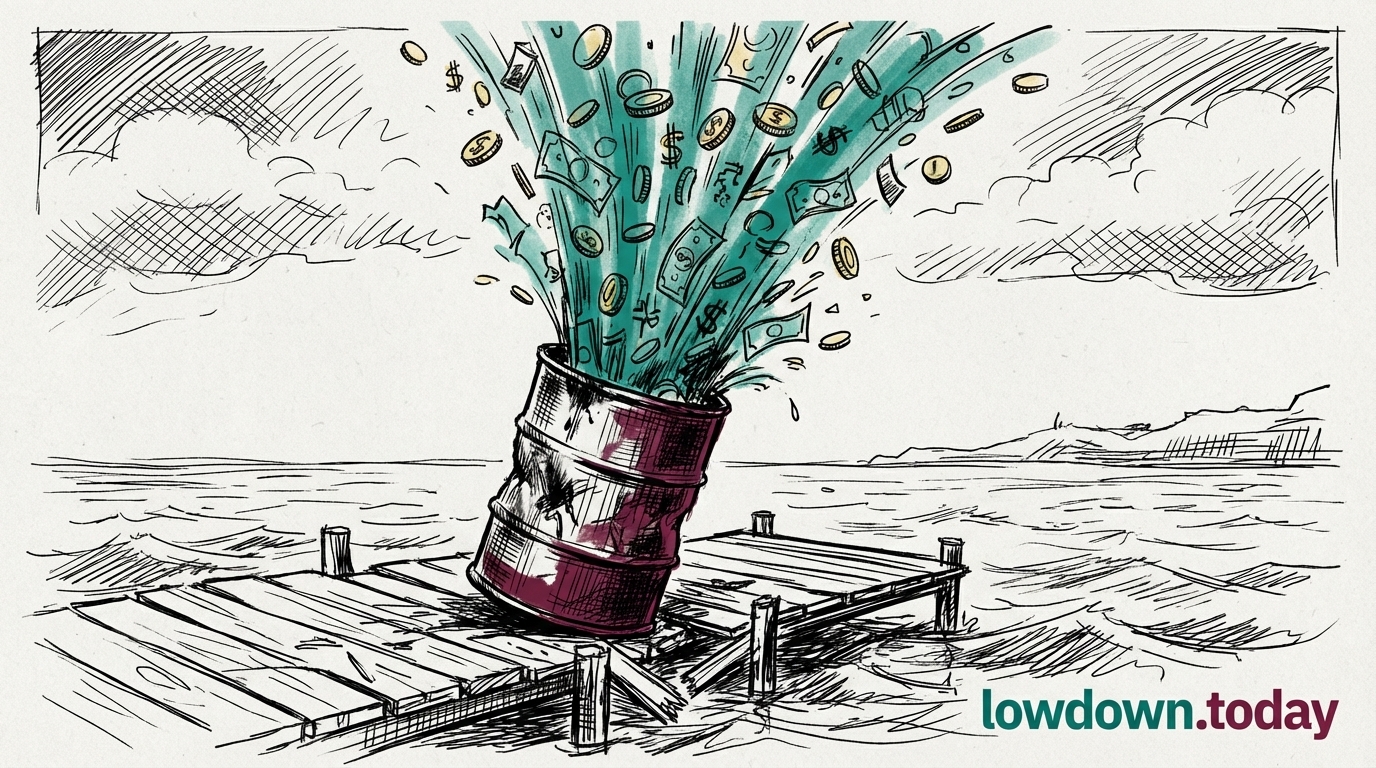
OFAC designated Nobitex and three more Iranian exchanges on 2 June, cutting off the stablecoin route the Central Bank used to defend the rial and the IRGC used to bank Hormuz tolls.

ConflictDeveloping
Key takeaway

Treasury froze the crypto exchanges that funded both Iran's rial defence and the IRGC's Hormuz tolls.

The US Treasury's Office of Foreign Assets Control, OFAC, designated Nobitex on 2 June under two authorities at once: Executive Order 13224, the counterterrorism order, and Executive Order 13902, which covers Iran's financial sector 1. Nobitex is Iran's largest cryptocurrency exchange, handling more than half of all Iranian digital-asset inflows in 2025. Treasury named three more exchanges beside it: Wallex at 12 per cent of inflows, Bitpin at 10 per cent, and Ramzinex, through which $2.45 billion had passed. Four of Iran's busiest exchanges lost dollar access on a single day.

Four individuals went on the list under the counterterrorism order, including Nobitex chairman Amir Hossein Rad and two members of the Kharrazi family, who sit inside Mojtaba Khamenei's inner circle. Treasury says it has now frozen close to $500 million in regime-linked crypto under its Economic Fury campaign, the same thread that began with the PGSA designation on 28 May . The State Department added a $15 million bounty through Rewards for Justice for information disrupting IRGC financial mechanisms 2.

Follow the plumbing. Nobitex was the rail the Central Bank of Iran used to reach dollar stablecoins and slow the rial's fall, and the IRGC (Iran's Islamic Revolutionary Guard Corps) levied its Hormuz tanker tolls in those same stablecoins . The same designation that drains the currency defence also drains the toll machine, because both flows passed through the named exchanges. Defenders call it the cleanest pressure available short of force. Critics note that crypto rails reroute fast, and an exchange can spin up fresh wallets in a weekend, so the freeze's bite depends on whether foreign counterparties actually refuse the named wallets.

Deep Analysis

In plain English

Iran has been cut off from the normal global banking system for years because of US sanctions. To get around this, Iranians started using cryptocurrency, especially a type called USDT (a 'stablecoin' pegged to the dollar), traded through local crypto exchanges. The four exchanges named here (Nobitex, Wallex, Bitpin and Ramzinex) together handled most of this traffic. The US Treasury on 2 June put all four on its sanctions list, which means any company worldwide that does business with them risks being cut off from the US financial system. This matters in two ways: the Iranian government was using these exchanges to buy dollars and prop up its own currency, and Iran's Revolutionary Guard (the IRGC) was using them to collect toll payments from ships passing through the Strait of Hormuz.

Deep Analysis
Root Causes

The IRGC's Hormuz toll machinery from the Persian Gulf Strait Authority (PGSA) required a payment channel that was denominated in dollar stablecoins, accepted pseudonymously, and settled outside the US correspondent banking system.

Nobitex met all three conditions simultaneously. The CBI independently needed Nobitex for the same reason: its own SDN-list status since 2019 blocked it from the dollar market, and the 43% rial devaluation through May 2026 created urgent demand for dollar-liquidity tools.

The second structural cause is that Iran's domestic banking system has no capacity to absorb the exchange rate pressure: with inflation running above 40% and the rial at a record low on 1 June, the stablecoin rail was the CBI's only lever for open-market intervention. Designating Nobitex simultaneously removed the IRGC toll revenue channel and the CBI stabilisation tool, hitting two distinct institutional functions with one instrument.

What could happen next?
  • Consequence

    Nobitex and the three co-designated exchanges will attempt address migration within days; OFAC will need to post successor-wallet updates to maintain the designation's operational effect.

    Immediate · Assessed
  • Risk

    The CBI loses its open-market dollar-intervention tool just as diplomatic momentum re-emerges, increasing the probability that a future rial slide will be sharper and faster than the 43% six-month slide already documented.

    Short term · Reported
  • Precedent

    Designating a state's central bank satellite exchange sets a template for targeting any country using crypto rails to evade sanctions, with implications for Venezuela, North Korea and Russia's evolving stablecoin infrastructure.

    Long term · Reported
First Reported In

Update #116 · Washington signs a sanction, not a strike

PBS NewsHour· 3 Jun 2026
Read original
Different Perspectives
North Korea / DPRK
North Korea / DPRK
ISW confirmed the first mounting of DPRK Type-75 MLRS on Russian autonomous UGVs near Kharkiv on 7 June, the latest step in a supply axis that escalated from shells in 2023 to troops in 2024. Pyongyang gains live battlefield data on its ordnance and on Russia's uncrewed-systems programme.
IAEA / Rafael Grossi
Grossi confirmed Chornobyl structural damage with nuclear material metres away and could not attribute the ZNPP 15-hour blackout during the agreed repair window. Six ceasefires brokered and broken at ZNPP, compounded by Rosatom's May attack on IAEA neutrality, have eroded his ability to enforce the windows he negotiates.
Emmanuel Macron / France
Macron co-signed the E3 framework whose line-of-contact baseline marks Europe's first formal acceptance that 1991 borders are not the opening position. France's role carries weight because Macron had previously proposed a European force for Ukraine, and the framework's multinational force point is the vehicle for that.
Keir Starmer / E3
Keir Starmer / E3
Starmer, Macron and Merz met Zelenskyy on 7 June and backed a five-point framework taking the line of contact as the talks baseline, conceding roughly one fifth of Ukraine in exchange for a multinational force and frozen assets. With US mediation ended, the NATO Ankara summit on 7-8 July is the next test.
Vladimir Putin / Kremlin
Putin used SPIEF to reject Zelenskyy's summit letter, citing 'elements of rudeness', and repeated the pre-agreed treaty precondition that has frozen every diplomatic round since May. The SPIEF platform's message of investor confidence was punctured by naval fires visible from St Petersburg, which Moscow declined to dispute in scale.
Ukraine / Unmanned Systems Forces
Commander Brovdi confirmed USF units tracked and set fire to Boikyi at Kronstadt, while Code 9.2 struck the Chonhar Bridge the following day. Ukraine is sequencing strikes for rear-area interdiction and political timing rather than ground gains, trading the Baltic Fleet's home base for the logistics squeeze Russia cannot absorb without rationing its own occupied territory.
