Skip to content
Briefings are running a touch slower this week while we rebuild the foundations.See roadmap
Pandemics and Biosecurity
9JUN

Only Ebola treatment still cannot dose

3 min read
09:58UTC

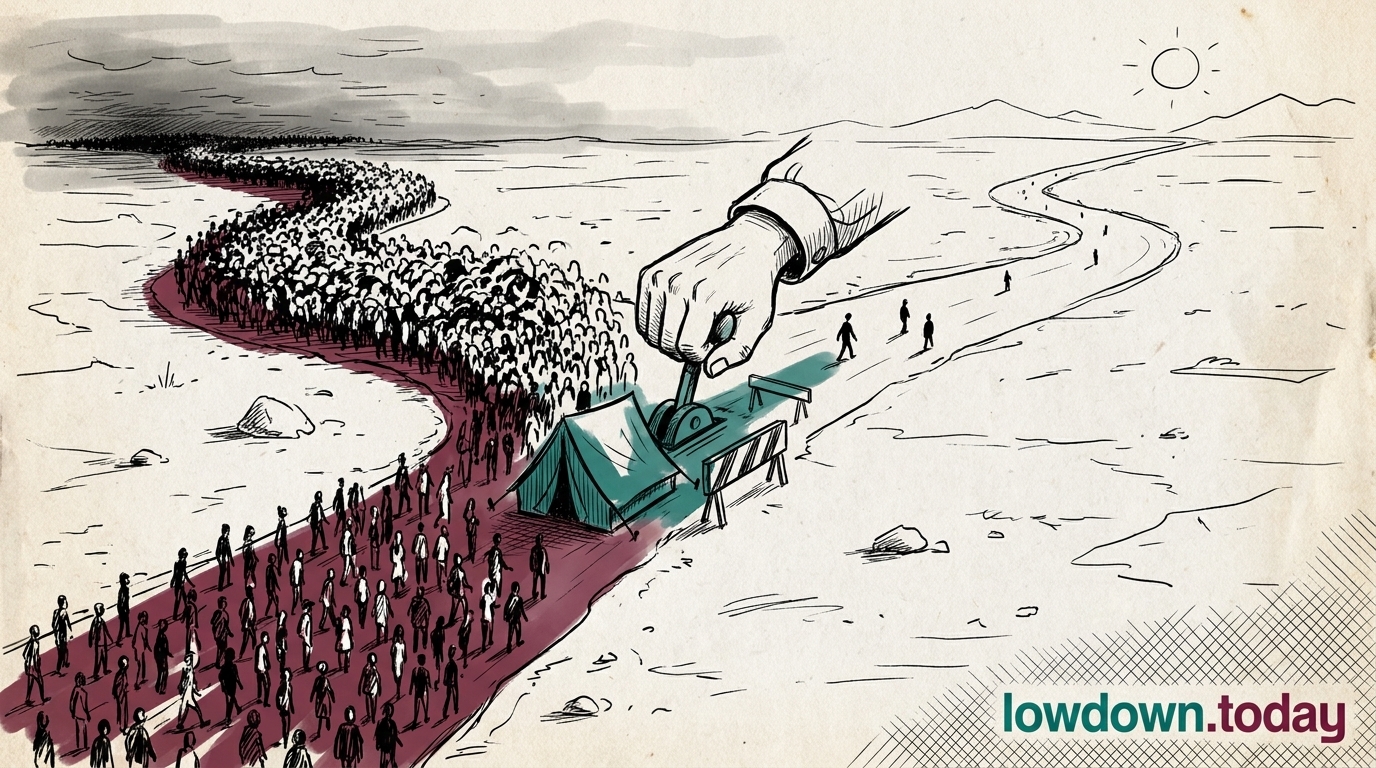
As of WHO's 29 May bulletin, the MBP134 and remdesivir trial, the only experimental Bundibugyo treatment, had still not been authorised to dose a single patient. A new $62 million vaccine coalition needs 12 to 18 months to reach human trials.

ScienceDeveloping
Key takeaway

The only experimental Bundibugyo treatment stayed unauthorised on 29 May; a new vaccine push needs 12 to 18 months.

WHO bulletin DON605 confirmed on 29 May that the MBP134 and remdesivir trial, the only experimental Bundibugyo treatment, had still not been authorised to dose a single patient 1. MBP134 is a monoclonal antibody cocktail, a laboratory-made mix of immune proteins designed to bind the virus; remdesivir is a broad-spectrum antiviral used clinically during COVID-19. No licensed vaccine or treatment exists for this Ebola species at all.

The three approved Ebola products, Ervebo, Inmazeb and Ebanga, all target the Zaire species and give no cross-protection . The MBP134 trial had been awaiting DRC and Uganda regulatory clearance since 20 May , so six people moved from the confirmed-living column to the confirmed-dead column during the eight-day gap. The contrast with eastern DRC in 2018-20 is sharp: that Zaire outbreak at least had Ervebo for ring vaccination, inoculating the contacts of each case to wall the virus off.

STAT News reported on Monday 1 June that a new Coalition will fast-track three Bundibugyo vaccines with $62 million in funding 2. It will not change this outbreak: a vaccine starting now needs 12 to 18 months to reach even early human trials. The countermeasure gap is structural rather than accidental, and the Pandemic Agreement's pathogen-sharing annex that might have funded earlier work was deferred to 2027 .

Deep Analysis

In plain English

When a new disease outbreak happens, doctors need treatments, meaning medicines that can help sick people survive. For this Bundibugyo Ebola outbreak, the only experimental treatment being considered is a combination of two drugs: MBP134, an antibody therapy developed by a company called Mapp Biopharmaceutical, and remdesivir, an antiviral used during COVID-19. The problem is that neither drug has been formally approved for use in DRC or Uganda. Before doctors can give them to patients, the governments of both countries must each run their own review process to confirm the drugs are safe enough to try. That review has been pending since 20 May, and as of 29 May no patient has received either drug. Meanwhile, a separate group announced on 1 June a $62 million effort to develop vaccines specifically for Bundibugyo. But vaccine development takes 12 to 18 months at the fastest, so a vaccine will not be available for this outbreak.

Deep Analysis
Root Causes

The MBP134 approval delay has two structural causes that are independent of the outbreak timeline. First, Bundibugyo ebolavirus had only 169 combined human cases across its entire pre-2026 clinical record (131 in 2007 Uganda, 38 in 2012 DRC). No regulatory agency has ever run an EUA review for a Bundibugyo-specific therapeutic, which means there is no pre-negotiated protocol or precedent the DRC and Uganda DPLM can apply by analogy. The review is, in regulatory terms, a first-draft process.

Second, the WHO Pandemic Agreement's Pathogen Access and Benefit-Sharing (PABS) annex, which was meant to create automatic benefit-sharing obligations (including accelerated regulatory review) when countries share virus samples, was deferred to WHA80 in 2027.

Without PABS in force, there is no binding international obligation on the drug developer or the WHO to share MBP134 data with DRC and Uganda in a format that expedites their national review. The legal architecture that would short-circuit this delay does not yet exist.

What could happen next?
  • Risk

    Every additional week without a licensed or emergency-authorised treatment means all patient care in DRC and Uganda remains limited to supportive therapy: fluids, oral rehydration, and isolation.

  • Precedent

    The MBP134 approval delay is generating institutional pressure for WHO and the Pandemic Fund to negotiate pre-positioned emergency-use frameworks for candidate therapeutics during future PHEIC declarations, as a complement to the unresolved PABS mechanism.

First Reported In

Update #5 · Ebola money arrives, the cure does not

World Health Organization· 2 Jun 2026
Read original
Different Perspectives
World Health Organization
WHO's DON606 recalibration to confirmed-only reporting gives the clean baseline the CDC model rests on, but the apparent fall from 1,040 to 534 carries misinterpretation risk WHO communications have not pre-empted. The PABS deadlock ahead of IGWG7 and continuing MBP134/remdesivir assessment without authorisation make WHO the body most able to accelerate the two decisions that could change the outbreak's trajectory.
European Union (ECDC)
ECDC's Week 23 CDTR tracked four simultaneous non-Ebola signals: the Dermatophilus congolensis novel-transmission cluster across France, Germany and Spain; a 4.2-fold malaria surge in Mayotte; the Salmonella ST2045 multi-country cluster; and two new Saudi MERS cases. The continental early-warning layer is carrying a full multi-pathogen picture while Bundibugyo dominates headlines.
Uganda
Uganda
Uganda's 19 confirmed cases are concentrated in Kampala and Wakiso, an urban cluster that applied the 2022 Sudan-ebolavirus playbook; the Bwera border laboratory shortens cross-border confirmation to same-day. Uganda's regulatory authority must co-sign before MBP134 or remdesivir can dose any patient.
Democratic Republic of the Congo
Kinshasa shares Bundibugyo sequence data in real time with no treaty-guaranteed access to the vaccines that data informs, and its health minister called the US entry ban discriminatory while negotiating an early lift. DRC accounts for 515 of 534 confirmed cases and faces IS-controlled access blockades in Mambasa that health authorities cannot resolve.
United States (HHS/CDC)
HHS expanded the Ebola entry ban to green-card holders on 5 June, widening a restriction expiring around 17 June against WHO advice. The CDC simultaneously published the R0=2.51 modelling, the sharpest analytical contribution to the response, from a federal bench that holds the NIH and acting CDC director roles in one person.
Imperial College London / Cori and Ferguson
Anne Cori and Neil Ferguson place the case-fatality ratio at 30 to 40 per cent and read the 6.8-to-1 suspected-to-confirmed ratio as evidence that the laboratory figure understates true lethality. Many people die before a swab reaches them.