Skip to content
Welcome, thoughtbot's Giant Robots listeners!Start here
Pandemics and Biosecurity
3OCT

IHR committee meets, rejects travel bans

3 min read
13:42UTC

The expert panel Tedros bypassed to declare the emergency faster convened on 19 May and issued recommendations on 22 May: exit screening and tracing, and no travel or trade restrictions.

ScienceDeveloping
Key takeaway

The IHR committee's advice against travel bans is the codified 2014 lesson, not a discretionary preference.

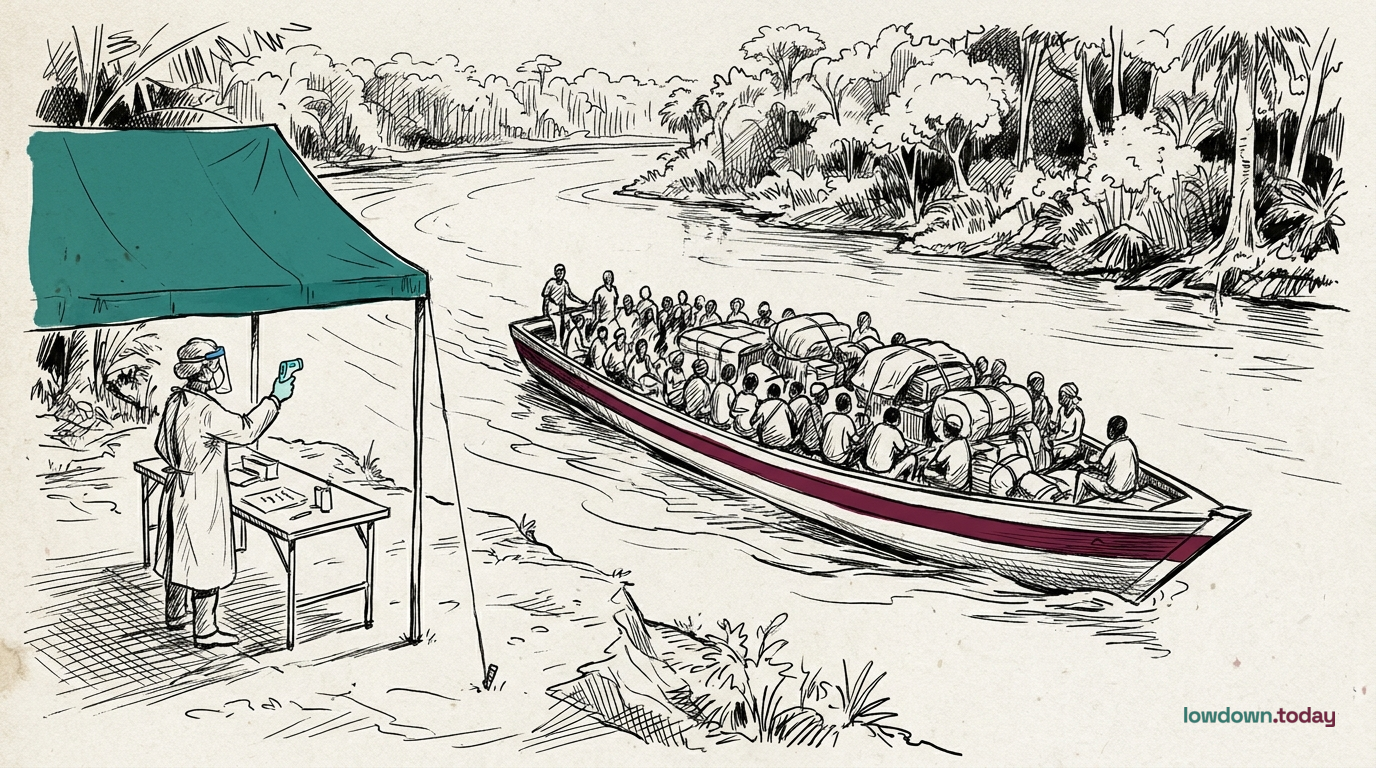
The Emergency Committee under the International Health Regulations (IHR), the binding treaty governing cross-border outbreak response, convened on 19 May⁠1. This is the standing expert panel that Tedros Adhanom Ghebreyesus had bypassed when he declared the Bundibugyo emergency faster than procedure normally allows. Its Temporary Recommendations, issued 22 May, call for exit screening at borders, 21-day contact tracing and safe burials, and explicitly advise against travel or trade restrictions⁠2. The committee confirmed the emergency but stopped short of the higher Pandemic Emergency tier.

The 2005 IHR replaced cordon-style border closures with exit screening at source precisely because the West Africa Ebola response in 2014 showed that bans drive disease underground without stopping it: travellers hide their movements and slip in by other routes. By advising exit screening and against entry bans, the committee is enforcing the rule the regulations were rewritten to encode, not weighing options afresh.

That advice arrives into a contradiction. A 21-day entry ban from a major power was already in force when the recommendations published, which sets the committee's codified guidance directly against a member state's unilateral measure within the same week. The committee can recommend, but the IHR carries no enforcement teeth; its authority rests on reciprocity, the expectation that states follow shared rules because they need others to. When that breaks, the treaty's recommendations become advice a government can read and ignore.

Deep Analysis

In plain English

The IHR Emergency Committee is a panel of international disease experts that normally advises the WHO's director-general before a global health emergency is declared. This time, the WHO chief Tedros declared the emergency first (on 17 May) and only convened the committee afterwards, because the outbreak was growing fast and he had legal authority to act alone. The committee then met on 19 May and issued formal recommendations on 22 May. Those recommendations said countries should screen travellers at borders, trace contacts for three weeks if they have been near a case, and ensure safe burial practices to prevent further spread. The IHR committee explicitly advised against travel or trade bans from affected countries, on the grounds that bans drive affected people to informal crossing points where they cannot be screened. Travel bans push sick people away from official routes.

What could happen next?
  • Precedent

    Tedros's pre-committee PHEIC declaration sets a procedural precedent; future WHO directors-general may face pressure to declare faster in politically contested outbreaks, before the technical committee can provide cover for the decision.

  • Consequence

    The committee's no-travel-restriction advice, issued four days after the US entry ban was imposed, puts the United States formally in violation of IHR Temporary Recommendations with no legal enforcement mechanism to compel compliance.

First Reported In

Update #4 · Ebola triples, response misfires

World Health Organization· 24 May 2026
Read original →
Different Perspectives
IGWG co-chair Tovar da Silva Nunes
The Brazilian co-chair closed the eighth pathogen-sharing session on 18 September without an agreed annex text, the second session in a row to end that way. He presented the outcome as continued commitment, with adoption due at the World Health Assembly in May 2027.
Fraport
Fraport
The Frankfurt Airport operator has told staff to watch for fever, hessenschau reported, after six airport workers caught malaria. Germany does not require insecticide spraying of arriving aircraft cabins, and parasite genotyping to trace the source is due at the end of October.
European Centre for Disease Prevention and Control
ECDC reported the eight Frankfurt Airport malaria cases on 18 September and considers repeated arrivals of infected mosquitoes on aircraft likely. It has not ruled out local mosquitoes, and awaits genotyping due at the end of October.
Pan American Health Organization
PAHO counted 53,957 measles cases in the Americas by 19 September and is supporting Peru's response in Puno and Arequipa. It warns that October's Señor de los Milagros festivities and Pope Leo XIV's November visit could increase transmission.
Bangladesh Directorate General of Health Services
The DGHS recorded 1,030 measles-related deaths and 172,720 suspected cases by 14 September, after a campaign that reached 19.75 million children. Its disease-control director, Halimur Rashid, said further vaccination rounds were expected within two weeks.
Minapharm
Minapharm
The Egyptian drugmaker and its Berlin subsidiary ProBioGen were awarded up to US$16.5m by CEPI on 27 August to take a Bundibugyo vaccine into a Phase 1 trial in Africa. Final manufacture is planned for Cairo, making it CEPI's first Bundibugyo candidate with an African producer.
