IHR amendments
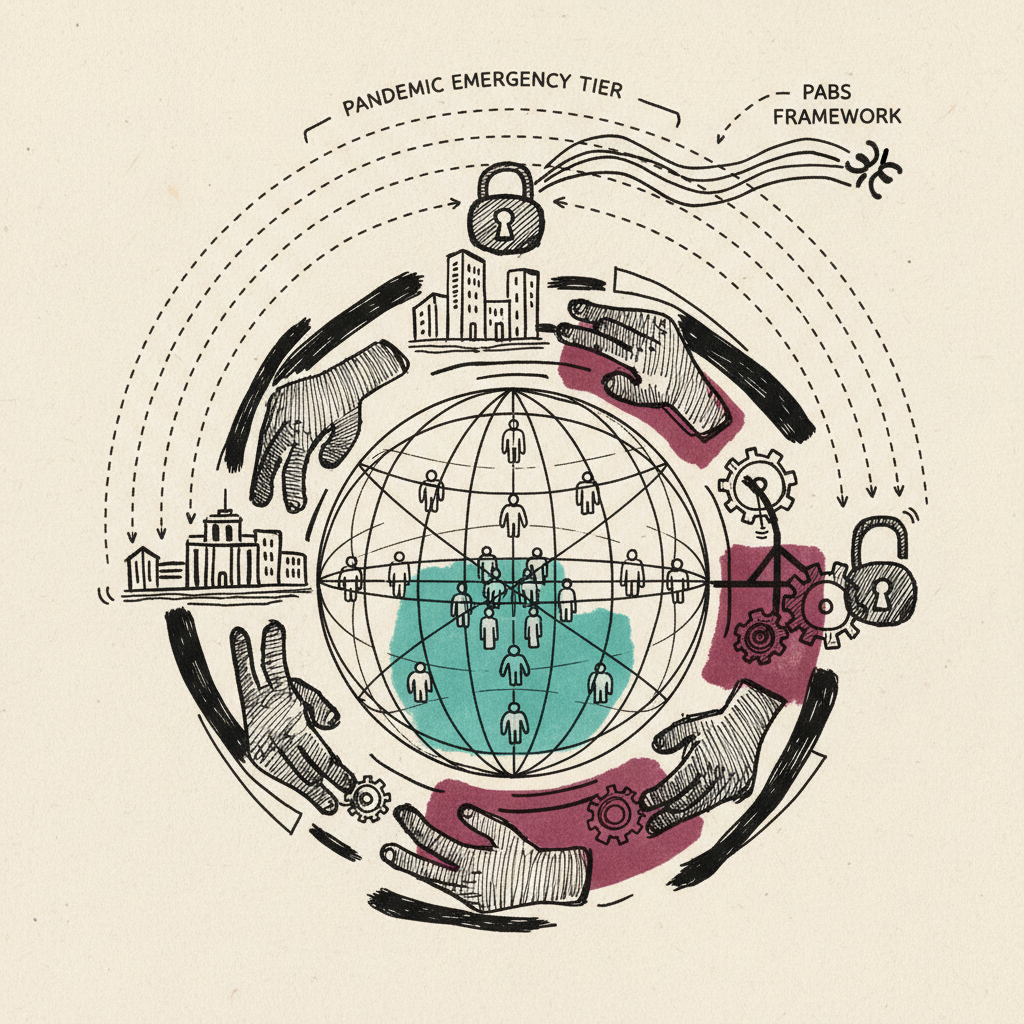
2024 World Health Assembly amendments to IHR (2005); created Pandemic Emergency tier and PABS framework.
Last refreshed: 12 May 2026 · Appears in 1 active topic
Did the 2024 IHR amendments actually change how WHO can respond to the next pandemic?
Timeline for IHR amendments
Mentioned in: IHR committee meets, rejects travel bans
Pandemics and BiosecurityMentioned in: WHO declares Ebola PHEIC, no committee
Pandemics and BiosecurityPandemic Agreement still unsigned after one year
Pandemics and BiosecurityBackground
The IHR amendments refers to the package of amendments to the International Health Regulations (2005) adopted at World Health Assembly 77 (WHA77) in June 2024, the most substantial revision to the IHR since their original adoption. The amendments were developed over three years of negotiation by the Working Group on IHR amendments (WGIHR) and were adopted by consensus by WHO member states. They entered into force in June 2025 after the required ten-month waiting period, with a one-year implementation period. They do not constitute a new treaty but amend an existing one that is already binding on 196 WHO member states.
The key changes introduced by the 2024 amendments include: creation of a new Pandemic Emergency (PE) designation tier, which sits below a full PHEIC but allows WHO to mobilise resources and coordinate responses for emerging threats before they reach PHEIC threshold; establishment of the Pathogen Access and Benefit Sharing (PABS) framework, which creates a multilateral mechanism for sharing pathogen samples and ensuring equitable access to countermeasures (a long-standing demand of the Global South); strengthened provisions for pandemic prevention and preparedness; and new obligations around health workforce surge capacity and critical medical countermeasure stockpiling.
The amendments are politically significant because they resolved the most contentious element of the separate Pandemic Treaty (Pandemic Accord) negotiations that ran in parallel, allowing WHO member states to agree a partial governance Reform even as the full treaty stalled. The PABS framework in particular was a prerequisite for developing-country support.
In the pandemics-and-biosecurity context, the IHR amendments are the regulatory environment in which the May 2026 Andes hantavirus and H5N1 responses are being managed. The PABS framework, whose extension was reported in May 2026 coverage, was directly triggered by the IHR amendment package. The new Pandemic Emergency tier, if activated, would sit below the PHEIC threshold used during COVID-19 and mpox, and represents the most significant change to the WHO emergency architecture since 2005.
What did the 2024 IHR amendments change about WHO's pandemic powers?
When did the 2024 IHR amendments enter into force?
What is the difference between a PHEIC and the new Pandemic Emergency tier?

