Skip to content
You can now search across every topic, entity and event.What's new
Pandemics and Biosecurity
31JUL

USAID outbreak unit gone by PHEIC

3 min read
10:28UTC

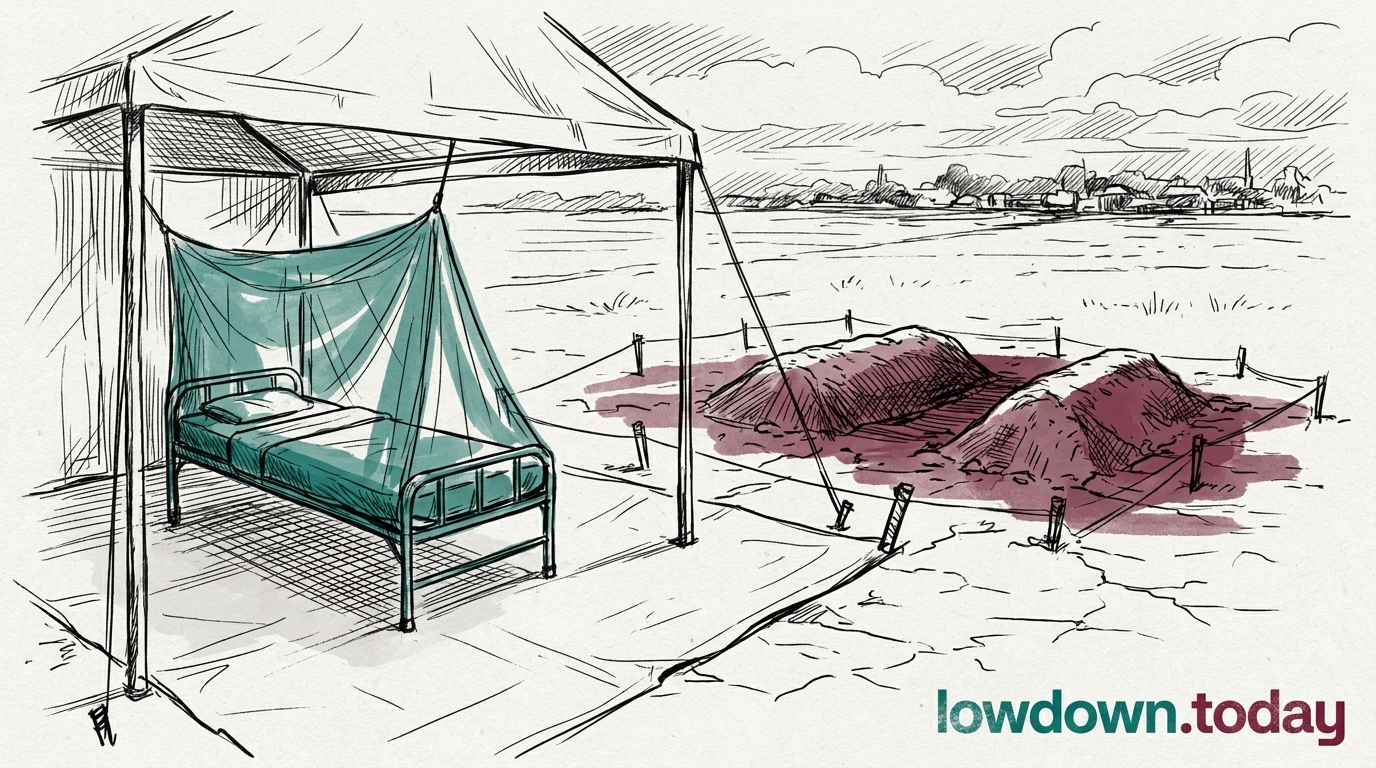
Craig Spencer told a 15 May specialist panel that USAID's outbreak-response unit of roughly 60 staff, including around 10 Ebola specialists, no longer exists in any operational form; US CDC is named as a partner by Africa CDC but absent from WHO AFRO's release.

ScienceDeveloping
Key takeaway

The American surge teams that crushed 2018 Equateur are not in the chain for Bundibugyo 2026.

The 2018 Equateur outbreak in western DR Congo was crushed by Ervebo ring vaccination, Inmazeb and Ebanga inside a clinical trial, and a US response footprint of roughly 90 deployed CDC subject-matter experts backed by US$266 million in USAID assistance for DRC Ebola programmes from 2018 onwards. The 2018 outbreak ended with 54 cases and 33 deaths in three months, controlled by Ervebo vaccination of 3,302 contacts. USAID's outbreak-response capacity was wound down in early 2025. Craig Spencer, the MSF Guinea 2014 veteran now at Brown University, told the same Friday panel that the agency's outbreak unit of "roughly 60 staff, including around 10 Ebola specialists, no longer exists in any operational form" 1.

In 2018, those staff ran contact-tracing convoys out of Mbandaka, ferried Ervebo doses to Iboko and underwrote nine of every ten dollars spent on the DRC response. None of that workflow has a US institutional owner today. Africa CDC's 16 May coordination statement names US CDC as a response partner; the confirmation release from WHO AFRO lists WHO and partners but does not name deployed US CDC personnel 2. The Idaho dairy H5N1 surge to 59 quarantined herds illustrates the simultaneous demand compression on the same federal response apparatus that would otherwise be the partner of record in Bunia and Mongbwalu. Ebola containment runs on logistics before it runs on bedside care; the embedded layer that supplied that logistics in 2018 is the layer that is now absent.


Deep Analysis

In plain English

When Ebola broke out in the DRC's Equateur Province in 2018, the United States sent about 90 disease experts and spent $266 million in aid to help stop it. The outbreak was contained in three months. That team no longer exists. The US foreign aid agency USAID was restructured in 2025, and the Ebola-response unit was one of the casualties. When the Bundibugyo outbreak struck in 2026, the US has far less to offer than it did eight years ago. America is also simultaneously dealing with a bird flu outbreak in Idaho dairy farms {{EVREF:/t/pandemics-and-biosecurity/2/idaho-dairy-h5n1-1-to-59-herds-in-twelve-days/}}, which stretches the same public health budget further.

Deep Analysis
Root Causes

USAID's outbreak-response unit was wound down as part of the second Trump administration's broader USAID restructuring, which began in January 2025 and eliminated roughly 83% of USAID's foreign aid contracts by March 2025. The Global Health Security agenda office, which housed the Ebola-specific staff Craig Spencer documented, was consolidated or eliminated.

The structural root cause predates the current administration: the Global Health Security Act of 2014 (passed after the West Africa Ebola crisis) funded outbreak response capacity but did not mandate permanent staffing levels, meaning the unit could be eliminated by executive action without Congressional approval.

What could happen next?
  • Consequence

    MSF, EU HERA, and UK FCDO bilateral teams now carry a materially larger share of the external response burden than in any Ebola outbreak since 2014.

  • Risk

    CDC is named in Africa CDC's coordination statement but absent from WHO AFRO's operational release, suggesting the agency's field presence is either limited or still being arranged, creating a coordination gap in the early weeks when response decisions matter most.

First Reported In

Update #3 · WHO calls Ebola PHEIC, no treatment exists

Public panel discussion, 15 May 2026· 17 May 2026
Read original
Different Perspectives
Chinese health authorities
China reported three human H9N2 cases to WHO between 10 and 16 July: two four-year-olds recovered, a 44-year-old man remains in intensive care, the first severity signal in a cluster that has produced 173 cases and 2 deaths globally since 2015. The subtype is distinct from the H5N1 series this topic otherwise tracks.
US public health authorities
CIDRAP and Dr Andrew Racine, president of the American Academy of Pediatrics, call 2026's 2,318 confirmed measles cases by 24 July the worst year since 1991's 2,126. Zero deaths against three in 2025 and a 7% hospitalisation rate, down from 11%, show record case counts have not brought record severity.
CEPI
CEPI
CEPI put an rVSV-platform vaccine candidate specific to Bundibugyo ebolavirus into trial-production on 31 July, developed by Hilleman Laboratories with MSD manufacturing and IAVI's reference virus, funded up to $8.5m. Eleven weeks into the third-largest Ebola outbreak on record, this is the first species-matched candidate; the licensed vaccine covers only Zaire ebolavirus.
Médecins Sans Frontières
MSF reports sexual-violence care in Ituri is almost non-existent, with 7 of 14 health centres closed or relocated by fighting, as Panzi Hospital logs 646 new survivors in six months, an 85% rise. Withdrawn US funding for post-exposure prophylaxis has left clinics across three provinces without PEP kits for months, a crisis running alongside Ebola, not caused by it.
DRC health workers at Elikya Ebola Treatment Centre
Staff at DRC's Elikya Ebola Treatment Centre walked out on 25 July over unpaid wages, the second such action after Rwampara, while unconfirmed suspects occupy up to 64% of the country's isolation beds awaiting lab results. Workers are absorbing a response that has grown faster than its payroll and its labs.
Uganda's Ministry of Health
Uganda's ministry says it discharged its last confirmed patient on 16 June, completed every contact's 21-day follow-up, and declared the country Ebola-free on 28 July, exactly 42 days later. It names Hon. Dr Chris Baryomunsi, Minister of Health, as overseeing a 20-case, 2-death outbreak it now considers closed.