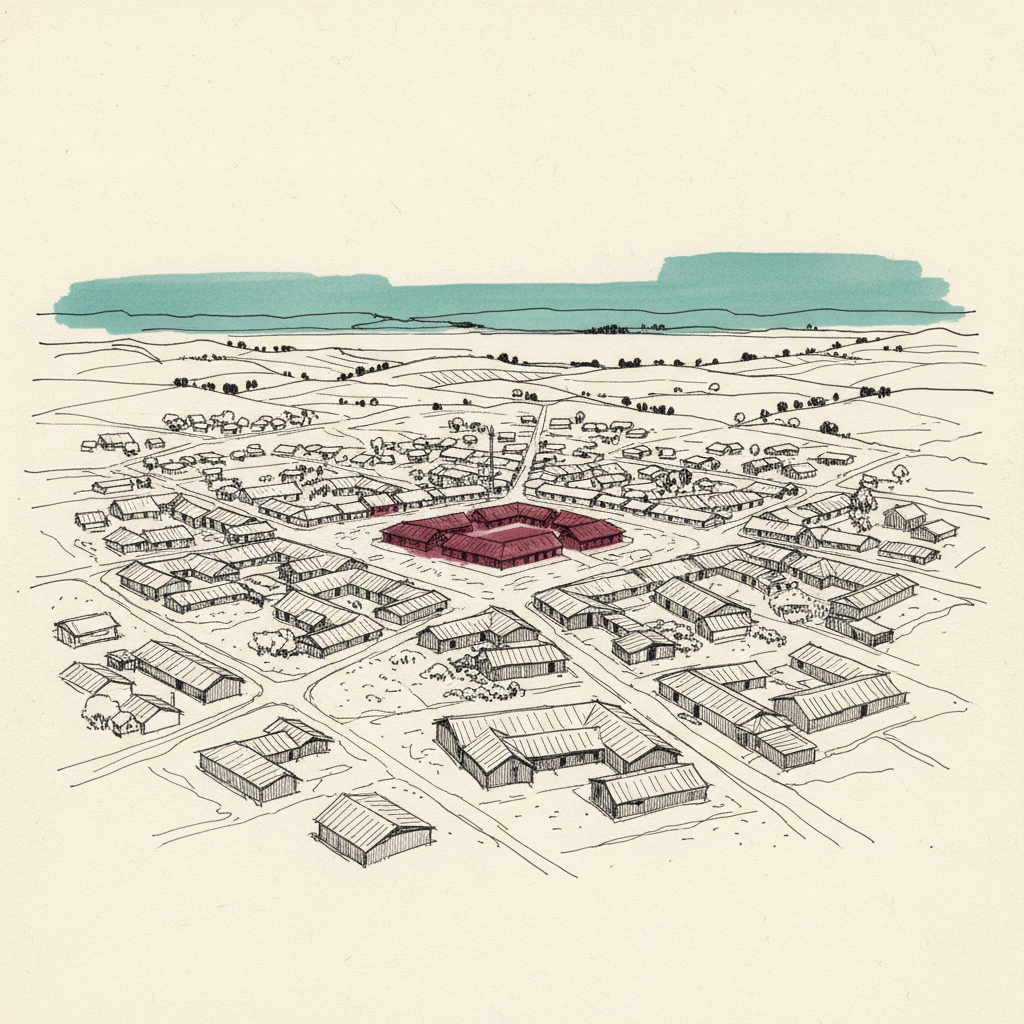
Bunia
Ituri Province capital; ~150,000 population; one of three health zones with active Bundibugyo transmission.
Staff at Bunia's Rwampara Ebola Treatment Centre abandoned an isolation ward on 13 July and burned tyres at the gate over unpaid hazard pay, the first of two Ituri centres to strike within a fortnight.
Last refreshed: 31 July 2026 · Appears in 1 active topic
How does Bunia's security crisis complicate the Ebola response in Ituri Province?
Timeline for Bunia
Mentioned in: Ebola beds sit empty in the epicentre
Pandemics and BiosecurityMentioned in: A second Ebola centre walks out on pay
Pandemics and BiosecurityHosted the 18 July press conference on the pay dispute
Pandemics and Biosecurity: Ebola staff abandon a Bunia wardA third Ebola case leaves Africa
Pandemics and BiosecurityMentioned in: Unpaid Ituri health workers walk off
Pandemics and BiosecurityBackground
Bunia is the administrative capital of Ituri Province in north-eastern DR Congo, with a population of roughly 150,000. The city sits at the intersection of the province's governance, commerce and humanitarian logistics, hosting the provincial government and the main hub international organisations use to operate across eastern DRC; reaching it from Kinshasa requires a long overland journey or air transport, which slows any rapid surge deployment.
Bunia has been shaped by decades of ethnic and armed-group conflict in Ituri: the 2003 Ituri conflict displaced hundreds of thousands, and subsequent ADF activity has kept humanitarian access constrained since. During the 2018-20 Kivu epidemic of Zaire ebolavirus, the largest Ebola outbreak in DRC's history, Bunia served only as a logistics relay point rather than a transmission zone.
That changed in May 2026, when Bunia was confirmed as one of three Ituri health zones with active transmission of Bundibugyo ebolavirus, a different species with no licensed vaccine or treatment. Bunia hospital produced the outbreak's first named DRC survivors in June, and by July the city had also become a departure point for international medevac cases, giving it a dual role as the response's operational hub and its point of international exposure.
Staff abandon a Bunia isolation ward
Staff at the Rwampara Ebola Treatment Centre in Bunia abandoned an isolation ward from 13 July, burning tyres at the gate in a strike over unpaid salaries and bonuses; officials pledged five days later to validate personnel lists and digitise payment.
The walkout followed an earlier strain on the city's health workforce: Africa CDC counted 34 healthcare workers infected nationally as of 10 June, including four nurses WHO recovered and were discharged from Bunia hospital, the outbreak's first named survivors from a DRC treatment facility.