Skip to content
You can now search across every topic, entity and event.What's new
Pandemics and Biosecurity
31JUL

US renews 30-day Ebola entry ban

3 min read
10:28UTC

The US CDC issued a fresh 30-day entry ban on DRC, Uganda and South Sudan nationals on 21 June, renewing a lapsed restriction that the WHO emergency committee still opposes.

ScienceDeveloping
Key takeaway

A nationality-based entry ban renewed monthly leaves untouched the returning citizens who carry the real importation risk.

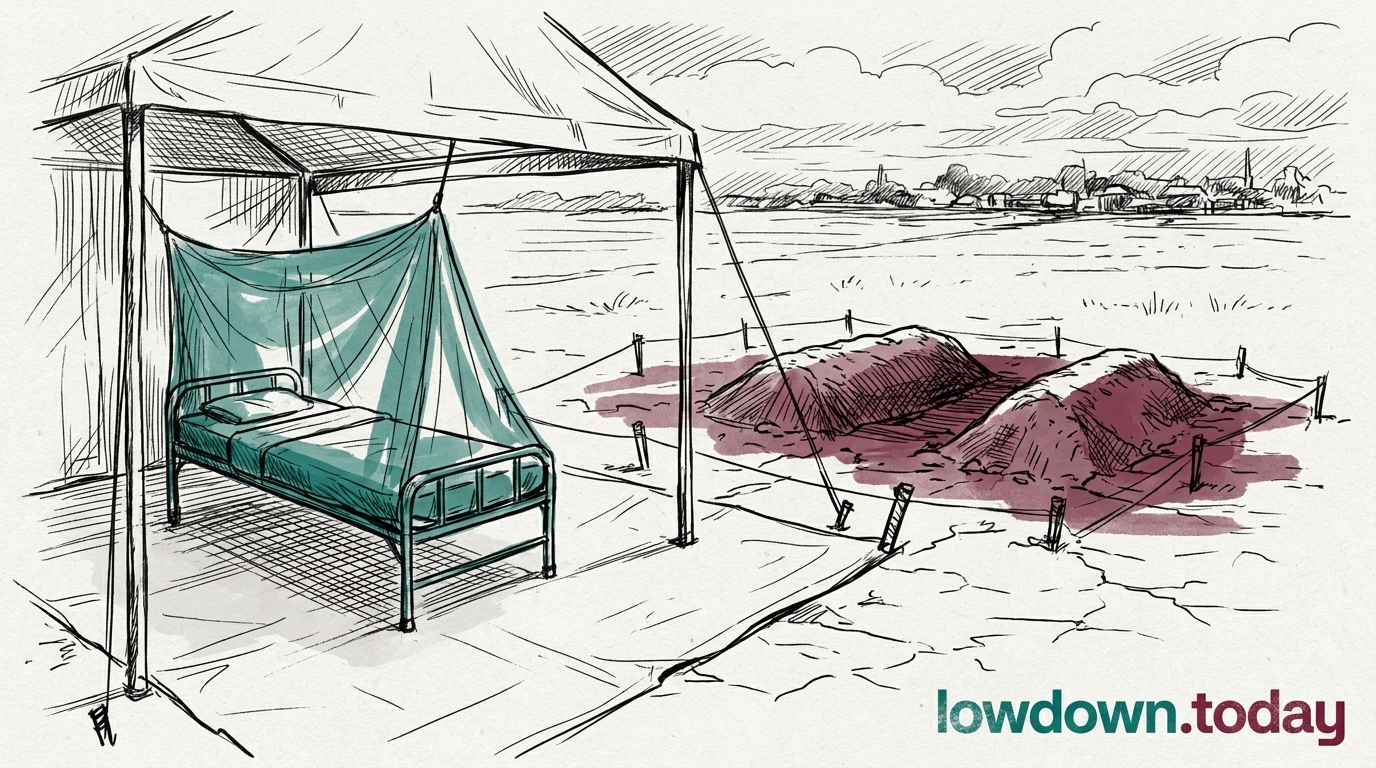
The US Centers for Disease Control and Prevention (CDC) issued a new 30-day entry ban on 21 June covering nationals of DR Congo, Uganda and South Sudan 1. The order renewed a restriction that had lapsed around 17 June without resolution. The CDC is the United States federal public-health agency; an entry ban of this kind bars foreign nationals of the named countries from boarding US-bound flights, with an expiry that forces a renewal decision roughly every month.

This is the third turn of a ratchet. The measure began as the initial 18 May ban , widened to green-card holders on 5 June , and reached its 17 June expiry unresolved before this renewal . Each cycle has expanded the population covered or reset the clock rather than tied the restriction to any epidemiological trigger, such as a fall in the Bundibugyo ebolavirus case count or a drop in cross-border movement.

The World Health Organization (WHO) emergency committee continues to advise against travel restrictions of any kind, holding that they displace rather than reduce risk and discourage honest reporting by affected states. The structural weakness in the order showed within days. The first Ebola case to reach Europe arrived in a French citizen the ban does not cover, because it screens by nationality, not by where a traveller has actually been. The next expiry falls around 21 July, when Washington must decide whether to lift, renew again, or face a challenge to a measure whose own design left the real import route open.

Deep Analysis

In plain English

Since May, the United States has been banning certain travellers from coming into the country because of the Ebola outbreak. The ban covers people from DR Congo, Uganda, and South Sudan. On 21 June, the CDC, America's public health agency, renewed that ban for another 30 days after the first version expired. The World Health Organization (WHO) has advised countries not to impose these kinds of travel bans, because the evidence from past outbreaks shows they do not stop the virus from reaching other countries and can make things worse by discouraging people from reporting symptoms. The France case three days later showed why: the person who brought Ebola to France was a French doctor, not someone from DR Congo, Uganda or South Sudan, so the US ban would not have stopped them. South Sudan does not even have any confirmed Ebola cases.

Deep Analysis
Root Causes

IHR Article 43 grants member states the right to exceed WHO recommendations, provided they notify WHO with scientific justification within 48 hours; WHO has no enforcement authority to compel compliance. The CDC's Article 43 notification filed with WHO for the 18 May order has not been publicly disclosed, nor has WHO's formal response.

The domestic political context is also structurally important: the US Department of Health and Human Services under the current administration has taken a systematically more restrictive posture on inbound travel from outbreak zones, and the CDC's public justification language mirrors the administration's wider immigration-adjacent policy framing rather than the epidemiological case.

The entry ban extends to South Sudan, which has no confirmed Bundibugyo cases: a geographic overreach that WHO noted in its DON608 risk assessment.

Escalation

The renewal signals a US posture that will hold through 21 July 2026 regardless of interim evidence.

The France importation, which occurred three days after the renewal, gives Washington a counter-argument that import risk is real, while giving WHO and EU counterparts a concrete example that nationality-based restrictions miss the actual import population.

What could happen next?
  • Risk

    Nationality-based bans may delay healthcare worker deployment from DRC, Uganda and South Sudan diaspora communities who carry clinical expertise, compounding the response capacity gap.

    Immediate · Assessed
  • Precedent

    The US ban's second renewal within a PHEIC cycle weakens the WHO Temporary Recommendation framework as a coordination instrument for future emergencies.

    Medium term · Assessed
  • Consequence

    The France importation undermines the ban's deterrence rationale but is unlikely to trigger a reversal before the 21 July expiry, given the domestic political context.

    Short term · Reported
First Reported In

Update #8 · Ebola reaches France through a screening blind spot

Al Jazeera· 25 Jun 2026
Read original
Different Perspectives
Chinese health authorities
China reported three human H9N2 cases to WHO between 10 and 16 July: two four-year-olds recovered, a 44-year-old man remains in intensive care, the first severity signal in a cluster that has produced 173 cases and 2 deaths globally since 2015. The subtype is distinct from the H5N1 series this topic otherwise tracks.
US public health authorities
CIDRAP and Dr Andrew Racine, president of the American Academy of Pediatrics, call 2026's 2,318 confirmed measles cases by 24 July the worst year since 1991's 2,126. Zero deaths against three in 2025 and a 7% hospitalisation rate, down from 11%, show record case counts have not brought record severity.
CEPI
CEPI
CEPI put an rVSV-platform vaccine candidate specific to Bundibugyo ebolavirus into trial-production on 31 July, developed by Hilleman Laboratories with MSD manufacturing and IAVI's reference virus, funded up to $8.5m. Eleven weeks into the third-largest Ebola outbreak on record, this is the first species-matched candidate; the licensed vaccine covers only Zaire ebolavirus.
Médecins Sans Frontières
MSF reports sexual-violence care in Ituri is almost non-existent, with 7 of 14 health centres closed or relocated by fighting, as Panzi Hospital logs 646 new survivors in six months, an 85% rise. Withdrawn US funding for post-exposure prophylaxis has left clinics across three provinces without PEP kits for months, a crisis running alongside Ebola, not caused by it.
DRC health workers at Elikya Ebola Treatment Centre
Staff at DRC's Elikya Ebola Treatment Centre walked out on 25 July over unpaid wages, the second such action after Rwampara, while unconfirmed suspects occupy up to 64% of the country's isolation beds awaiting lab results. Workers are absorbing a response that has grown faster than its payroll and its labs.
Uganda's Ministry of Health
Uganda's ministry says it discharged its last confirmed patient on 16 June, completed every contact's 21-day follow-up, and declared the country Ebola-free on 28 July, exactly 42 days later. It names Hon. Dr Chris Baryomunsi, Minister of Health, as overseeing a 20-case, 2-death outbreak it now considers closed.