Skip to content
Welcome, thoughtbot's Giant Robots listeners!Start here
Pandemics and Biosecurity
21JUL

WHO counts 695 cases as Ebola climbs

3 min read
09:12UTC

WHO Disease Outbreak News 607 logged 695 confirmed Bundibugyo Ebola cases and 138 deaths across DRC and Uganda on 13 June, a 30 percent rise in five days. Contact tracing has surged past 70 percent; patient isolation has not.

ScienceDeveloping
Key takeaway

Bundibugyo Ebola has reached 695 confirmed cases, the largest outbreak ever recorded for this species.

WHO Disease Outbreak News 607, published 13 June, counted 695 confirmed Bundibugyo Ebola cases and 138 deaths across the Democratic Republic of the Congo and Uganda, a rise of 30 percent in five days from the 534 confirmed at DON606⁠1. Bundibugyo is one of six Ebola species, and this is the largest outbreak ever recorded for it. The World Health Organization, the United Nations health agency that tracks outbreaks worldwide, publishes the Disease Outbreak News series as its authoritative case log.

The confirmed case-fatality ratio, the share of laboratory-confirmed cases that end in death, sits at 20.1 percent in DRC, roughly one in five. The outbreak now spans 29 health zones across three provinces: Ituri, North Kivu and South Kivu. Contact tracing, the work of finding and watching everyone a patient has been near, has climbed to 71.4 percent in Ituri, 71 percent in North Kivu and 83.5 percent in South Kivu, up from the 20 percent baseline in the CDC reproduction-number model that named one variable as the outbreak's fork.

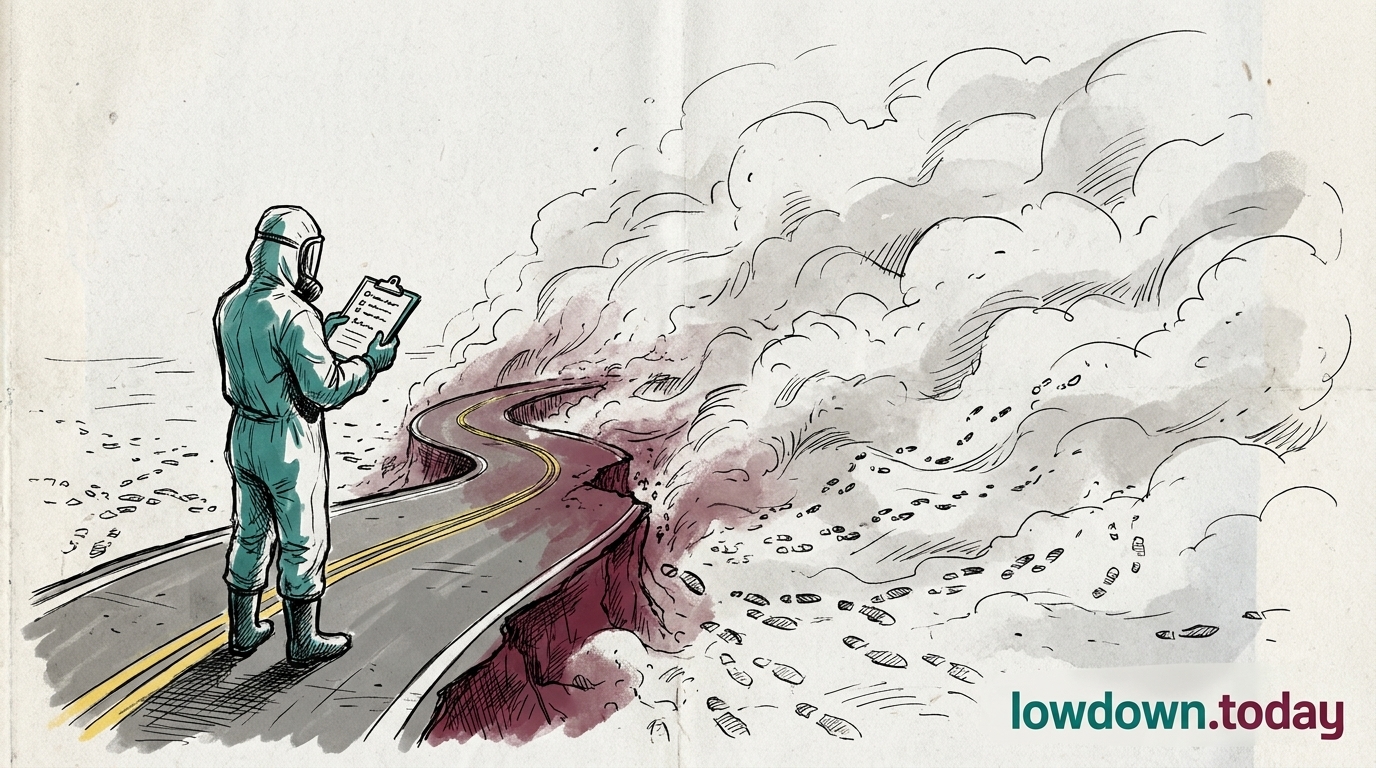
Tracing tells responders where the virus might travel next, but it does not stop a sick person infecting others. That depends on isolation in a treatment bed, and isolation has not kept pace. The 71 to 83 percent tracing gain is real and hard-won; the figure that decides whether the outbreak peaks or runs is the slower one underneath it.


Deep Analysis

In plain English

Ebola is a severe illness that causes fever and, in many cases, internal and external bleeding. This particular type, Bundibugyo ebolavirus, has killed about one in five confirmed patients in this outbreak. Doctors in DRC have no approved drug or vaccine to treat it; care means isolation, fluids, and monitoring. WHO reported 695 confirmed cases by 13 June. The cases are spread across 29 health zones, which means teams have to track and isolate contacts in many different communities at once. Contact tracing, finding everyone who came near a sick person, is working reasonably well, above 70 percent in all three affected provinces. But only 46 percent of confirmed patients have made it into an isolation unit, and that is the number that most directly prevents further spread.

Deep Analysis
Root Causes

Bundibugyo ebolavirus has no licensed vaccine, treatment, or rapid diagnostic test, a countermeasure gap named explicitly in the WHO R&D Blueprint Filovirus roadmap three months before this outbreak. This structural absence means every confirmed case management decision rests on supportive care alone until the treatment trial yields data.

Ituri Province's contested governance creates a compounding constraint. Gold mining drives continual cross-border population movement between DRC, Uganda and South Sudan, while ADF insurgency activity and CODECO militia operations restrict community-health workers' access to a significant share of the outbreak zone. Contact tracing at 71 percent is not reachable everywhere; in Mambasa health zone under Islamic State-affiliated control it is effectively zero.

Escalation

Geographic and caseload escalation is confirmed. The jump from 534 confirmed (DON606, 8 June) to 695 (DON607, 13 June) in five days is the fastest absolute growth rate recorded since the PHEIC declaration. Cross-border spread into Uganda is established with onward transmission in Kampala and Wakiso. The trajectory continues upward unless patient isolation rates rise materially.

What could happen next?
  • Risk

    At the current 45.9 percent isolation rate, the CDC model projects a 65 percent probability of 20,000 cases by August; this risk window remains open while isolation lags behind tracing.

    Short term · Assessed
  • Consequence

    Cross-border spread into Uganda, 19 confirmed cases with five from onward transmission in Kampala, establishes a second transmission chain in a capital city, requiring parallel response infrastructure.

    Immediate · Assessed
  • Risk

    Ituri's conflict-zone insecurity and M23-linked territories continue to hold a zero-tracing subset within the outbreak zone, creating unobserved transmission that is invisible to the DON607 figures.

    Medium term · Reported
First Reported In

Update #7 · Bundibugyo's fork stays open

World Health Organization· 16 Jun 2026
Read original →
Different Perspectives
Pan American Health Organization
PAHO warned on 20 October that El Niño is set to intensify as the dengue season begins, and issued a regional screwworm alert on 16 October. It wants veterinary and human health workers reporting into one surveillance system.
UK Health Security Agency
UKHSA links three Salmonella Enteritidis clusters to imported eggs and has two large importers under investigation without naming either. Its sequencing led the Food Standards Agency to recall eggs from Kyiv producer Yasensvit.
ECDC
ECDC
ECDC says Europe's West Nile season affected a broader area than any before and calls Germany's first local Sindbis virus case not unexpected, since the virus was already found in German mosquitoes and birds. It cautions that missing clade data limit how far Europe's clade I mpox rise can be read.
Ghana Ministry of Health
Health Minister Kwabena Mintah Akandoh declared a yellow fever outbreak in the Upper West Region after a Dakar laboratory confirmed three cases, all of whom died. Ghana plans an emergency vaccination campaign in three districts this month.
Government of Côte d'Ivoire
Spokesperson Amadou Coulibaly reported 23 yellow fever cases and 11 deaths in Bounkani on 14 October and said the country holds more than 400,000 vaccine doses. He did not say how many cases were laboratory-confirmed, which leaves the outbreak's true size unclear.
World Health Organization
WHO says no cause has been found for the Irkutsk technician's death and a laboratory-associated exposure cannot be fully excluded. Tedros Adhanom Ghebreyesus urged states to finish the pathogen-sharing annex that holds the Pandemic Agreement back from signature.

Written with AI from Lowdown's published reporting. Not individually reviewed by an editor. Editorial standards.
