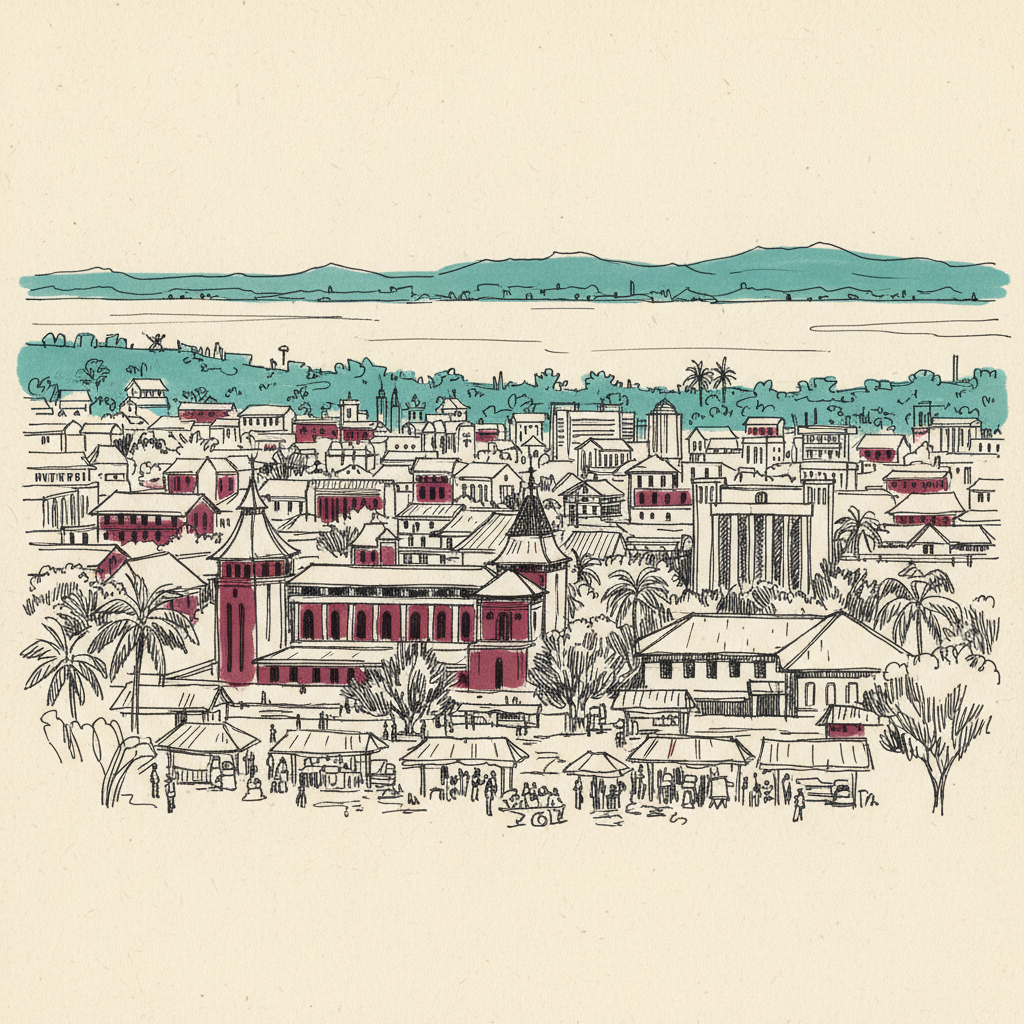
Kampala
Uganda's capital city, now a confirmed Bundibugyo Ebola cluster site alongside Wakiso District.
Uganda discharged its last confirmed Bundibugyo Ebola patient from Mulago National Referral Hospital in Kampala on 16 July, closing a 20-case, two-death cluster centred on the capital and opening a 42-day countdown to declaring the outbreak over.
Last refreshed: 31 July 2026 · Appears in 1 active topic
How many confirmed Ebola cases has Kampala recorded and why does it matter?
Timeline for Kampala
Mentioned in: CEPI awards Minapharm US$16.5m for Ebola
Pandemics and BiosecurityHeld the hospital where the countdown began
Pandemics and Biosecurity: WHO calls Uganda's Ebola outbreak overUganda calls its Ebola outbreak over
Pandemics and BiosecurityUganda discharges its last Ebola patient, starts 42-day clock
Pandemics and BiosecurityMentioned in: Nine of twelve Djugu posts shut
Pandemics and BiosecurityBackground
Kampala is Uganda's capital and largest city, home to approximately 1.7 million people and situated on a series of hills along the northern shore of Lake Victoria; its metropolitan population exceeds 3 million once Wakiso District's peri-urban ring is included. It serves as the country's political, commercial and transport hub, hosting The National Parliament and the main international airport at Entebbe, 41km to the south.
Founded as a royal capital of The Kingdom of Buganda, the city grew substantially under British colonial administration from the late 19th century Onward and is today one of East Africa's fastest-growing cities and a regional hub for humanitarian and public-health operations.
Kampala's dense transport networks and international connectivity make it a critical node in any regional outbreak response. Its hospitals, including Kibuli Muslim Hospital and Mulago National Referral Hospital, carry the primary burden of tertiary clinical care for Uganda, and its laboratory infrastructure anchors the country's disease surveillance system, a role demonstrated when Kibuli admitted Uganda's index Bundibugyo Ebola patient.
Kampala's Ebola cluster reaches closure
Kampala's index case, a 59-year-old Congolese national, died at Kibuli Muslim Hospital on 14 May, and by 29 May confirmed cases in the capital and neighbouring Wakiso District had risen from two to nine, evidence of local transmission rather than a single import.
Uganda discharged its last confirmed patient from Mulago National Referral Hospital in Kampala on 16 July, after two negative tests, closing a cluster that finished at 20 cases and 2 deaths and opening a 42-day countdown toward declaring the outbreak over around 27 August; a single new case imported from DR Congo would have reset the clock.
Kampala's Ebola cluster reaches closure
Is Uganda's Ebola outbreak over?
How many Ebola cases have been confirmed in Kampala?
Is it safe to travel to Kampala during the Ebola outbreak?
Where was Uganda's first Ebola patient treated in 2026?
Reference
Why does an Ebola case in Kampala concern public health authorities more than a rural case?

Written with AI from Lowdown's published reporting. Not individually reviewed by an editor. Updated 31 July 2026. Editorial standards.