Skip to content
Welcome, thoughtbot's Giant Robots listeners!Start here
Media's AI Pivot
7SEP

Publishers bill AI £500 a piece

3 min read
12:32UTC

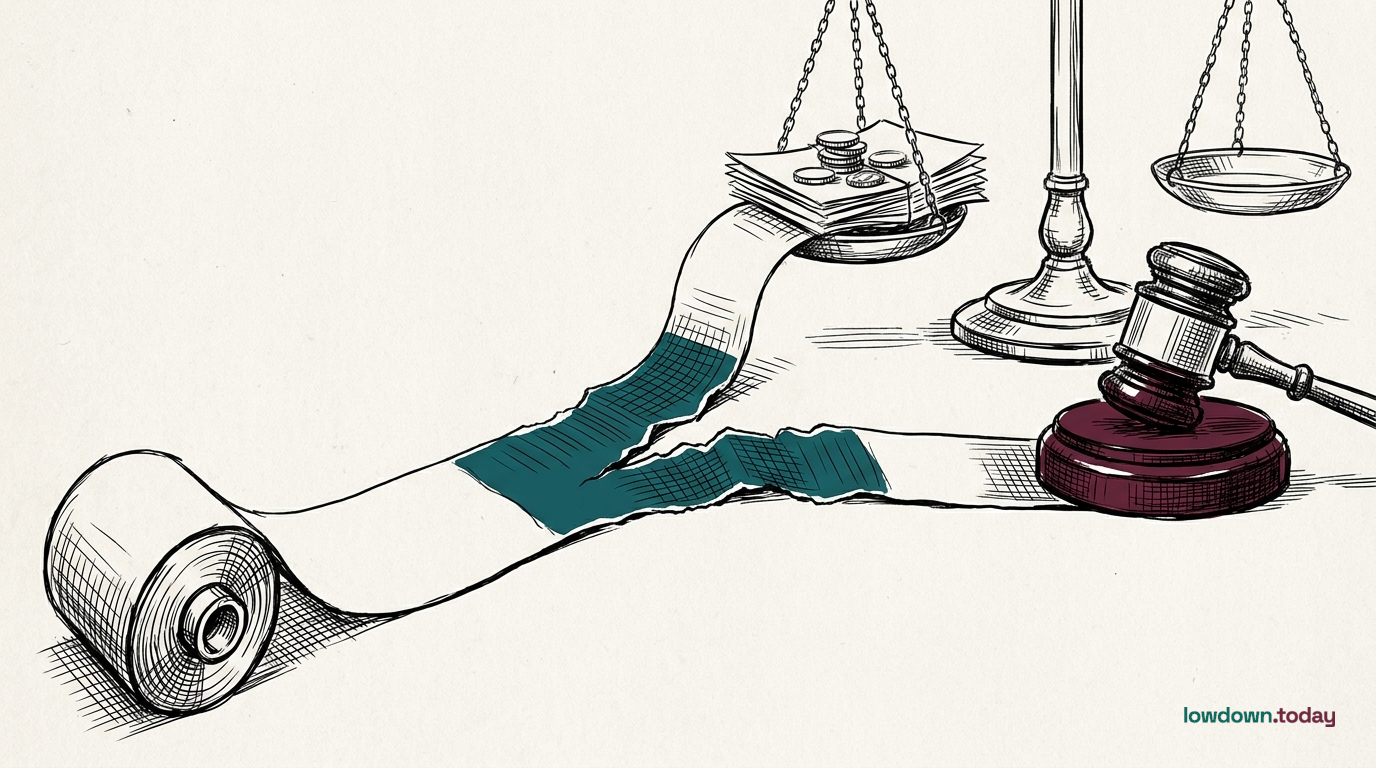
The Movement for an Open Web signed 31 UK publisher sites to contracts charging AI crawlers £500 per scraped article, enforced through small-claims court rather than copyright law.

IndustryDeveloping
Key takeaway

Thirty-one UK publishers will invoice AI scrapers £500 an article and chase non-payers through small-claims court.

The Movement for an Open Web (MOW), a UK publisher advocacy group, launched Search-Only Contracts on Monday 15 June with 31 founding publisher sites, among them Trusted Reviews (Candr Media), road.cc and ebiketips.co.uk (F-At)⁠1. Each contract adds a clause to the site's terms and conditions and its robots.txt, the file that tells web crawlers which pages they may copy, charging £500 per article scraped without permission. MOW named OpenAI's ChatGPT, Google Gemini and Claude as the targets.

MOW built the enforcement route to give the charge teeth. Rather than bring a copyright case, which needs specialist counsel and deep pockets, a publisher files through the county-court Moneyclaim service for a filing fee of about £50 and represents itself in small claims⁠2. MOW co-founder Tim Cowan, a lawyer, has turned scraping into a small-debt collection problem rather than an intellectual-property fight. A model trained on a thousand articles from one site now carries a £500,000 invoice that does not require a barrister to lodge.

News Corp expects an unspecified HarperCollins share of the $1.5bn Bartz class fund; MOW instead proposes a per-article charge for access to news sites. The class fund cannot be treated as News Corp's individual payout or compared directly with that charge. The mechanism is untested in court, and whether judges uphold the terms-and-conditions charge against an AI firm that disputes it remains unproven.

Deep Analysis

In plain English

When you read an article online, AI companies such as OpenAI, Google and Anthropic send automated programs called crawlers to copy that article into their training databases or use it to answer questions directly. Publishers do not get paid for this copying. The Movement for an Open Web, a UK publisher group, launched a scheme on 15 June that lets any publisher add a clause to their website's terms saying: if an AI crawler copies my articles without permission, it owes me £500 per article. To collect that money, publishers can use an online court service called Moneyclaim, which costs about £50 to file and does not require a lawyer. The first 31 sites to sign up include Trusted Reviews and road.cc.

Deep Analysis
Root Causes

The £500 per-article rate emerges from a specific legal design choice: English small-claims jurisdiction tops out at £10,000, making county-court self-representation viable for batches of up to 20 articles per filing. Tim Cowan's design converts what would otherwise be a high-cost IP litigation matter into a consumer-debt collection problem.

Prior publisher-licensing deals, including the News Corp anticipated Anthropic settlement and Reach plc's pay-per-usage AWS arrangement, all required publishers to initiate formal negotiations or class-action participation. The MOW scheme inverts that: it creates individual publisher rights any site operator can exercise without joining a coalition, reducing the collective-action barriers that have stalled larger licensing attempts.

What could happen next?
  • Opportunity

    Small publishers that cannot afford IP litigation now have a low-cost enforcement route against AI scrapers; if even 1% of 31,000 UK publisher sites adopt the scheme, the potential liability exposure for AI companies scales to hundreds of millions of pounds annually.

    Medium term · Assessed
  • Risk

    US-incorporated AI companies may contest English court jurisdiction and T&C contract formation, stalling enforcement before a single county-court judgement is obtained.

    Short term · Assessed
  • Precedent

    If a county-court Moneyclaim judgement is obtained against an AI company, it becomes the first court-determined per-article price for AI scraping in any English-language jurisdiction, creating a valuation anchor for licensing negotiations globally.

    Medium term · Assessed
First Reported In

Update #6 · Fox buys Roku's data layer for $22bn

Press Gazette· 17 Jun 2026
Read original →
Causes and effects
This Event
Publishers bill AI £500 a piece
The scheme turns scraping from a contested copyright question into an uncontested small debt any junior can lodge without a barrister.
Different Perspectives
Publicis Groupe
Publicis Groupe
Publicis Groupe credited AI demand for its Connected Media growth in the 13 October third-quarter release, reporting net revenue of €3,808m, up 5.0% organically. It named no AI product, so investors get the AI claim without a product to measure it against.
Educational Broadcasting System
Educational Broadcasting System premiered EBS AI Literature Theatre on 16 October, remaking 11 Korean literary classics with generative AI. Korea's public education broadcaster puts AI-made drama on air under its own name, while the BBC's director-general said he 'got in trouble' for praising an AI Doctor Who episode.
Hakuhodo
Hakuhodo
Hakuhodo began selling its in-house Image Similarity Checker on 19 October, scoring AI-generated ad creative against similar images on the web and logging who checked what. The Japanese agency is selling the compliance step around generative advertising and leaves the legal judgment with its clients.
Lisa Nandy
Lisa Nandy
Nandy told Sky on 15 October she is minded to issue a public interest intervention notice on its purchase of ITV's Media and Entertainment business, on four grounds including news plurality. She notes Comcast's Sky News undertakings expire in December 2028 and do not cover ITV News or ITN, in which Sky would take a 20% stake.
Australian Broadcasting Corporation
The Australian Broadcasting Corporation asked Parliament's AI committee to extend the News Bargaining Incentive to AI firms and hold them to the copyright, defamation and privacy rules news outlets follow. With SBS telling the same committee that robots.txt is routinely ignored, the public broadcasters are contesting the opt-out Anthropic proposed.
Editorial Perfil
Editorial Perfil
Perfil reported on 14 October that Civil Court No. 57 kept its damages suit against OpenAI and Microsoft out of the federal courts, and it wants a pre-trial inspection of their California servers. Its lawyer says Microsoft Argentina came to mediation without a serious offer, and Perfil seeks payment rather than takedowns.

Written with AI from Lowdown's published reporting. Not individually reviewed by an editor. Editorial standards.
