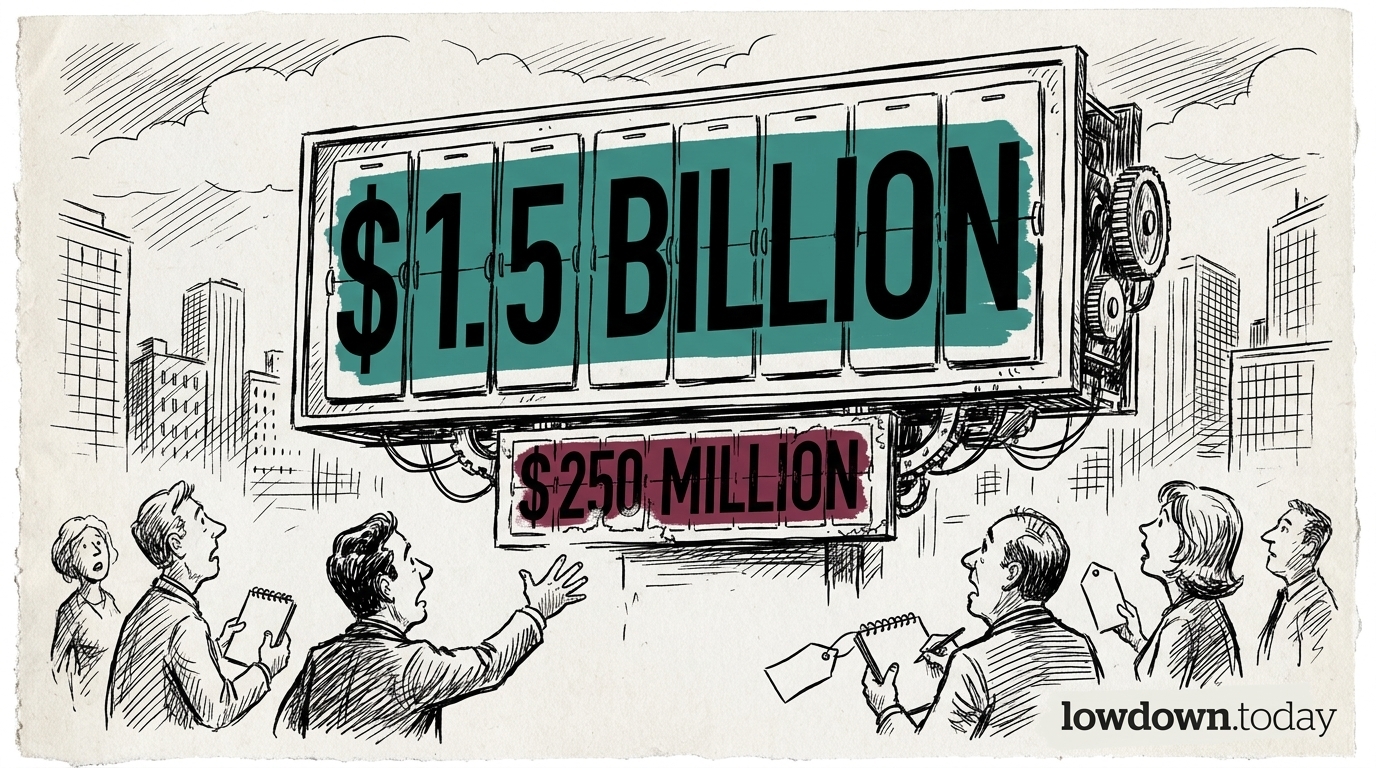
Reach plc, owner of the Daily Mirror, Daily Express and more than 100 UK regional titles, disclosed in its April 2026 trading update that it had agreed an AI content licensing deal with Amazon Web Services structured on a pay-per-usage model rather than a lump sum1. The same statement disclosed active discussions with several other tech platforms on similar terms, alongside Q1 group revenue down 6.9% and digital revenue down 8.1% year-on-year2.
This is the structural counter to the News Corp template. Reach reaches roughly 35 million UK monthly readers across the Mirror, Express and the regional network, but carries no $1.5bn-class litigation exposure and a mid-tier balance sheet that cannot extract a one-off windfall. Pay-per-usage scales down rather than up: small payments, prospective rather than retrospective, paid against measured query volume into Amazon's Rufus assistant and adjacent products. The CJL April 2026 mapping put comparable AI licensing deals on the same scale, with DotDash Meredith at $16m a year from OpenAI, Thomson Reuters at $33m year-to-date, and Amazon paying The New York Times roughly $20m a year3.
The model is structurally identical to the early ad-network rev-share deals that built the open programmatic web in the late 2000s, and which subsequently disintermediated those same publishers as platform integration deepened. Revenue tracks query volume rather than damages, which makes Reach's upside contingent on Amazon's product trajectory: if Rufus and adjacent surfaces grow share, Reach's revenue scales with them; if they stall, Reach is exposed to platform-side risk it does not control. The CFO disclosure of "active discussions with several other tech platforms" on similar terms suggests Reach is hedging that platform risk by spreading across counterparties before any one of them locks the rate card.
Pay-per-usage is the only template available to most of the long tail outside News Corp's tier. Reach cannot bring a $1.5bn case the way News Corp can, and Microsoft's Publisher Content Marketplace, launched February 2026, takes a 15-50% broker cut that mid-tier publishers can avoid by negotiating direct usage terms. Whether usage-based revenue offsets the 8.1% digital revenue decline disclosed in the same statement will only be testable when Reach's H1 2026 numbers land. The first publicly itemised pay-per-usage line in a published-company set of accounts will set the floor for every subsequent mid-tier negotiation in Europe.




