Search-Only Contracts
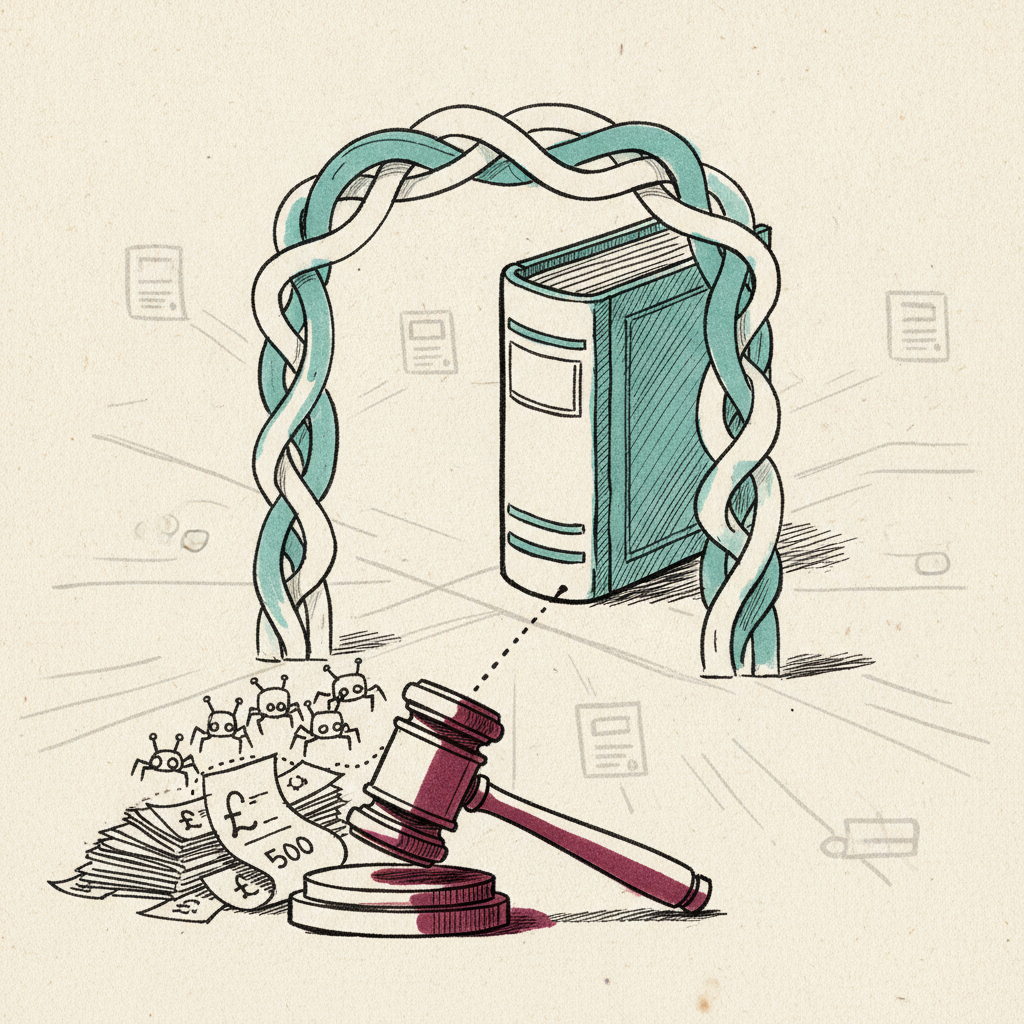
Search-Only Contracts charge AI crawlers £500 per scraped article via small-claims court enforcement.
Last refreshed: 17 June 2026
Is a £500 per-article small-claims threat enough to make AI companies pay publishers?
Timeline for Search-Only Contracts
Publishers bill AI £500 a piece
Media's AI PivotBackground
Search-Only Contracts are a legal mechanism developed by the Movement for an Open Web (MOW), a UK publisher advocacy group, and launched on 15 June 2026. Each contract adds a clause to a participating publisher website's terms and conditions and robots.txt file, charging £500 per article scraped by an AI crawler without the publisher's permission. The contracts target AI search crawlers specifically, distinguishing them from general web indexers. Enforcement runs through the UK county-court Moneyclaim small-claims service, which can be initiated by the publisher for a filing fee of approximately £50 without specialist intellectual property counsel, treating each article as a quantified, claimable small debt.
The mechanism is designed to operate at scale across small publishers who cannot afford IP litigation against well-resourced AI companies. It is predicated on crawler identification: without knowing which company's crawler took an article, the publisher cannot issue an invoice. New York State bill A11292, passed on 5 June 2026, requires AI crawlers to disclose their identity under penalty of $15,000 per day, providing the identification layer the MOW contracts require to function.
Search-Only Contracts represent a third model for publisher monetisation of AI training data, distinct from individual licensing deals (News Corp, AP, The Atlantic) and from litigation (The New York Times vs OpenAI). The £500 per-article figure is set below the threshold that would require IP counsel to enforce, and above the threshold at which a named AI company would find ignoring the invoice strategically comfortable.