Skip to content
Briefings are running a touch slower this week while we rebuild the foundations.See roadmap
Iran Conflict 2026
16MAY

OFAC ships paper, Trump signs Cuba

3 min read
12:41UTC

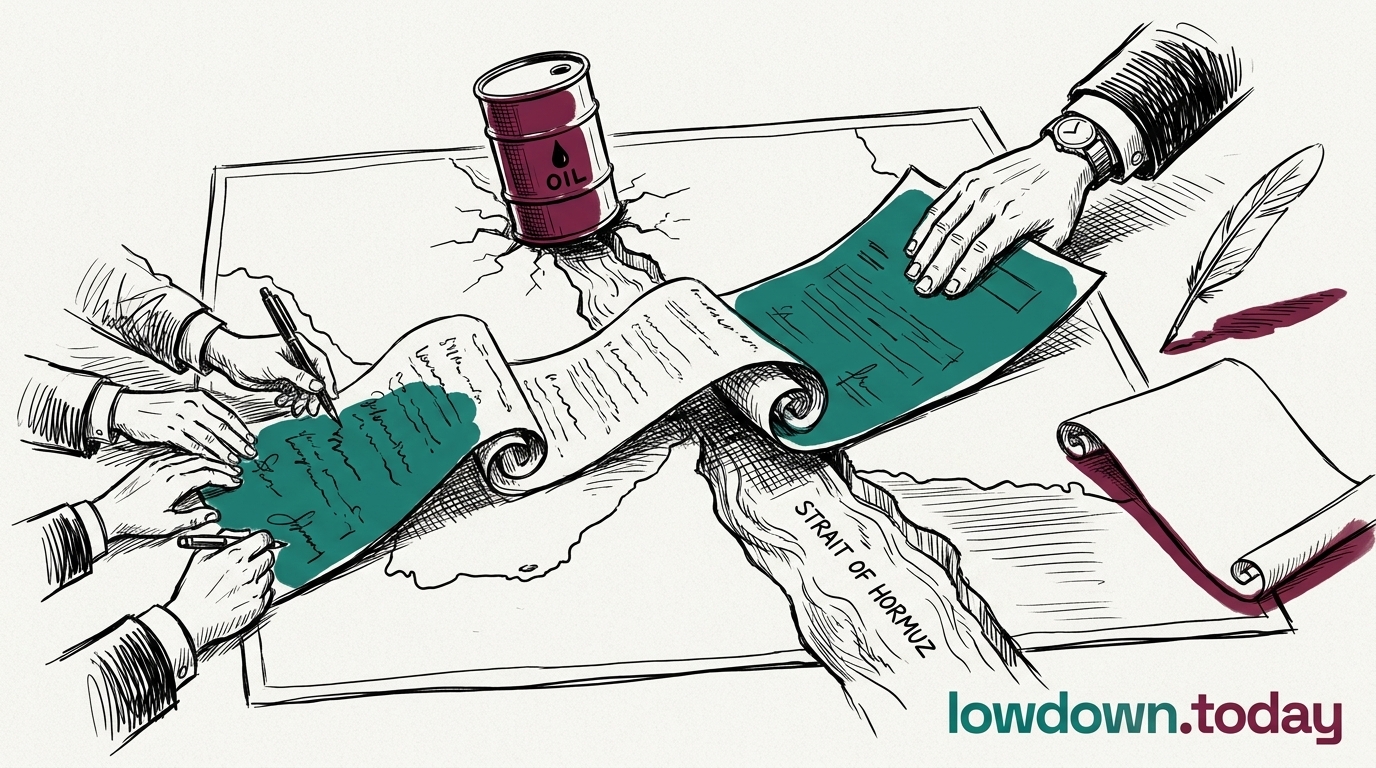
OFAC issued General License W and designated three Iranian foreign-exchange houses including Radin Exchange under SB0483 on 1 May; the only executive order Donald Trump signed that day was on Cuba.

ConflictDeveloping
Key takeaway

Treasury and Defense filed Iran instruments while the President's only signature this weekend was on Cuba.

OFAC issued General License W on 1 May, authorising wind-down transactions for newly blocked persons, and the same day published bulletin SB0483 designating three Iranian foreign-exchange houses, including Radin Exchange, under Executive Order 13902 1. Executive Order 13902 is the standing US authority that targets Iran's financial sector; SB0483 names the desks moving currency out of Tehran on behalf of sanctioned entities. GL-W is the procedural counterpart, defining the legal off-ramp for any foreign counterparty unwinding exposure to the new designations. The two instruments extend the Iran enforcement track Treasury opened the previous week and now overlap with the Chinese Blocking Rules contest set out in event 0.

The Department of War added paper of its own. Secretary Pete Hegseth's WPR letters to House Speaker Mike Johnson and Senator Chuck Grassley, declaring hostilities terminated as of 7 April , landed alongside the FY27 posture filing already on the record . The Maritime Freedom Construct sits inside the same enforcement basket , as set out for event 4, and Iran's fourth ceasefire text arrived through Islamabad's mediation channel the same day. Four cabinet departments shipped Iran-related instruments inside the same 48 hours.

The White House presidential-actions index records one executive order from Donald Trump on 1 May: Cuba sanctions 2. Cabinet-level instruments carry the President's delegated authority but commit none of his personal political capital, whereas a signed presidential order locks both. Treasury and Defense paper this weekend tells allied governments how the United States is enforcing on Iran; the Cuba order is what the President was prepared to put his name to. Lisa Murkowski's 11 May AUMF deadline, the Authorisation for Use of Military Force she has conditioned on four named criteria , is the next forcing function on that gap. If she files, Congress will have written more on Iran than the President has; if the White House heads it off with a 'credible plan' that lands on paper, the asymmetry visible this weekend will shift.

Deep Analysis

In plain English

The US Treasury's sanctions office issued two routine measures on 1 May: a wind-down licence for companies newly caught by sanctions, and a list of three Iranian money-exchange businesses now blocked from the US financial system, including one called Radin Exchange. None of this required Donald Trump to sign anything. It runs on an automatic basis under authority he granted in 2020. The White House signed only a Cuba-related order that day. In 65 days of the Iran conflict, Trump has signed no Iran-specific executive orders, meaning the war's entire legal architecture rests on sub-presidential instruments and on standing orders from his first term.

Deep Analysis
Root Causes

OFAC's GL-W and SB0483 operate under E.O. 13902, signed by Trump in 2020, which pre-authorises OFAC to designate Iranian financial facilitators without a case-specific presidential instrument.

The cabinet departments are not operating outside presidential authority; they are operating under delegated authority from a prior executive order that requires no fresh signature. Trump's zero Day-65 Iran instrument count therefore reflects the breadth of existing delegations, not a vacuum of legal authority.

The FX house designations (Radin Exchange and two others) under SB0483 continue the shadow-banking disruption track that OFAC has maintained weekly since the war began, degrading the financial architecture through which Iranian oil revenues convert to usable currency for war expenditure.

What could happen next?
  • Risk

    Senator Murkowski's 11 May AUMF filing deadline (ID:2980) creates the first scenario in 65 days where the Iran war's legal architecture could acquire a congressional instrument independent of OFAC mechanical action; a veto or signing both constitute the first presidential Iran document of the conflict.

  • Consequence

    MOFCOM's 2 May Blocking Rules activation directly contests the OFAC SB0483 enforcement track: Chinese FX intermediaries between the designated Iranian exchanges and dollar-rail clearing now face competing legal obligations under US and Chinese law simultaneously.

First Reported In

Update #87 · China blocks OFAC; Iran writes; Trump tweets

The White House· 3 May 2026
Read original
Different Perspectives
India (BRICS meeting host, grey-market beneficiary)
New Delhi hosted the BRICS foreign ministers' meeting on 14 May that Araghchi attended under the Minab168 designation, giving India a front-row seat to Iran's diplomatic positioning. India's state refiners have been absorbing discounted Iranian crude through grey-market routing since April; Brent at $109.30 means every barrel sourced outside the formal market generates a structural saving.
Hengaw / Kurdish human rights monitors
Hengaw's daily reports from Iran's Kurdish provinces remain the sole independent cross-check on Iran's judicial activity during the conflict. Two executions across Qom and Karaj Central prisons on 15 May and five Kurdish detentions on 15-16 May indicate the wartime judicial pipeline is operating independently of military tempo.
Pakistan (mediator and bilateral partner)
Islamabad spent its diplomatic capital as the US-Iran MOU carrier to secure LNG passage for two Qatari vessels through a bilateral Pakistan-Iran agreement, spending its mediation credit for direct economic gain. China's public endorsement of Pakistan's mediatory role on 13 May is the structural reward.
China and BRICS bloc
Beijing endorsed Pakistan's mediatory role on 13 May, one day after the BRICS foreign ministers' meeting in New Delhi. Chinese state banks are processing PGSA yuan toll payments; China has not commented on its vessels' continued Hormuz passage, but benefits structurally from a non-dollar toll system it did not design.
Iraq (bilateral passage partner)
Baghdad negotiated a 2-million-barrel VLCC transit without paying PGSA yuan tolls, offering political alignment in lieu of cash. Iraq's position inside Iran's adjacent bloc makes it the natural first bilateral partner and a template for how Tehran structures passage deals with states that cannot afford Western coalition membership.
Bahrain and Qatar (Gulf signatories)
Both signed the Western coalition paper while hosting US Fifth Fleet and CENTCOM's Al Udeid base, respectively. Qatar occupies the sharpest contradiction: it is on coalition paper while simultaneously receiving LNG passage through the bilateral Iran-Pakistan track, a position Doha has tacitly accepted from both sides.