Skip to content
Briefings are running a touch slower this week while we rebuild the foundations.See roadmap
Iran Conflict 2026
11MAY

US diesel tops $5 a gallon, up 34%

3 min read
14:01UTC

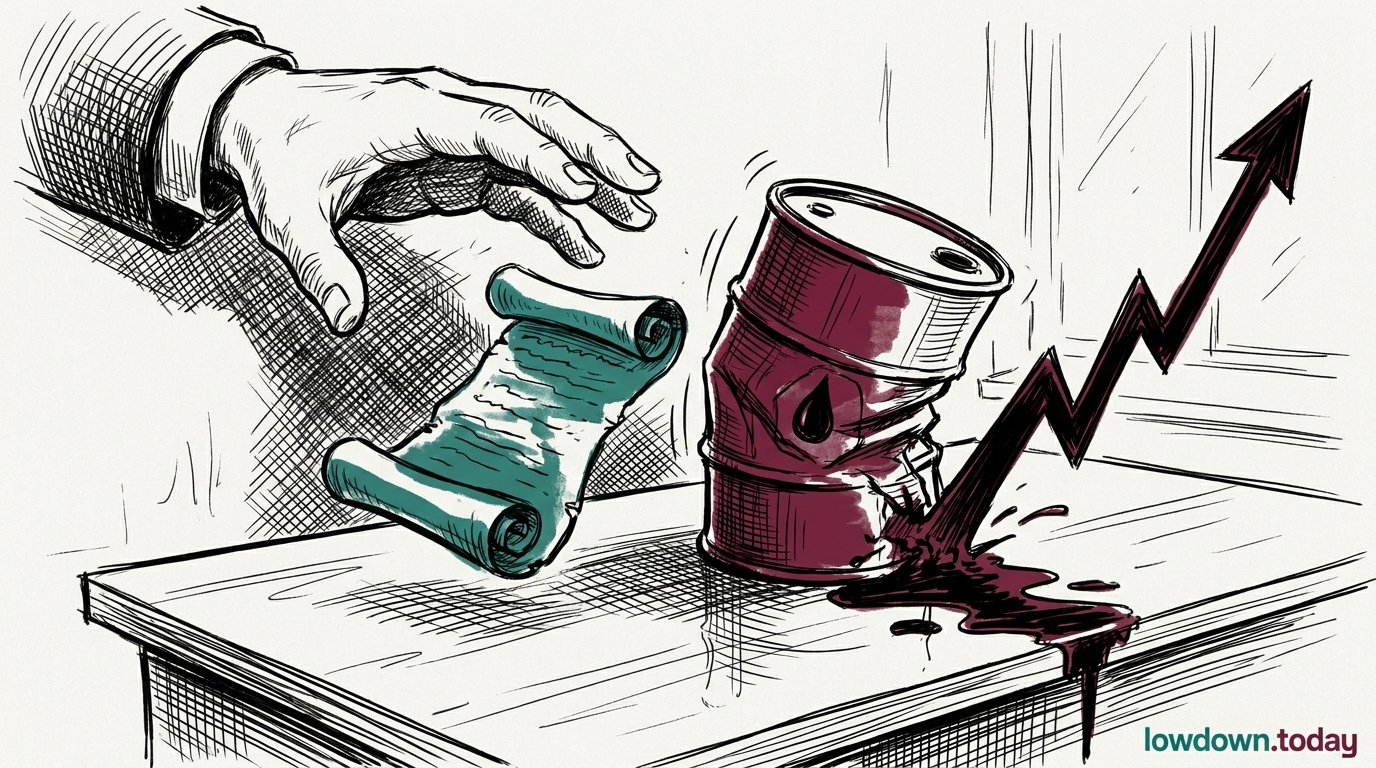
US diesel has jumped 34% since 28 February and petrol is at its highest since October 2023, translating a distant conflict into a cost every American driver can read on the pump sign.

ConflictDeveloping
Key takeaway

Diesel at $5 activates trucking surcharge tiers that feed consumer price inflation within weeks.

US diesel topped $5 per gallon on 17 March — up 34% since the war began on 28 February 1. Petrol averaged $3.79 per gallon, a 27% increase and the highest price since October 2023. Brent Crude closed at $100.21, down from the previous Friday's $103.14 but still 49% above the pre-war baseline of $67.41.

The Brent pullback from its war-high of $106.18 on 15 March has not reached consumer fuel prices, which typically lag crude by one to two weeks. Diesel's steeper rise — 34% against petrol's 27% — reflects the fuel's sensitivity to supply disruptions: middle distillate markets tighten faster when refining and export capacity is removed from the system. The IEA declared this the largest supply disruption in the history of the global oil market , with Gulf production down at least 10 million barrels per day.

The projections compound the current pain. Chatham House assessed that if the conflict persists for months, Brent could reach $130 and the Eurozone would 'probably' contract in Q2 2. CSIS calculated Operation Epic Fury costs nearly $900 million per day 3. The IISS characterised the conflict as at risk of becoming a 'battle of endurance' 4. Trump told NBC that Iran is ready for a deal but 'the terms aren't good enough yet' 5 — a position that faces a daily test at $5 diesel, with Deutsche Bank and Oxford Economics already warning of Stagflation in the second and third quarters .

Deep Analysis

In plain English

Diesel is the fuel of the economy's logistics arteries — it powers the lorries delivering groceries, the trains moving industrial goods, and the farm equipment harvesting crops. When diesel rises 34% in 18 days, those costs don't stay at truck stops. Freight carriers apply automatic fuel surcharges that pass costs to retailers, who pass them to shoppers. The lag between a diesel spike and grocery price increases is typically four to eight weeks. Petrol matters to household budgets, but diesel is the more economically contagious price because it enters the cost of nearly every physical good before it reaches a consumer.

Deep Analysis
Synthesis

Brent falling from $103.14 to $100.21 in one week while US pump prices remain at record post-2023 levels indicates refinery margin capture and regional product supply bottlenecks — not simple crude cost pass-through. This divergence matters because diplomatic progress on Hormuz alone will not immediately reduce US pump prices; the supply chain dislocation has created secondary pricing dynamics that persist even when crude settles.

Root Causes

US Strategic Petroleum Reserve stocks entered this conflict at multi-decade lows following sustained drawdowns in 2021–2022, reducing the government's primary buffer tool. Domestic refinery capacity remains below pre-COVID peak, limiting the ability to translate increased crude output into product price relief at the pump.

What could happen next?
  • Consequence

    Freight surcharge activation will translate diesel prices into broader consumer goods inflation within four to eight weeks, disproportionately affecting lower-income households.

    Short term · Assessed
  • Risk

    Strategic Petroleum Reserve depletion limits the administration's ability to use reserve releases as a price-dampening tool, as deployed effectively in 2022.

    Immediate · Assessed
  • Consequence

    Sustained $100+ Brent will likely delay Federal Reserve rate-cut expectations, tightening financial conditions at a moment of rising economic stress.

    Short term · Suggested
  • Risk

    If Fujairah bunkering disruption persists, delivered-fuel costs will decouple from Brent spot price, making diplomatic solutions slower to reach consumers at the pump.

    Medium term · Suggested
First Reported In

Update #40 · Larijani dead; Israel hunts the new leader

CNBC· 18 Mar 2026
Read original
Causes and effects
This Event
US diesel tops $5 a gallon, up 34%
Fuel prices are the most politically immediate channel through which the Iran war reaches American voters. With Brent still 49% above pre-war levels, think tanks projecting $130 oil if the conflict persists, and Trump rejecting daily off-ramp options, the war's domestic sustainability is now measurable at every petrol station and freight terminal in the country.
Different Perspectives
Israel
Israel
Israeli strikes on Hezbollah positions in Lebanon continued through the weekend, maintaining the secondary front. The IDF has publicly named Mojtaba Khamenei as an assassination target; his courier-governance mode complicates targeting but does not remove him from the order.
Russia
Russia
Putin told a Moscow press conference that Washington, not Tehran or Moscow, killed the Russia-custody uranium arrangement by demanding US-territory-only storage. Neither Tehran nor Washington has corroborated the account, which appeared in second-tier outlets only, consistent with a trial balloon rather than a formal position.
United Kingdom
United Kingdom
HMS Dragon was redeployed from the Eastern Mediterranean to the Middle East on 9 May, the first physical European platform commitment to the Gulf. The Ministry of Defence called it "prudent planning" while publishing no rules of engagement, no tasking order, and no vessel name, committing a named asset to a conflict zone before the political instrument authorising it exists.
United Arab Emirates
UAE air defences intercepted two Iranian drones over its territory on 10 May, a kinetic escalation six days after the Fujairah oil terminal strike that drew no formal protest. The three-state simultaneous operation, not the severity of individual strikes, appears to have crossed the threshold at which the GCC states collectively began responding.
Saudi Arabia
Saudi Arabia
Riyadh issued the first formal Gulf-state protest of the conflict on 10 May, demanding an "immediate halt to blatant attacks on territories and territorial waters of Gulf states", ending 10 weeks of channelling displeasure through OPEC+ quota discussions. The protest forecloses Saudi Arabia's preferred quiet-channel role and reduces the functioning back-channel architecture to Pakistan alone.
Qatar
Qatar
Doha is simultaneously a strike target, the site of the Safesea Neha attack 23 nautical miles offshore, and an active MOU mediator: Qatar's prime minister met Rubio and Vance in Washington the same weekend. Whether Qatar issues its own formal protest or maintains its dual role is the critical escalation indicator for the week of 11 May.