Skip to content
Briefings are running a touch slower this week while we rebuild the foundations.See roadmap
Iran Conflict 2026
11MAY

Europe gas up 54%; Asian LNG surges 39%

3 min read
14:01UTC

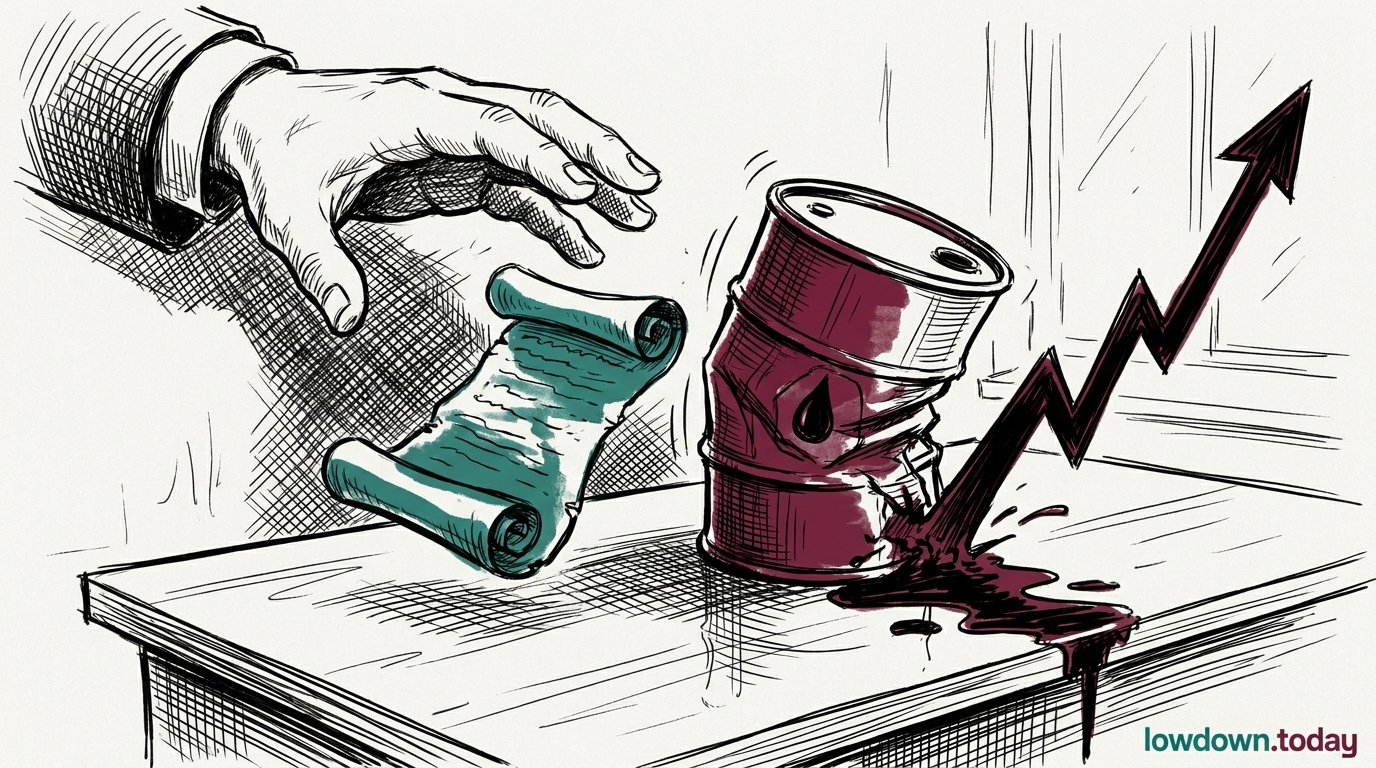
European gas prices surged 45–54% within hours as the supply chain the EU spent four years building to replace Russian pipeline gas came under direct Iranian fire.

ConflictDeveloping
Key takeaway

Europe's post-2022 energy diversification away from Russia succeeded in eliminating political-supply risk but inadvertently concentrated new physical-security risk in a single conflict theatre, and Monday's price moves are the market pricing that structural vulnerability for the first time.

European gas prices surged 45–54% within hours of QatarEnergy's shutdown announcement. Asian LNG spot prices rose 39%. Oil climbed 13% intraday, pushing Brent above $82 per barrel — up from the $73 level that prevailed before the first strikes and extending the rally that had already taken crude to $85–90 .

The European price spike has a specific structural cause. After Russia's 2022 invasion of Ukraine and the rupture of Nord Stream pipeline flows, the EU rebuilt its gas supply around Qatari LNG. Qatar and the United States became Europe's two largest LNG suppliers, replacing the pipeline volumes Moscow had weaponised. Monday's strikes revealed the diversification from Russian gas as a substitution of one geopolitical vulnerability for another — dependence on Russian goodwill replaced by exposure to Iranian military reach.

The compounding effect makes the market response rational. JP Morgan had already raised its recession probability to 35% with Hormuz as the primary variable, and both JP Morgan and Goldman Sachs projected $110–130 oil in a prolonged conflict . Monday added a third simultaneous disruption: Hormuz constrained transit, Ras Tanura reduced refining, and Qatar's shutdown eliminated production at source. Each alone would be absorbable; together, they strip redundancy from a system that had already lost its buffers.

Asian buyers face a separate emergency. Japan depends on LNG imports for virtually all its natural gas and holds roughly three weeks of strategic reserves. South Korea's position is comparable. The 39% Asian spot price increase reflects buyers scrambling for alternative cargoes from the United States, Australia, and Mozambique — none of which can replace Qatar's volume at short notice. For import-dependent Asian economies, the Qatar shutdown is a supply crisis, not a price event.

Deep Analysis

In plain English

After Russia's 2022 invasion of Ukraine, Europe scrambled to replace Russian pipeline gas — previously about 40% of supply — with LNG shipped by sea, much of it from Qatar. That transition broadly succeeded and European gas storage rebuilt to healthy levels. But it meant Europe became dependent on a supply chain running directly through the Gulf conflict zone. Monday's price surge reflects markets pricing in the possibility that this replacement supply could be disrupted for an extended period — and unlike Russian gas, which could theoretically be restored by a diplomatic agreement, physical damage to LNG liquefaction infrastructure takes years to repair, not months.

Deep Analysis
Synthesis

The 45–54% European gas price surge is not solely a supply-shock response — it reflects markets re-pricing the baseline risk on Gulf LNG infrastructure as a permanent military target class. This permanently widens the risk premium on Gulf energy assets until either the conflict ends or credible hardened air defence of energy infrastructure is demonstrated, with long-run implications for European energy investment planning and LNG contract pricing.

Root Causes

The EU's post-2022 LNG pivot traded one form of energy insecurity for another: Russian pipeline gas carried political-supply risk (vulnerable to Kremlin decisions) whilst seaborne LNG from Qatar carries physical-security risk (vulnerable to military action in a conflict zone). The structural fragility was latent in the architecture of the energy transition; Monday's strikes have made it kinetic rather than theoretical.

What could happen next?
  • Consequence

    LNG cargo diversion from Asian to European buyers will create a secondary energy squeeze on US-allied Asian economies — South Korea, Japan, Taiwan — complicating the geopolitical coalition managing the broader conflict.

    Immediate · Assessed
  • Risk

    If prices are sustained above current levels for more than four weeks, eurozone industrial output contraction becomes probable, with recessionary implications concentrated in Germany's energy-intensive manufacturing sector.

    Short term · Suggested
  • Precedent

    Markets will henceforth price a permanent Gulf conflict risk premium into LNG contracts, raising the long-run cost of seaborne gas supply and accelerating the investment case for domestic renewable energy in Europe and Asia.

    Long term · Suggested
  • Opportunity

    US LNG exporters and North American gas producers benefit from structural repricing of competing supply; Henry Hub futures are likely to rise on anticipated export demand and cargo reallocation.

    Short term · Assessed
First Reported In

Update #11 · Qatar's LNG dark; Trump eyes ground troops

Bloomberg· 2 Mar 2026
Read original
Causes and effects
This Event
Europe gas up 54%; Asian LNG surges 39%
The price surges expose a structural flaw in European energy security: four years of replacing Russian pipeline gas with Qatari LNG created a new single point of failure now under direct military threat, while simultaneously triggering a supply emergency for LNG-dependent Asian economies.
Different Perspectives
International human rights monitors (NetBlocks, IHR, Hengaw)
NetBlocks recorded 1,704 cumulative hours of near-total internet blackout for roughly 90 million Iranians on Day 74, while IHR documented ongoing executions under emergency provisions. These organisations are the only active monitoring windows into a civilian population cut off from the global internet for 71 consecutive days.
UK / France coalition
The Royal Navy confirmed HMS Dragon's Hormuz deployment on its own website on 11 May, converting a press-reported presence into declared force posture; UK and French defence ministers hosted a coalition meeting the same day. Britain and France are now the only named contributors to a Hormuz escort mission all five allies Trump originally asked had declined.
Saudi Aramco / Gulf producers
Saudi Aramco CEO Amin Nasser warned on 11 May that a Hormuz closure could remove 100 million barrels of weekly supply from global markets (roughly 15 million barrels per day for a week), a figure that dwarfs any OPEC+ swing capacity. The warning functions as both a price-floor signal and a public pressure on Washington to protect transit.
Beijing / Chinese Government
China has not publicly acknowledged the four Hong Kong-registered entities designated on 11 May or extended MOFCOM's Blocking Rules cover to HK-domiciled firms. Xi Jinping hosts Trump on 14–15 May having already de-risked state-bank balance sheets via NFRA's quiet loan halt, entering the summit partially compliant before any negotiation.
Tehran / Iranian Government
Foreign Minister Araghchi described Iran's 10-point counter-proposal as 'reasonable and responsible' via spokesman Baqaei on 11 May, and widened the mediator pool by meeting Turkish, Egyptian, and Dutch counterparts in a single day. Tehran is buying procedural runway while Trump's verbal rejection went unmatched by any written US counter.
Trump White House
Trump White House
Trump called the ceasefire 'on massive life support' and dismissed Iran's 10-point counter-proposal as 'a piece of garbage' on 11 May, while departing for Beijing two days later with no signed Iran instrument to show Congress. The verbal maximum and the paper void coexist: the administration is running a legal pressure campaign through Treasury while the president free-lances the rhetoric.