Skip to content
You can now search across every topic, entity and event.What's new
Iran Conflict 2026
10MAY

Lebanon talks open as the line moves

3 min read
14:22UTC

The fourth round of Israel-Lebanon ceasefire talks opened in Washington on 2 June while Israeli forces advanced north of the Litani and struck two districts.

ConflictDeveloping
Key takeaway

Israel-Lebanon talks opened in Washington as Israeli forces advanced on the ground they cover.

The fourth round of Israel-Lebanon ceasefire talks opened at the State Department on 2 June and ran into 3 June 1. Lebanon went in asking for a full ceasefire, an Israeli withdrawal from the south, and the return of 1.2 million displaced people; Israel went in demanding guarantees that Hezbollah will be disarmed 2. The two opening positions barely touch.

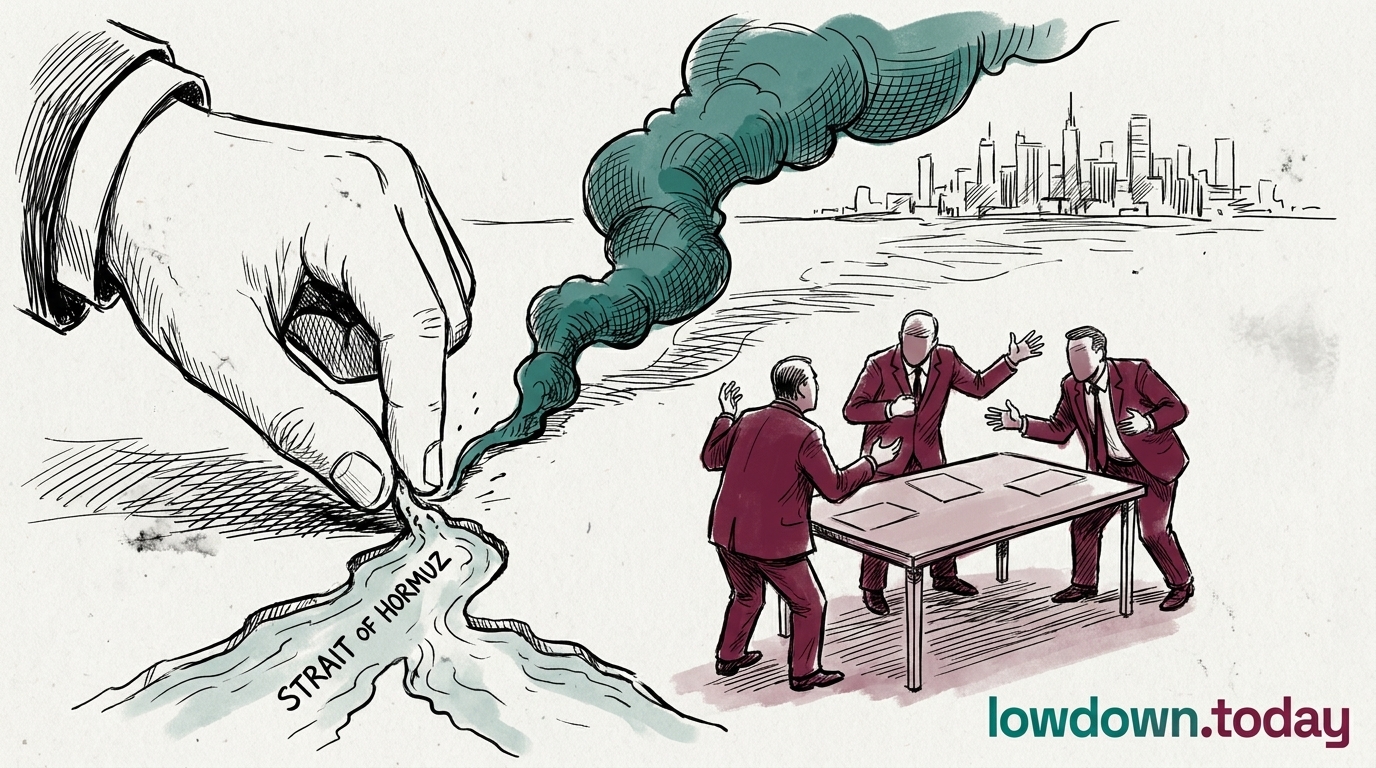
While the delegations sat in Washington, the line moved. Israeli forces pushed north of the Litani and strikes hit the Nabatieh and Tyre districts 3. The Washington table and the southern field ran on different clocks: diplomats negotiated the south's future while soldiers redrew its map by the hour.

The talks aim to stretch the Beirut-only truce Trump brokered on 1 June across all of Lebanon, which is precisely the ground Israel is taking on the Zaharani approach. Each kilometre the advance covers shrinks what Lebanon's delegation can still bargain for, because territory held by force is rarely surrendered at a table. The negotiation is chasing a front line that will not wait for it.


Deep Analysis

In plain English

The fourth round of ceasefire talks between Israel and Lebanon opened at the US State Department on 2 June. Lebanon went in asking for a complete Israeli withdrawal from southern Lebanon and the return of 1.2 million displaced people. Israel went in demanding that Hezbollah be disarmed. Lebanon's government has no legal mechanism to disarm Hezbollah; the 1989 Taif Agreement required disarmament of all non-state militias but Hezbollah was exempted under Iranian pressure. While the delegations sat in Washington, Israeli forces captured territory north of the Litani and struck Nabatieh and Tyre. Netanyahu confirmed ground operations would continue regardless of the talks.

Deep Analysis
Root Causes

The disarmament-guarantee deadlock rests on a structural asymmetry: Israel's minimum requirement (a verifiable Hezbollah disarmament) is beyond the capacity of Lebanon's government to deliver, while Lebanon's minimum requirement (Israeli withdrawal to the 1967 line) is beyond Israel's current military willingness. Neither side can meet the other's floor without internal political collapse.

The kinetic continuation during the talks reflects Clausewitz's principle that a party that is winning militarily has no rational incentive to settle on yesterday's terms. Every kilometre the IDF advances north of the Litani raises the price of any settlement Lebanon can offer Israel, because the withdrawal Israel eventually accepts will need to be counted from wherever the IDF stops.

What could happen next?
  • Risk

    Each day the IDF advances while talks continue changes the territorial baseline against which any withdrawal will be measured, ratcheting up Lebanon's demand and Israel's concession cost simultaneously.

  • Consequence

    Without an external guarantor capable of enforcing Hezbollah disarmament, any text agreed at the State Department faces the same implementation failure as Resolution 1701, which Hezbollah never complied with after August 2006.

First Reported In

Update #116 · Washington signs a sanction, not a strike

CNBC· 3 Jun 2026
Read original
Different Perspectives
Oil markets / Lloyd's of London
Brent fell to near $87.33 on 80 per cent deal-probability pricing, but Lloyd's has not de-listed Hormuz from its war-risk register and shipping diversions continue at 139 vessels. Insurance markets are lagging futures: physical risk remains while financial markets have spent the good news before the paper exists.
India
India
Modi is expected to raise the deaths of three Indian sailors in the 11 June CENTCOM strike on the MT Settebello with Trump at G7 sidelines, the first non-party leader to put the blockade's human cost into a formal bilateral. New Delhi is also a major Iranian oil buyer whose import volumes the sanctions-relief terms will govern.
Israel (Netanyahu)
Israel (Netanyahu)
Netanyahu stated Israel is not party to the deal on 12 June; Defence Minister Katz ruled out the Lebanon withdrawal Iran's draft demands, inserting a third blocker the US-Iran negotiating channel cannot resolve. Israel's position tethers Hormuz reopening to a Lebanon settlement Washington has not brokered.
Pakistan (mediator, Sharif/Naqvi)
Sharif declared a final agreed text on 12 June before either principal confirmed it, running two Tehran visits in under a week without securing a written IRGC or Khamenei response. Islamabad's incentive to claim a diplomatic win outpaces its standing to deliver either capital's signature.
Iran foreign ministry (Araghchi)
Araghchi declared digital signing within days while setting dilute-in-Iran as a non-negotiable red line on the 440.9 kg HEU stockpile, a standing Tehran position he cannot override without authorisation from Khamenei, reachable only by courier. The FM track is sprinting to close before the IRGC reasserts control.
Trump administration / CENTCOM
Vance called the deal still TBD on 12 June while CENTCOM downed Iranian drones over Hormuz for a second consecutive night and the White House register stayed blank. Washington holds the ship-out position on HEU and has not signed an Iran instrument in over 100 days of conflict.



