Skip to content
Briefings are running a touch slower this week while we rebuild the foundations.See roadmap
Iran Conflict 2026
7MAY

Tehran demands ratification, not a deal

4 min read
12:43UTC

Iran's overnight counter-proposal asks Washington to legally recognise the Hormuz toll system Tehran has already built, not negotiate it away.

ConflictDeveloping
Key takeaway

Iran's counter-proposal asks Washington to ratify, not negotiate, the Hormuz status quo Tehran has built.

Iran transmitted a 10-point counter-proposal to Washington overnight via Pakistan's Foreign Office, in which President Masoud Pezeshkian's spokesman set the price of any reopening: "the strait of Hormuz will open when all the damage caused by the imposed war is compensated through a new legal regime, using a portion of the revenue from transit fees" 1.

Read what Tehran is asking for. The proposal demands Washington recognise a "new legal regime" for Hormuz, full sanctions relief, war reconstruction funds, and the cessation of Western military operations across the region. Every one of those provisions, on the strait itself, describes the situation Iran has already built. Iran's parliament legislated a permanent customs authority over the strait in late March . French and Japanese vessels have already paid Tehran's toll in yuan to transit . The IRGC toll system runs five tariff tiers and roughly 53 weekly transits, 94% below the pre-war baseline of 966 weekly crossings, yet the toll architecture itself runs at full revenue capacity.

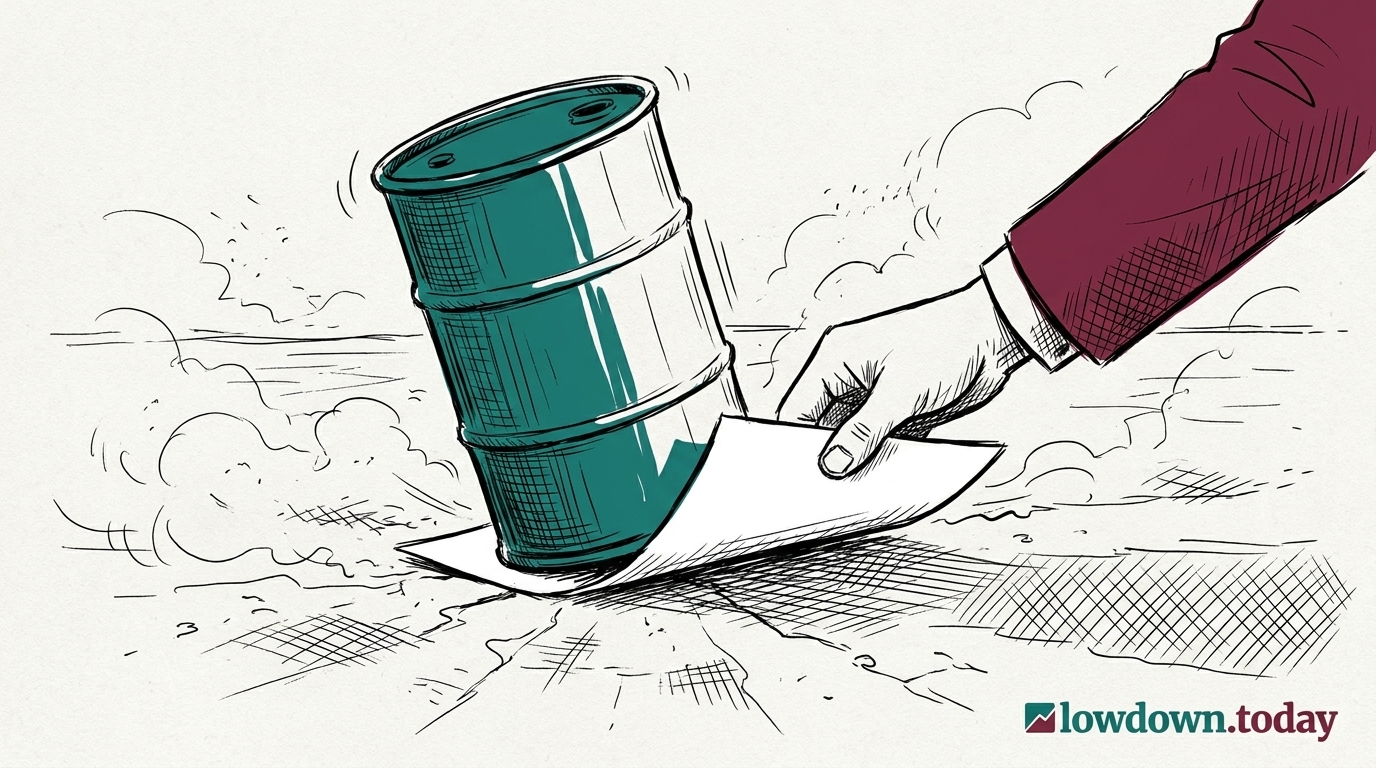
What Iran has put on Pakistan's table is not a counter-offer; it is an invoice for international ratification of the status quo. Tehran wants Washington to sign the customs system into legal existence, not negotiate it away. The conventional sequence has been reversed: instead of trading the toll for sanctions relief, Iran is asking for sanctions relief, reconstruction, and the legal codification of the toll in a single document.

Deep Analysis

In plain English

Iran has sent a formal list of ten conditions to the US, via Pakistan as a go-between. The headline condition: the Strait of Hormuz , the narrow passage through which about a fifth of the world's oil normally flows , will only reopen once the US legally recognises Iran's right to charge ships a toll to pass through it. Here is what makes this unusual. Iran is already charging that toll. Ships from France and Japan have already paid it. The toll system already exists and is running. Iran is not offering to create something new , it is asking the US to sign a legal document recognising what is already there. It is a bit like a squatter asking the homeowner to change the deeds rather than agree to move out. The homeowner has to decide whether to accept the squatter's terms, keep fighting, or find a third path , and so far, Trump's answer is 'not good enough', without specifying what would be.

Deep Analysis
Synthesis

The proposal's significance is architectural, not transactional. Iran is not offering a deal; it is publishing the terms on which it would allow an existing arrangement to acquire legal permanence. The gap between what Tehran has put in writing and what any US administration can sign is the gap this war has not closed , and today's answer from Trump did not close it.

Root Causes

Iran's maximalist counter-proposal reflects three structural factors that predate the war. First, the IRGC has for decades sought a legal basis for its role in Persian Gulf security that international maritime law under UNCLOS does not provide; the war has created the first realistic opportunity to demand that basis as a peace condition.

Second, Iran's civilian government under Pezeshkian has almost no leverage over the IRGC military council , meaning any counter-proposal that the government transmits must be one the IRGC has approved , and the IRGC's minimum price for the toll system is codification, not mere continuation.

Third, the precedent of the 2015 JCPOA, which was undone by the US within three years of signing, has made Iran deeply resistant to informal or executive-agreement-only arrangements. The demand for a "new legal regime" , the specific language the spokesman used , is in part a demand for the kind of multilateral treaty architecture that a future US president cannot unilaterally exit.

What could happen next?
  • Meaning

    The 10-point proposal confirms Iran is treating the toll system as a permanent institution, not a wartime expedient , there is no version of the counter-proposal in which Iran dismantles the toll in exchange for sanctions relief alone.

    Immediate · 0.88
  • Consequence

    If Trump extends the deadline again without engaging Iran's specific legal ratification demand, the gap between the two positions hardens from tactical to structural, making any settlement before the War Powers 60-day clock (approaching 29 April) arithmetically unlikely.

    Short term · 0.74
  • Risk

    China's backing of the Islamabad Accord (ID:2055) as currency-of-transit provider and UNSC gatekeeper gives the toll architecture external legitimacy that compounds the difficulty of a US legal challenge even if a US administration refuses to sign.

    Medium term · 0.7
  • Precedent

    If any version of the Hormuz toll system is ratified in a peace settlement, it sets the first precedent in the post-UNCLOS era of a state extracting sovereignty concessions over an international strait through wartime fait accompli.

    Long term · 0.65
First Reported In

Update #61 · Carriers retreat; Iran codifies Hormuz

NPR· 7 Apr 2026
Read original
Different Perspectives
International human rights monitors (NetBlocks, IHR, Hengaw)
NetBlocks recorded 1,704 cumulative hours of near-total internet blackout for roughly 90 million Iranians on Day 74, while IHR documented ongoing executions under emergency provisions. These organisations are the only active monitoring windows into a civilian population cut off from the global internet for 71 consecutive days.
UK / France coalition
The Royal Navy confirmed HMS Dragon's Hormuz deployment on its own website on 11 May, converting a press-reported presence into declared force posture; UK and French defence ministers hosted a coalition meeting the same day. Britain and France are now the only named contributors to a Hormuz escort mission all five allies Trump originally asked had declined.
Saudi Aramco / Gulf producers
Saudi Aramco CEO Amin Nasser warned on 11 May that a Hormuz closure could remove 100 million barrels of weekly supply from global markets (roughly 15 million barrels per day for a week), a figure that dwarfs any OPEC+ swing capacity. The warning functions as both a price-floor signal and a public pressure on Washington to protect transit.
Beijing / Chinese Government
China has not publicly acknowledged the four Hong Kong-registered entities designated on 11 May or extended MOFCOM's Blocking Rules cover to HK-domiciled firms. Xi Jinping hosts Trump on 14–15 May having already de-risked state-bank balance sheets via NFRA's quiet loan halt, entering the summit partially compliant before any negotiation.
Tehran / Iranian Government
Foreign Minister Araghchi described Iran's 10-point counter-proposal as 'reasonable and responsible' via spokesman Baqaei on 11 May, and widened the mediator pool by meeting Turkish, Egyptian, and Dutch counterparts in a single day. Tehran is buying procedural runway while Trump's verbal rejection went unmatched by any written US counter.
Trump White House
Trump White House
Trump called the ceasefire 'on massive life support' and dismissed Iran's 10-point counter-proposal as 'a piece of garbage' on 11 May, while departing for Beijing two days later with no signed Iran instrument to show Congress. The verbal maximum and the paper void coexist: the administration is running a legal pressure campaign through Treasury while the president free-lances the rhetoric.