Skip to content
Briefings are running a touch slower this week while we rebuild the foundations.See roadmap
Iran Conflict 2026
7MAY

Russia halts Kazakh crude to Germany

4 min read
12:43UTC

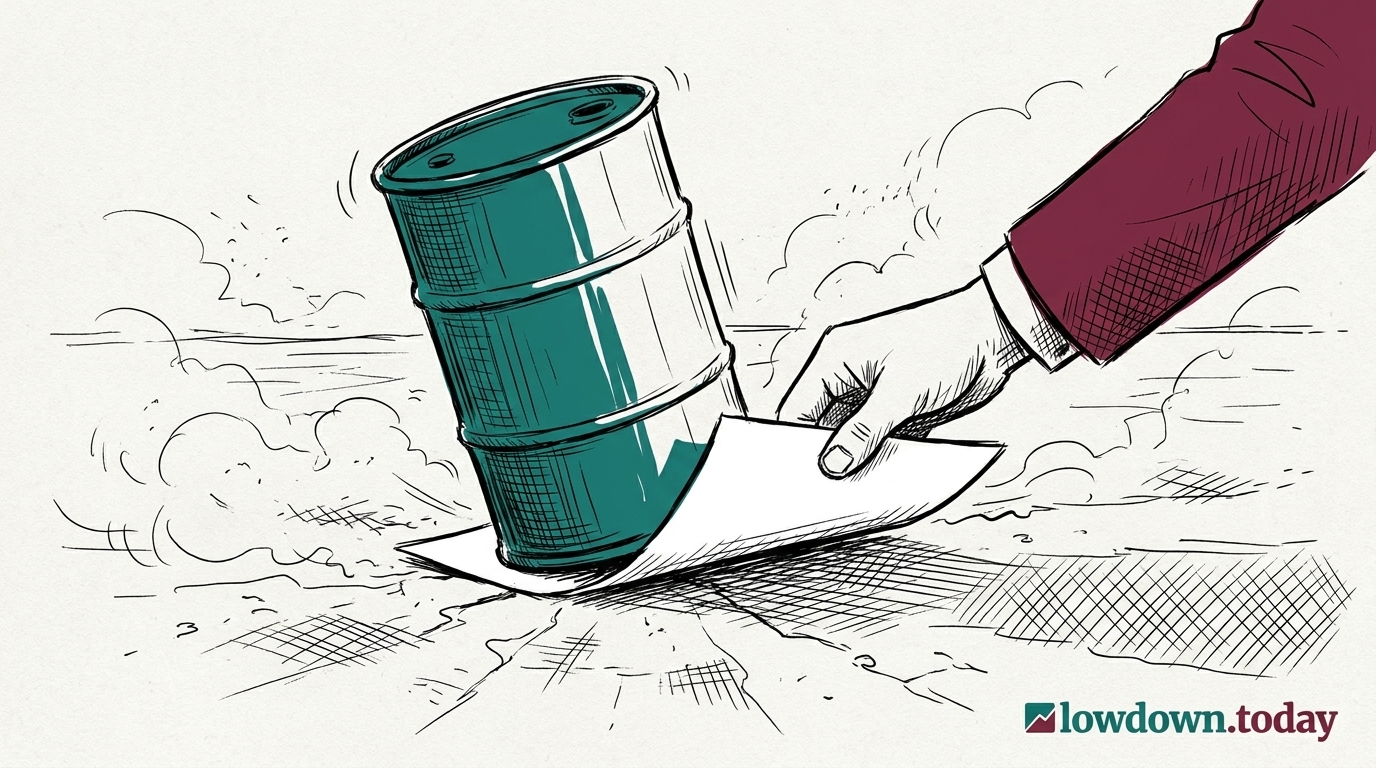
Russian Deputy PM Alexander Novak confirmed Moscow will stop Kazakh crude transit via the Druzhba pipeline to Germany from 1 May, removing one of Berlin's last partial non-Russian-origin supply streams.

ConflictDeveloping
Key takeaway

Berlin loses a non-Russian crude lane while Hungary loses the Kazakh-origin defence on Druzhba dependency.

Russian Deputy Prime Minister Alexander Novak, who runs Moscow's energy portfolio, confirmed Russia will halt Kazakh crude oil transit via the Druzhba pipeline's northern branch to Germany from 1 May 2026. Druzhba is the Soviet-era oil pipeline carrying Russian and Kazakh crude west into the European Union; Astana's barrels move through Russian infrastructure under a third-party transit arrangement that Berlin had been using as a partial non-Russian-origin replacement while Germany worked through its EU sanctions wind-downs.

Al Jazeera assesses that Ukrainian strikes on Russian-side Druzhba infrastructure have cut Russia's total export capacity by roughly 40% and forced a 500,000 barrels-per-day (bpd) production cut. The Security Service of Ukraine (SBU) struck the Transneft-Privolga pumping station at Samara on 21 April, damaging crude storage tanks , with the earlier 23 February strike on the Kaleykino station in Tatarstan completing the pair on the Russian-side trunk. Druzhba itself remains operational on Ukrainian soil following Kyiv's 22 April restoration .

Kazakhstan cannot retaliate without breaking the Eurasian Economic Union compact Moscow holds as the framework, leaving the transit decision operationally simple for Moscow and politically costless inside Russia. Structural pipeline geometry gives Berlin no second non-Russian transit option through the same routing. Germany's nearest substitute is spot-market crude via Rotterdam or Wilhelmshaven, at higher freight cost in the May driving season.

The arrangement leaves Hungary's Druzhba leverage, the basis on which Viktor Orbán dropped the EU loan veto , bounded on one side by Kyiv's restraint on the Ukrainian section and on the other by Moscow's transit decisions on the Russian section. Budapest cannot use the Kazakh-stream argument to claim non-Russian-origin crude; the third-party label is no longer available. Ukraine repaired the pipeline on its soil and now strikes Russia's; Russia repairs its pumping stations and now narrows what flows.


Deep Analysis

In plain English

Kazakhstan, a large oil-producing country in Central Asia, had been sending some of its crude oil to Germany through a Soviet-era pipeline called Druzhba that crosses Russian territory. Russia's Deputy Prime Minister Alexander Novak announced this transit arrangement would stop from 1 May. Kazakhstan is not at war with anyone; its oil is not subject to Western sanctions. Russia controls the pipeline infrastructure, so it can block Kazakh exports to Germany without breaking any international law. Germany had been using those Kazakh barrels as a partial replacement for Russian oil it had stopped importing under European sanctions. The halt removes that workaround.

Deep Analysis
Root Causes

Russia's ability to halt Kazakh transit without a legal violation is a product of the infrastructure architecture built during the Soviet era and never renegotiated after 1991. The Druzhba pipeline's northern branch runs through Russian territory; Kazakhstan has no parallel westward export route for the volumes affected.

CPC's Novorossiysk route is the only non-Russian-territory alternative, and it is operating at approximately 60% of baseline throughput following the April-May Ukrainian strikes on the port area.

Orbán's six-week veto on the €90bn EU loan was dropped on 22 April partly in exchange for pipeline flow continuity guarantees. Magyar's incoming government has not placed a new veto, but it has committed Hungary to a referendum on Ukraine's EU accession. Moscow's calculation may be that narrowing Druzhba's commercial utility to Germany removes a German incentive to maintain political pressure on Budapest to remain cooperative with the EU loan disbursement.

What could happen next?
  • Consequence

    Germany's PCK Schwedt refinery loses its primary non-sanctioned crude input stream, increasing Berlin's dependence on seaborne Baltic alternatives at higher transport cost.

    Immediate · 0.85
  • Risk

    Kazakhstan's CPC Novorossiysk route, its only alternative to the Druzhba path, is operating at approximately 60% capacity following Ukrainian strikes; if Novorossiysk throughput falls further, Astana faces a full western-export blockage.

    Short term · 0.72
  • Precedent

    The halt demonstrates that Russia can deny transit to non-Russian crude through Russian-territory infrastructure, removing a legal safe harbour that European buyers had assumed protected third-party supply streams.

    Medium term · 0.82
First Reported In

Update #15 · Hardware-free parade; crude waiver lives on

Al Jazeera· 3 May 2026
Read original
Causes and effects
This Event
Russia halts Kazakh crude to Germany
Berlin loses a third-party crude lane it had been using as a partial replacement; Hungary's Druzhba leverage now narrowed on both ends.
Different Perspectives
Oil markets
Oil markets
Brent fell $1.05 to $106.0 on summit Day 1 but remains $5-7 above the post-ceasefire equilibrium analysts modelled in March; the market is pricing a holding pattern, not a breakthrough. OilPrice.com and Aramco CEO Nasser converge on buffer-exhaustion before Hormuz reopens if the blockade extends past mid-June.
Iranian dissidents and human rights monitors
Hengaw documented a five-prison simultaneous execution cluster on 13 May, with Gorgan appearing for the first time in the wartime register. Espionage charges framed as Israel-linked moharebeh now extend across Mashhad, Karaj, and Gorgan, using the war as judicial cover for protest-era detainees.
BRICS / Global South
Araghchi's Delhi appearance positioned Iran as a victim of US aggression before non-Western foreign ministers, with Deputy FM Bagheri Kani calling on BRICS to act against US aggression. India, as the largest non-Chinese user of Iranian-routed crude, faces pressure to balance bloc solidarity against its own shipping and sanctions exposure.
China
China
Beijing accepted the Nvidia chip clearance on summit Day 1 and gave Rubio verbal acknowledgement of Iran as an Asian stability concern, having already put Pakistan on paper as the mediatory channel on 13 May (ID:3253), deflecting the US ask for direct Chinese action without refusing it.
Iran (government and civilian diplomatic track)
Araghchi denied any Hormuz obstruction at BRICS Delhi on 14 May while Iran's SNSC had finalised a Hormuz security plan the day before. Israel Hayom's single-sourced 15-year freeze offer gives Tehran a deployable figure in non-Western forums regardless of corroboration; the state attributed 3,468 wartime deaths with no independent verification.
United States (Trump administration and Senate moderates)
Trump signed a chip clearance for 10 Chinese firms on summit Day 1 and zero Iran instruments across 76 days; Rubio and Vance made verbal Iran asks without paper. Murkowski voted yes on the 49-50 war-powers resolution after Hegseth told the Senate that Article 2 makes an AUMF unnecessary.



