Skip to content
Briefings are running a touch slower this week while we rebuild the foundations.See roadmap
Iran Conflict 2026
1MAY

US Oil Sanctions Waiver Expires 11 April Amid Confusion

2 min read
10:38UTC

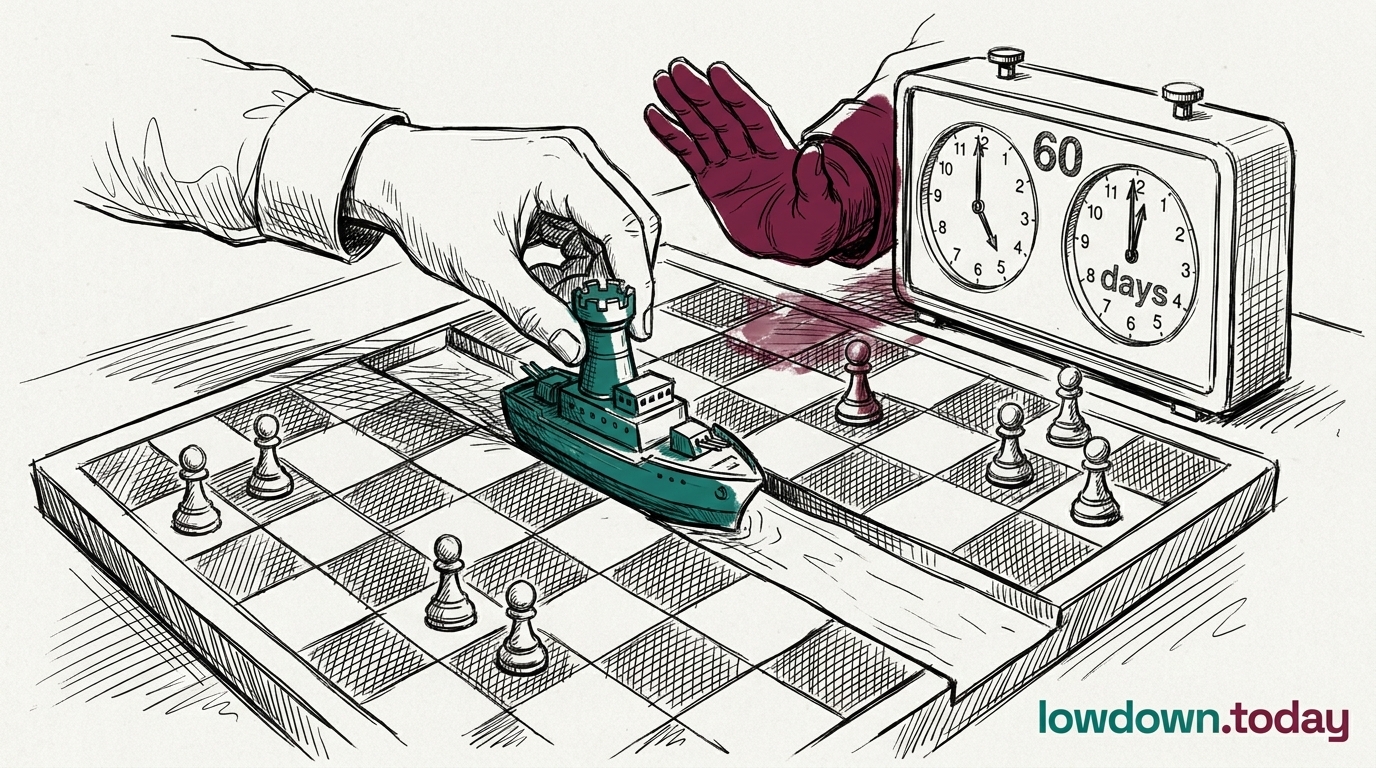
OFAC's GL 134A expires 11 April; at $121 per barrel, any extension would hand Russia far more revenue than when the waiver was issued at $73, while simultaneous vessel desanctioning created contradictory signals.

ConflictDeveloping
Key takeaway

GL 134A expiry on 11 April is the binary choice: extension at $121/barrel or lapse compounding Russia's crisis.

OFAC issued General License 134 on 12 March, covering the roughly 124 million barrels of Russian crude at sea , amended it to GL 134A on 19 March, and faces a binary decision on its 11 April expiry. At $73 per barrel when issued, the waiver was defensible as market stabilisation. At $121, the same licence authorises far greater per-barrel income than its design contemplated.

OFAC added Iran, North Korea, and Cuba exclusions to GL 134A one week after the original licence, a rapid amendment suggesting Treasury received evidence that cargoes were being redirected toward sanctioned parties. On 31 March, OFAC separately removed sanctions on three Russian cargo vessels: Fesco Magadan, Fesco Moneron, and SV Nikolay.

The contradictory pattern, tightening the licence's terms while reducing pressure on named Russian vessels, is consistent with an administration managing competing objectives across the Iran war and Ukraine simultaneously. The Atlantic Council warned that extension at current prices "risks sustaining Russia's war effort."

Deep Analysis

In plain English

The US government gave Russia a special oil sales exemption that expires on 11 April. When it was issued, oil prices were around $73 per barrel. Now that the Iran war has pushed prices to $121, extending the same exemption would hand Russia much more money than originally intended. At the same time, the US removed sanctions on three Russian ships while tightening the exemption's rules — sending confusing signals about American policy toward Russia.

What could happen next?
  • Risk

    GL 134A extension at $121/barrel would constitute the largest single US-authorised revenue transfer to Russia since sanctions began.

First Reported In

Update #11 · Russia Sells Less Oil but Earns More

Mayer Brown· 5 Apr 2026
Read original
Causes and effects
This Event
US Oil Sanctions Waiver Expires 11 April Amid Confusion
The GL 134A expiry is a binary US policy signal: extension at $121 per barrel directly subsidises Moscow's war revenue; lapse combined with Baltic terminal damage would compound Russia's export crisis.
Different Perspectives
Oil markets
Oil markets
Brent fell $1.05 to $106.0 on summit Day 1 but remains $5-7 above the post-ceasefire equilibrium analysts modelled in March; the market is pricing a holding pattern, not a breakthrough. OilPrice.com and Aramco CEO Nasser converge on buffer-exhaustion before Hormuz reopens if the blockade extends past mid-June.
Iranian dissidents and human rights monitors
Hengaw documented a five-prison simultaneous execution cluster on 13 May, with Gorgan appearing for the first time in the wartime register. Espionage charges framed as Israel-linked moharebeh now extend across Mashhad, Karaj, and Gorgan, using the war as judicial cover for protest-era detainees.
BRICS / Global South
Araghchi's Delhi appearance positioned Iran as a victim of US aggression before non-Western foreign ministers, with Deputy FM Bagheri Kani calling on BRICS to act against US aggression. India, as the largest non-Chinese user of Iranian-routed crude, faces pressure to balance bloc solidarity against its own shipping and sanctions exposure.
China
China
Beijing accepted the Nvidia chip clearance on summit Day 1 and gave Rubio verbal acknowledgement of Iran as an Asian stability concern, having already put Pakistan on paper as the mediatory channel on 13 May (ID:3253), deflecting the US ask for direct Chinese action without refusing it.
Iran (government and civilian diplomatic track)
Araghchi denied any Hormuz obstruction at BRICS Delhi on 14 May while Iran's SNSC had finalised a Hormuz security plan the day before. Israel Hayom's single-sourced 15-year freeze offer gives Tehran a deployable figure in non-Western forums regardless of corroboration; the state attributed 3,468 wartime deaths with no independent verification.
United States (Trump administration and Senate moderates)
Trump signed a chip clearance for 10 Chinese firms on summit Day 1 and zero Iran instruments across 76 days; Rubio and Vance made verbal Iran asks without paper. Murkowski voted yes on the 49-50 war-powers resolution after Hegseth told the Senate that Article 2 makes an AUMF unnecessary.