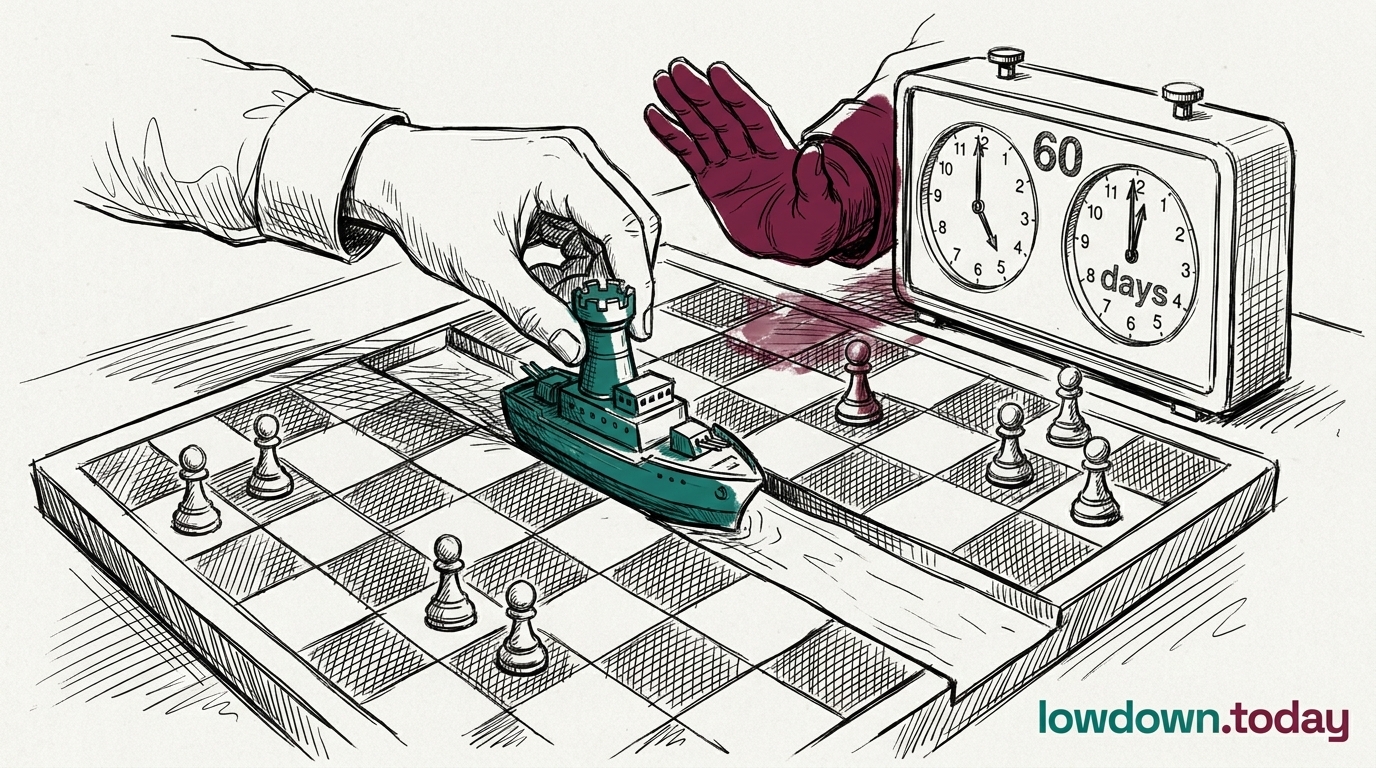
President Masoud Pezeshkian delivered a prerecorded televised address on Saturday morning — filmed hurriedly, without professional broadcast equipment — in which he apologised to neighbouring countries struck by Iranian missiles and drones. "I should apologise to the neighbouring countries that were attacked by Iran, on my own behalf," he said. The Interim Leadership Council, he announced, had agreed that Iranian forces "should not attack neighbouring countries or fire missiles at them, unless we are attacked" from their territory. In the same address, he rejected Trump's unconditional surrender demand as "a dream that they should take to their grave" — an attempt to signal de-escalation to The Gulf while maintaining defiance toward Washington.
The apology was personal — "on my own behalf" — because Pezeshkian has no institutional authority to offer it on the state's behalf. Under Article 110 of Iran's constitution, command of the armed forces belongs exclusively to The Supreme Leader. Ayatollah Khamenei is dead. Article 111 provides for an interim council to inherit his powers, but this transfer has never been tested, and the IRGC's institutional culture does not recognise civilian substitution. Iran's constitutional architecture contains no redundancy for Supreme Leader succession during active warfare — a gap that did not matter during peacetime because no previous Supreme Leader died while the country was under direct military assault.
The deeper structural failure is that Iran's Mosaic Defence Doctrine and its succession mechanism are fundamentally incompatible. The mosaic doctrine — devolving launch authority to 31 autonomous provincial commands — was designed to sustain operations after the destruction of Central Command infrastructure. It works. The succession mechanism requires centralised authority to function. The US-Israeli strike that killed Khamenei did not merely remove a leader; it disabled the only constitutional mechanism capable of halting IRGC operations. With Khamenei's funeral postponed indefinitely and the formal announcement of a successor delayed until at least next week, Iran is conducting the most serious military confrontation in the Islamic Republic's 47-year history without a constitutionally empowered commander-in-chief.
For Gulf capitals now weighing the Saudi backchannel and the Egypt-Turkey-Oman mediation bid, Pezeshkian's apology poses a specific question: is there any Iranian interlocutor who can both agree to terms and enforce them on the forces doing the fighting? The intelligence-to-intelligence contact Iran attempted through a third country — promptly exposed and rejected by Trump — suggests Tehran itself knows the diplomatic channel and the military channel are disconnected. Pezeshkian can apologise. He cannot stop the war.


