Skip to content
Briefings are running a touch slower this week while we rebuild the foundations.See roadmap
Iran Conflict 2026
1MAY

OFAC GL 134B expires 16 May, no successor

4 min read
10:38UTC

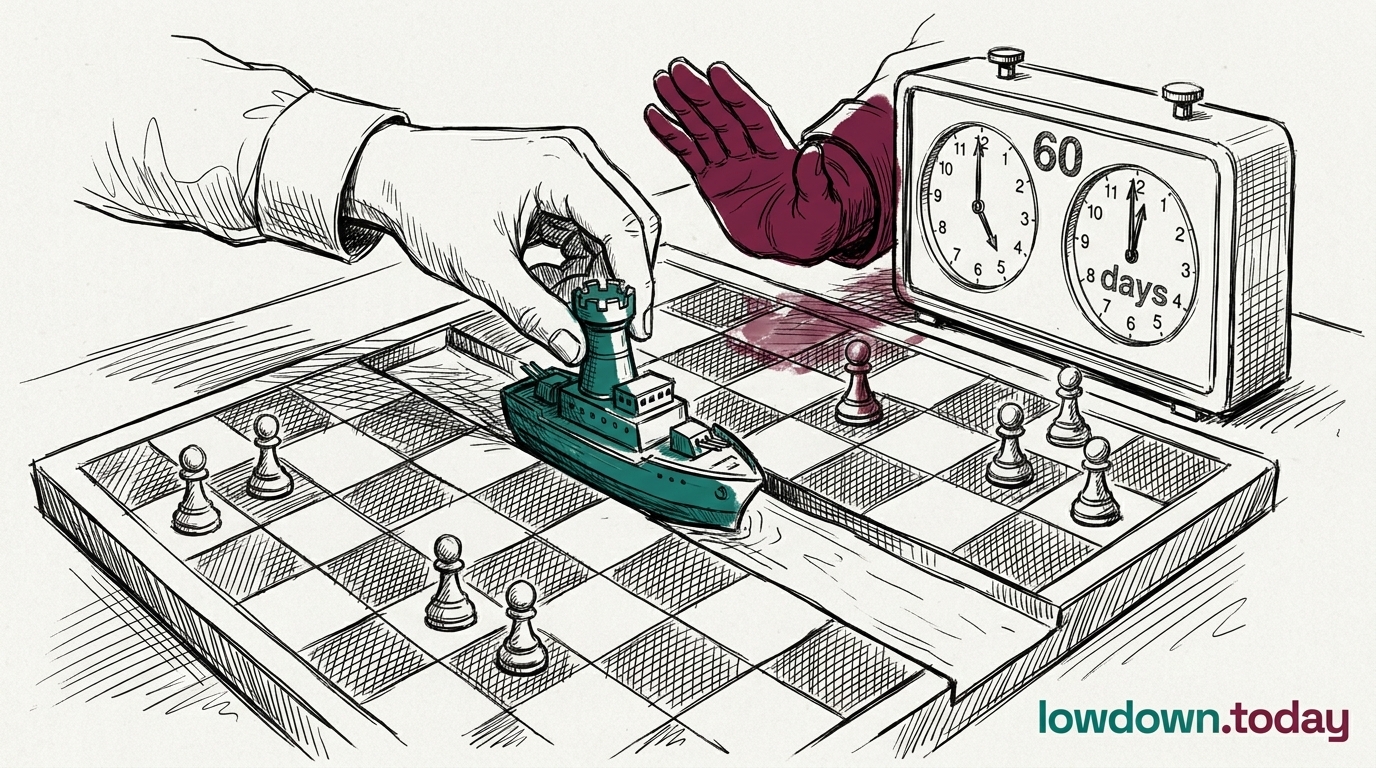
OFAC General License 134B, authorising Russian crude transactions, expires at 12:01 EDT on 16 May 2026. No GL 134C has appeared in the OFAC actions feed as of 13 May, making this the second consecutive non-extension.

ConflictDeveloping
Key takeaway

GL 134B expires 16 May with no successor visible: second consecutive non-extension, threatening stranded cargoes.

OFAC (Office of Foreign Assets Control) General License 134B expires at 12:01 EDT on 16 May 2026 1. No GL 134C has appeared in OFAC's recent actions feed as of 13 May. GL 134B authorises transactions in Russia-origin crude oil and petroleum products loaded onto vessels on or before 17 April; expiry without a successor would strand cargoes currently at sea and remove the legal certainty that shadow-fleet operators and Asian refiners have relied on since the licence series began in March 2026.

This would be the second consecutive non-extension in the sequence. GL 134A expired on 16 April without renewal, triggering the redesignation of Rosneft and Lukoil as Specially Designated Nationals (SDN) . Treasury then issued GL 134B one day later , keeping the channel open through 16 May. That single-day reflexive extension on 17 April is not a reliable precedent: it was a patch on an unexpected cliff, not a standing commitment to rolling authorisation. If GL 134B expires hard, the 17 April response is the model for how Treasury acts, but only if the same internal calculus that produced the one-day patch still holds.

The fiscal timing makes the cliff consequential regardless of which way it lands. Russia's National Wealth Fund (NWF) held $49.1 billion in liquid assets on 1 May, with the Finance Ministry now purchasing 110 billion roubles in NWF assets in May to recapitalise . Oil and gas revenues fell 38.3% year-on-year in January-April 2026, as covered separately in this briefing. With Brent at $107/barrel, each Russian barrel that cannot leave legally costs Moscow at Urals rates near $80-85. Every blocked cargo at a high oil price is the most expensive version of the sanctions mechanism. If GL 134C does not appear before 16 May, Asian refinery contract adjustments and potential Treasury SDN follow-ons are the downstream signals to watch.

Deep Analysis

In plain English

When the US sanctions Russia, it does not always switch everything off at once. Instead, it issues 'general licences': temporary permissions that let companies finish existing contracts without breaking the law, so they can wind down their business with Russia gradually. GL 134B covers shipments of Russian crude oil that were already loaded onto tankers before a certain date. Without it, those ships are technically carrying cargo the US says nobody can legally help with, which means Western insurers would have to withdraw their cover. The licence expires on 16 May. If no new one appears, the companies still in this wind-down process face a legal problem. Russia can work around it, as it has built its own shadow insurance system, but the process costs more and takes time.

What could happen next?
  • Consequence

    Western P&I clubs may withdraw cover from Russian-cargo wind-down voyages, raising Russian oil export transaction costs by an estimated 15-25% and accelerating Russia's shift to RNRC coverage.

  • Risk

    A permanent move of Russian oil logistics outside Western insurance and legal architecture reduces the leverage that future US administrations would have to apply financial pressure on Russia's energy sector.

First Reported In

Update #16 · 800 drones, three ceasefires, one cliff

Baker McKenzie Sanctions News· 13 May 2026
Read original
Causes and effects
Different Perspectives
Oil markets
Oil markets
Brent fell $1.05 to $106.0 on summit Day 1 but remains $5-7 above the post-ceasefire equilibrium analysts modelled in March; the market is pricing a holding pattern, not a breakthrough. OilPrice.com and Aramco CEO Nasser converge on buffer-exhaustion before Hormuz reopens if the blockade extends past mid-June.
Iranian dissidents and human rights monitors
Hengaw documented a five-prison simultaneous execution cluster on 13 May, with Gorgan appearing for the first time in the wartime register. Espionage charges framed as Israel-linked moharebeh now extend across Mashhad, Karaj, and Gorgan, using the war as judicial cover for protest-era detainees.
BRICS / Global South
Araghchi's Delhi appearance positioned Iran as a victim of US aggression before non-Western foreign ministers, with Deputy FM Bagheri Kani calling on BRICS to act against US aggression. India, as the largest non-Chinese user of Iranian-routed crude, faces pressure to balance bloc solidarity against its own shipping and sanctions exposure.
China
China
Beijing accepted the Nvidia chip clearance on summit Day 1 and gave Rubio verbal acknowledgement of Iran as an Asian stability concern, having already put Pakistan on paper as the mediatory channel on 13 May (ID:3253), deflecting the US ask for direct Chinese action without refusing it.
Iran (government and civilian diplomatic track)
Araghchi denied any Hormuz obstruction at BRICS Delhi on 14 May while Iran's SNSC had finalised a Hormuz security plan the day before. Israel Hayom's single-sourced 15-year freeze offer gives Tehran a deployable figure in non-Western forums regardless of corroboration; the state attributed 3,468 wartime deaths with no independent verification.
United States (Trump administration and Senate moderates)
Trump signed a chip clearance for 10 Chinese firms on summit Day 1 and zero Iran instruments across 76 days; Rubio and Vance made verbal Iran asks without paper. Murkowski voted yes on the 49-50 war-powers resolution after Hegseth told the Senate that Article 2 makes an AUMF unnecessary.