Skip to content
Briefings are running a touch slower this week while we rebuild the foundations.See roadmap
Iran Conflict 2026
29APR

Two Qatar LNG trains destroyed for good

4 min read
09:17UTC

Iran's second wave at Ras Laffan destroyed 17% of Qatar's LNG export capacity — damage that will take three to five years to rebuild. Force majeure notices have gone to Italy, Belgium, South Korea, and China.

ConflictDeveloping
Key takeaway

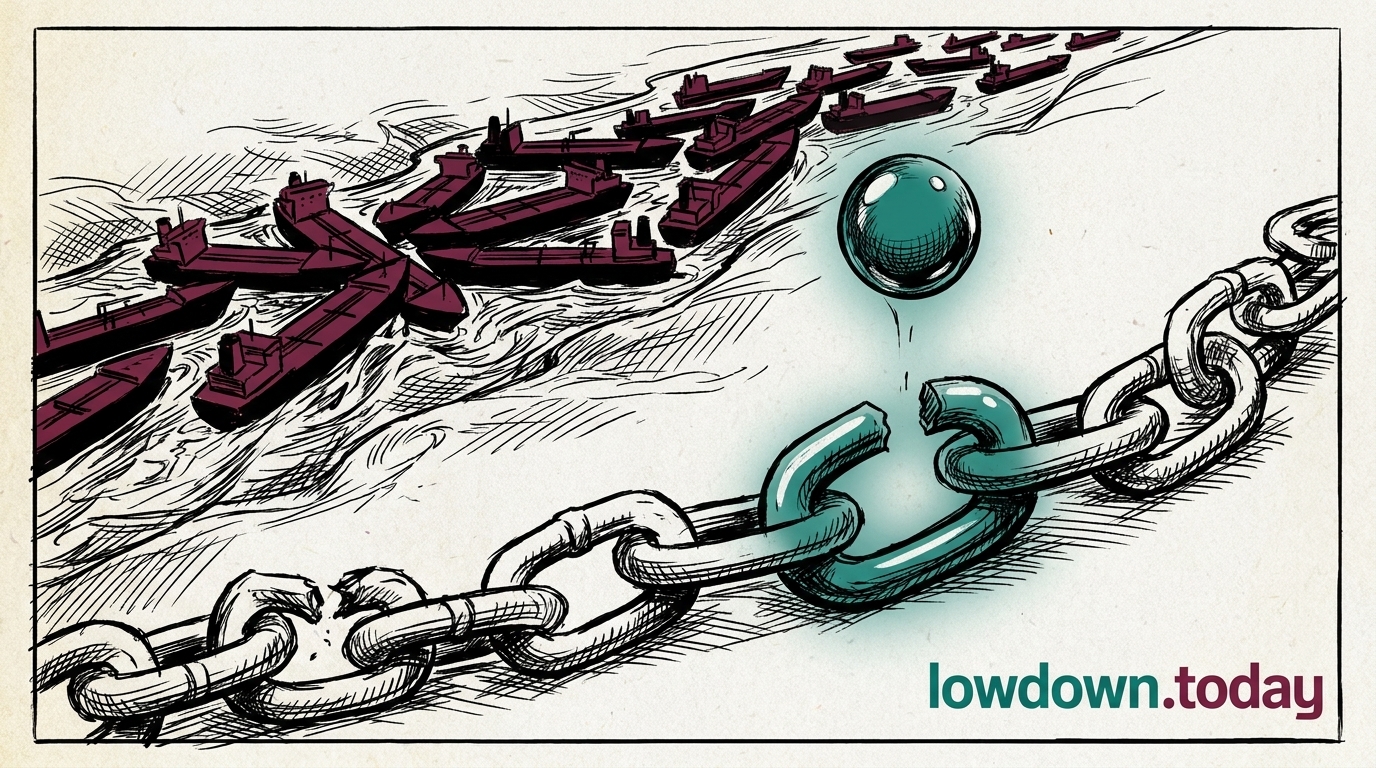
Qatar's LNG destruction creates a structural supply gap no alternative source can fill within three years.

QatarEnergy CEO Saad al-Kaabi confirmed on 19 March that two of Qatar's 14 LNG trains and one gas-to-liquids facility have been destroyed in Iran's second wave of attacks on Ras Laffan Industrial City 1. The damage removes 12.8 million tonnes per year of LNG export capacity — 17% of Qatar's total — for an estimated three to five years. Al-Kaabi put lost annual revenue at $20 billion; the destroyed units cost approximately $26 billion to build. QatarEnergy declared Force majeure on long-term supply contracts to Italy, Belgium, South Korea, and China 2.

The three-to-five-year rebuild estimate is the figure that outlasts every other number in this war. LNG trains are cryogenic processing units engineered to cool natural gas to −162°C for shipment; they cannot be assembled from off-the-shelf components. Qatar's North Field Expansion programme, under construction before the war, took more than four years from contract award to first gas under peacetime conditions. A wartime rebuild — with insurance markets in retreat, the facility still within missile range, and no guarantee against further strikes — will run longer. The initial Ras Laffan attack three days earlier caused fires that civil defence teams extinguished. This second wave destroyed capacity outright.

Qatar is Europe's second-largest LNG supplier after the United States. EU gas storage had already fallen below 30% — a five-year low — as the critical refill season began . Bloomberg traders now expect the Asian LNG benchmark to surpass $26 per million British thermal units by mid-April 3. Beyond LNG, condensate exports will drop 24%, LPG 13%, and helium 14%. Qatar is one of the world's largest helium producers, with output tied directly to its LNG processing; disruptions ripple into semiconductor fabrication and medical imaging, industries with no near-term substitute for the gas.

The Force majeure declarations distribute the damage across four continents. Italy accelerated its shift from Russian pipeline gas to Qatari LNG after 2022, hedging against geopolitical disruption — and has now lost part of that hedge to a different one. South Korea, among the world's three largest LNG importers, holds long-term Qatari contracts now subject to Force majeure. Qatar expelled Iranian military attachés within 24 hours of the first Ras Laffan strike , closing a diplomatic channel maintained since 1979. Tehran's response — destroying billions in Qatari infrastructure three days later — demonstrated that Iran will absorb the diplomatic cost of attacking a Gulf neighbour's economic foundations if it calculates the resulting energy-market disruption strengthens its hand against the US-Israeli campaign.

Deep Analysis

In plain English

Qatar is one of the world's largest exporters of liquefied natural gas — the fuel used to generate electricity and heat homes across Europe and Asia. The destroyed facilities are like giant refrigeration and processing plants that turn natural gas into a liquid cold enough to ship by tanker. Two of those plants have been destroyed and a linked fuel-conversion facility damaged. Because each plant costs billions to build and takes years to construct, Qatar cannot simply replace them quickly. Countries that relied on these deliveries will now compete for the same reduced global supply, pushing energy prices higher across multiple continents.

Deep Analysis
Synthesis

Qatar is the world's second-largest helium producer, and the 14% reduction in helium exports — noted in the body but not analysed — represents a distinct secondary supply shock. Helium is a non-substitutable input for semiconductor fabrication, MRI manufacture, and aerospace systems. A multi-year reduction in Qatari helium supply will tighten global helium markets independently of gas prices, adding an industrial input dimension to what is otherwise analysed as an energy crisis alone.

Root Causes

Ras Laffan's concentration of virtually all Qatari LNG capacity within a single coastal industrial complex was a known single-point-of-failure. QatarEnergy and international partners chose this configuration for logistical efficiency; dispersal was never economically attractive when no adversary had the reach or will to strike it. The IRGC attack also carries a competitive logic not in the body: Iran and Qatar tap the same geological reservoir — the South Pars/North Dome field. After Israel struck South Pars , Iran had an incentive to damage Qatar's advantage in monetising shared geology.

Escalation

The force majeure declarations on contracts to Italy, Belgium, South Korea, and China will trigger arbitration proceedings that outlast the war itself. China, Qatar's largest single LNG buyer, faces a compounding energy security problem: its long-term QatarEnergy agreements are among the most voluminous in the market, and substituting Russian pipeline gas carries political costs Beijing has been managing carefully since 2022.

What could happen next?
2 consequence2 risk1 precedent
  • Consequence

    Force majeure declarations will trigger multi-year arbitration between QatarEnergy and buyers in Italy, Belgium, South Korea, and China, restructuring long-term LNG contract norms globally.

    Medium term · Assessed
  • Risk

    EU gas storage already below 30% faces a structurally tighter 2026–27 winter supply outlook with no alternative supplier able to provide comparable volume at speed.

    Short term · Assessed
  • Consequence

    A 14% reduction in Qatari helium exports will tighten global helium supply for semiconductor and medical industries for three to five years, independent of gas price movements.

    Medium term · Suggested
  • Risk

    JKM prices above $20 per MMBtu trigger industrial demand destruction and supply curtailment in price-sensitive Asian markets including Bangladesh, Pakistan, and Thailand.

    Short term · Suggested
  • Precedent

    Deliberate wartime destruction of LNG trains establishes a new threshold for targeting energy export capacity as a legitimate military objective, with implications for future conflicts.

    Long term · Assessed
First Reported In

Update #42 · Iran hits four countries; Brent at $119

Al Jazeera· 20 Mar 2026
Read original
Causes and effects
This Event
Two Qatar LNG trains destroyed for good
The destruction removes 12.8 million tonnes per year of LNG from global markets for years beyond any ceasefire, compounding Europe's energy vulnerability and triggering contractual crises across four continents.
Different Perspectives
International human rights monitors (NetBlocks, IHR, Hengaw)
NetBlocks recorded 1,704 cumulative hours of near-total internet blackout for roughly 90 million Iranians on Day 74, while IHR documented ongoing executions under emergency provisions. These organisations are the only active monitoring windows into a civilian population cut off from the global internet for 71 consecutive days.
UK / France coalition
The Royal Navy confirmed HMS Dragon's Hormuz deployment on its own website on 11 May, converting a press-reported presence into declared force posture; UK and French defence ministers hosted a coalition meeting the same day. Britain and France are now the only named contributors to a Hormuz escort mission all five allies Trump originally asked had declined.
Saudi Aramco / Gulf producers
Saudi Aramco CEO Amin Nasser warned on 11 May that a Hormuz closure could remove 100 million barrels of weekly supply from global markets (roughly 15 million barrels per day for a week), a figure that dwarfs any OPEC+ swing capacity. The warning functions as both a price-floor signal and a public pressure on Washington to protect transit.
Beijing / Chinese Government
China has not publicly acknowledged the four Hong Kong-registered entities designated on 11 May or extended MOFCOM's Blocking Rules cover to HK-domiciled firms. Xi Jinping hosts Trump on 14–15 May having already de-risked state-bank balance sheets via NFRA's quiet loan halt, entering the summit partially compliant before any negotiation.
Tehran / Iranian Government
Foreign Minister Araghchi described Iran's 10-point counter-proposal as 'reasonable and responsible' via spokesman Baqaei on 11 May, and widened the mediator pool by meeting Turkish, Egyptian, and Dutch counterparts in a single day. Tehran is buying procedural runway while Trump's verbal rejection went unmatched by any written US counter.
Trump White House
Trump White House
Trump called the ceasefire 'on massive life support' and dismissed Iran's 10-point counter-proposal as 'a piece of garbage' on 11 May, while departing for Beijing two days later with no signed Iran instrument to show Congress. The verbal maximum and the paper void coexist: the administration is running a legal pressure campaign through Treasury while the president free-lances the rhetoric.