Skip to content
Briefings are running a touch slower this week while we rebuild the foundations.See roadmap
Iran Conflict 2026
29APR

Mashhad hangs Rasouli and Miri on 4 May

3 min read
09:17UTC

Mehdi Rasouli and Mohammadreza Miri were hanged in Mashhad in the early hours of 4 May; Iranian state media described both as Mossad elements linked to a January coup attempt.

ConflictDeveloping
Key takeaway

Iran is using the Mossad label to absorb domestic protest cases into a wartime espionage frame.

Iran International and Iran Human Rights confirmed that Mehdi Rasouli and Mohammadreza Miri were hanged in Mashhad in the early hours of 4 May 2026. 1 Iranian state media described both men as "Mossad elements" linked to a January 2026 coup attempt and to the killing of a security forces member.

The "Mossad elements" label is not new, but its target set is widening. Hengaw first documented the framing for Naser Bakrzadeh and Yaqoub Karimpour, who were executed on 2 May on Israel-espionage charges . On 3 May, Mehrab Abdollahzadeh was executed at Urmia Central Prison . With Rasouli and Miri on 4 May, the wartime register stands at five confirmed political executions in three days, faster than any prior phase of the conflict.

The Mossad framing carries a counter-espionage register that compresses judicial process and forecloses appeal. Cases that previously moved through domestic security or moharebeh statutes are now being absorbed into a single wartime espionage frame; the legal architecture does not need new statute, only new framing of existing detainees. Iran Human Rights records at least 25 political executions since the 28 February strikes began, roughly 1.3 per day in the past three days alone, yet the official Iranian state register acknowledges none of them.

The Pakdasht mosque-fire defendants sit on the final-rulings docket and are now the next imminent execution risk. Hengaw's monitoring scope, originally focused on Kurdish-majority provinces, has had to expand to cover the broader wartime register, which suggests the centre of gravity for political executions is no longer the periphery. The accelerating tempo continues to track the diplomatic calendar inversely; every Pakistan-channel paper reply is matched by a tightening of the domestic register.

Deep Analysis

In plain English

Iran executed two men on 4 May, officially labelling them as spies working for Israel's Mossad intelligence agency who had been involved in a plot to overthrow the Iranian government in January 2026. Iran frequently uses this type of charge during the war to justify quick executions of people it considers security threats. Iran's courts have closed proceedings to the public and international monitors since February 2026. Iran Human Rights and Hengaw confirmed the executions from inside-Iran sources but had no access to court documents or evidence summaries. Human rights organisations like Iran Human Rights have confirmed the executions happened, but have no access to the evidence behind the charges. This brings the confirmed count of political executions in Iran since February to at least 25.

Deep Analysis
Root Causes

The Mossad-elements label serves two structural purposes that operate independently of the specific charges. First, it nationalises the security threat: framing executed dissidents as foreign agents rather than domestic opponents converts what would be political suppression into a legitimate counter-intelligence response under international law. Second, it deters cooperation with foreign intelligence services by establishing that suspected contact with Israel carries capital consequences.

The wartime acceleration of executions reflects the IRGC's structural control over the judiciary since Mojtaba Khamenei's appointment in March 2026. Prior to the war, execution orders required multiple approval layers including a final sign-off from the Supreme Leader.

Under wartime emergency procedures introduced after Mojtaba Khamenei's March 2026 appointment, the Revolutionary Court's single-judge approval has replaced the multi-stage civilian review chain that previously governed capital sentences.

What could happen next?
  • Precedent

    The Mossad-elements label, applied to at least four executions in three days, establishes a judicial template Iran's courts can apply to any detained opposition figure without producing public evidence of Israeli contact.

    Short term · 0.85
  • Risk

    Continued political executions at this rate will make any ceasefire agreement that does not include a prisoner release or judicial amnesty provision politically impossible to sell domestically in Iran.

    Medium term · 0.66
  • Consequence

    The Mossad framing gives Iran plausible deniability against ICC referrals: executing spies is legally distinct from executing political opponents, and the distinction is hard to prove without independent court access.

    Long term · 0.72
First Reported In

Update #88 · 15,000 troops unsigned; Pakistan carries first reply

Iran International· 4 May 2026
Read original
Causes and effects
This Event
Mashhad hangs Rasouli and Miri on 4 May
The state-media counter-espionage frame first applied to two protest detainees on 2 May has now scaled to two more cases on 4 May, expanding the wartime political-execution surface without requiring new legal architecture.
Different Perspectives
Gulf shipping and insurance markets
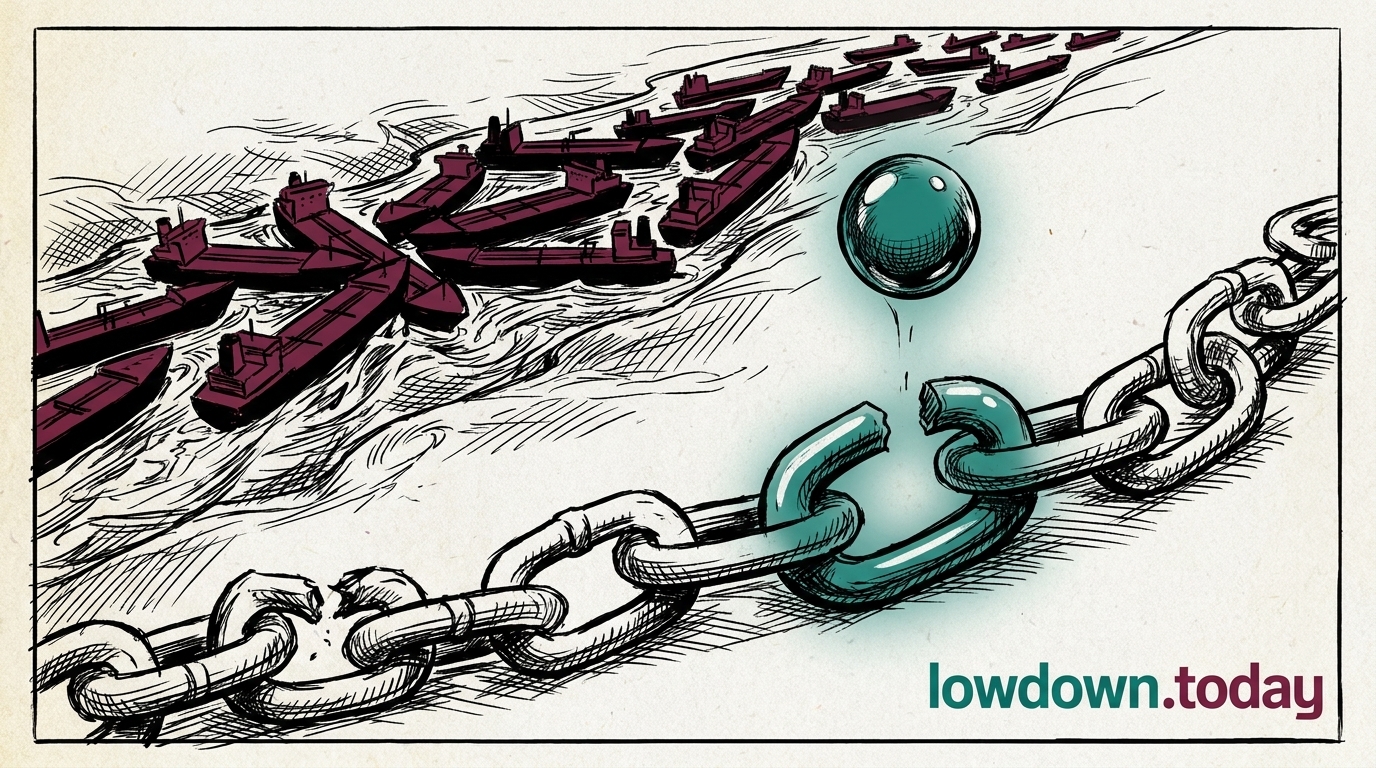
With Hormuz and Bab el-Mandeb both hostile at once, war-risk underwriters face their first dual-chokepoint pricing problem; the rerouting hedge that absorbed one closure is gone for Israeli-linked hulls. Any deal that reopens Hormuz without a Houthi stand-down clause delivers only partial shipping relief.
Russia and China
Russia and China
Russia and China met IAEA chief Grossi jointly in Geneva on 5 June to coordinate an advance blocking position against Washington's censure resolution, the first documented instance of proactive pre-session obstruction rather than reactive post-vote dissent. Beijing's move came four days after OFAC designated Shanghai Qianye Energy under Iran energy sanctions.
Saudi Arabia
Saudi Arabia
Saudi Arabia was left out of the emergency $4.01 billion Patriot waiver Qatar received on 2 May as its own PAC-3 stocks ran near-empty from intercepting Iranian salvoes over Aramco facilities. Riyadh is on a standard 18-month FMS queue behind a production line booked through 2030, with no equivalent priority to Qatar's Al Udeid basing role.
Houthis (Ansar Allah)
The Houthis declared a complete ban on Israeli Red Sea navigation on 8 June and struck Jaffa, their first attack on Israeli territory since April, seven days after the Tasnim authorisation to activate other fronts including Bab el-Mandeb. The declaration put both chokepoints under hostile authority simultaneously.
Iran
Iran
Iran agreed the 9 June mutual halt after the Mahshahr exchange and coordinated with Russia and China to block Washington's IAEA censure resolution, using the Board as a second front while the bilateral pause held on the military one. Tehran's acceptance of the Lebanon carve-out contradicts the linkage position it stated on 1 June.
Benjamin Netanyahu and the IDF
Israel struck the Karun Petrochemical plant at Mahshahr on 8 June over Trump's explicit objection, then agreed a halt with Iran the following day scoped on Israeli terms with Lebanon carved out. Netanyahu's posture is that the IDF will not accept Iranian missile factories as off-limits regardless of US diplomatic timelines.