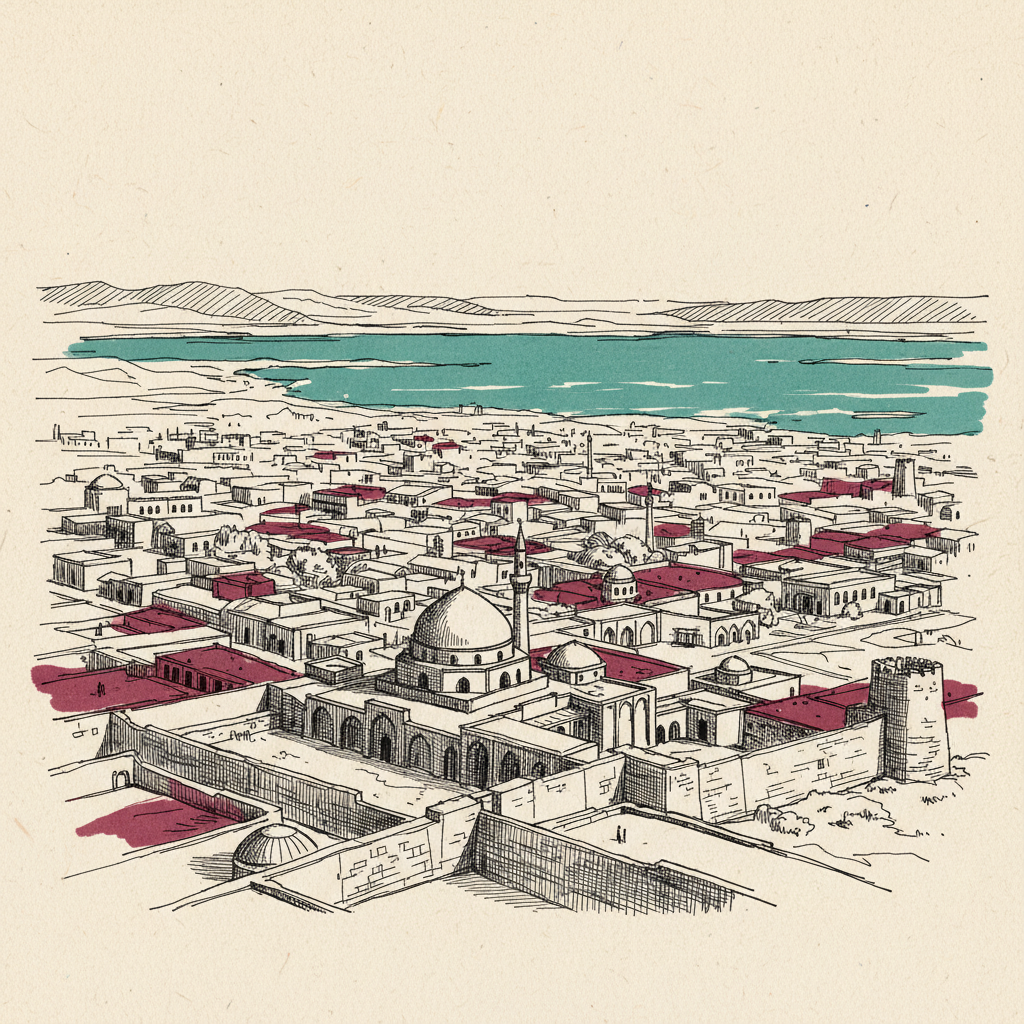
Urmia
Provincial capital of West Azerbaijan in north-western Iran; frequent site of Kurdish and Azerbaijani political-prisoner executions.
Urmia is West Azerbaijan's provincial capital, whose central prison has become a wartime execution hotspot: two men were hanged there at dawn on 3 August as alleged Mossad spies.
Last refreshed: 17 August 2026 · Appears in 1 active topic
Why is Urmia Prison a focus of Iran's wartime execution reports?
Timeline for Urmia
Mentioned in: Iran accuses France of a spy scheme
Iran Conflict 2026Mentioned in: Two hanged at Urmia as wartime spies
Iran Conflict 2026Mentioned in: Hengaw: Kurdish bodies denied, writer detained
Iran Conflict 2026Mentioned in: Hengaw documents Bevara, Mamousi in Iran arrests
Iran Conflict 2026Four Kurdish arrests in northwest Iran
Iran Conflict 2026Background
Urmia is the provincial capital of West Azerbaijan in north-western Iran, home to roughly one million people with a predominantly Azerbaijani-Turkic and Kurdish population. Its central prison has long held a disproportionate share of political prisoners drawn from these ethnic-minority communities, a pattern that dates back to sustained Kurdish hunger strikes at the facility between 2009 and 2012.
During the 2026 war, Urmia Prison has become one of the country's most closely watched sites for state executions, tracked chiefly through the Norway-based Kurdish monitor Hengaw rather than Iranian state media. Iranian authorities have in several cases withheld bodies from bereaved families, a practice that prevents public funerals from becoming protest sites.
The combination of ethnic-minority demographics, geographic distance from Tehran, and wartime information restrictions has made Urmia a recurring datapoint in international human rights reporting on Iran's judicial Conduct during the conflict, Independent of the diplomatic and military news cycle.
Urmia hangs two more wartime spies
Iran executed Omid Behzad and Pouria Safvat at dawn on 3 August, reportedly at Urmia Central Prison, on charges of spying for Israel's Mossad. The report comes solely from Hengaw, the Norway-based Kurdish rights monitor; Iranian judiciary media had not independently confirmed it at the time of reporting.
The hangings extend an espionage-execution pattern Hengaw has tracked at the prison since January, and follow a run of confirmed Urmia deaths earlier in the war, including Kurdish protester Mehrab Abdollahzadeh on 3 May and political prisoner Ehsan Afrashteh on 12 May. Single sourcing means the underlying espionage evidence remains unverified.
Urmia sits amid a wartime surge
Urmia Prison has repeatedly featured in Hengaw's tally of a wartime execution rate that reached one political killing every two days by early May, the fastest sustained pace documented since 1988. Mehrab Abdollahzadeh, a 27-year-old Kurdish barber convicted on a confession his lawyers said was coerced, was hanged there on 3 May; three more prisoners had already been transferred out of the same facility on 1 May, a pattern Hengaw treats as a pre-execution signal.
The city's ethnic-minority demographics and geographic isolation, compounded by an internet blackout still near 2% of normal connectivity, leave Hengaw's field contacts as the primary source documenting what happens inside the prison.
Where is Urmia in Iran?
Why are political prisoners being executed in Urmia?
What is the ethnicity of political prisoners in Urmia, Iran?
Who was hanged at Urmia Prison for spying in August 2026?
What is Urmia's population and ethnic makeup?
Why does Urmia Prison hold so many political prisoners?
