Skip to content
Welcome, thoughtbot's Giant Robots listeners!Start here
Iran Conflict 2026
29APR

IRGC declares standby, quantifies surviving fleet

3 min read
09:17UTC

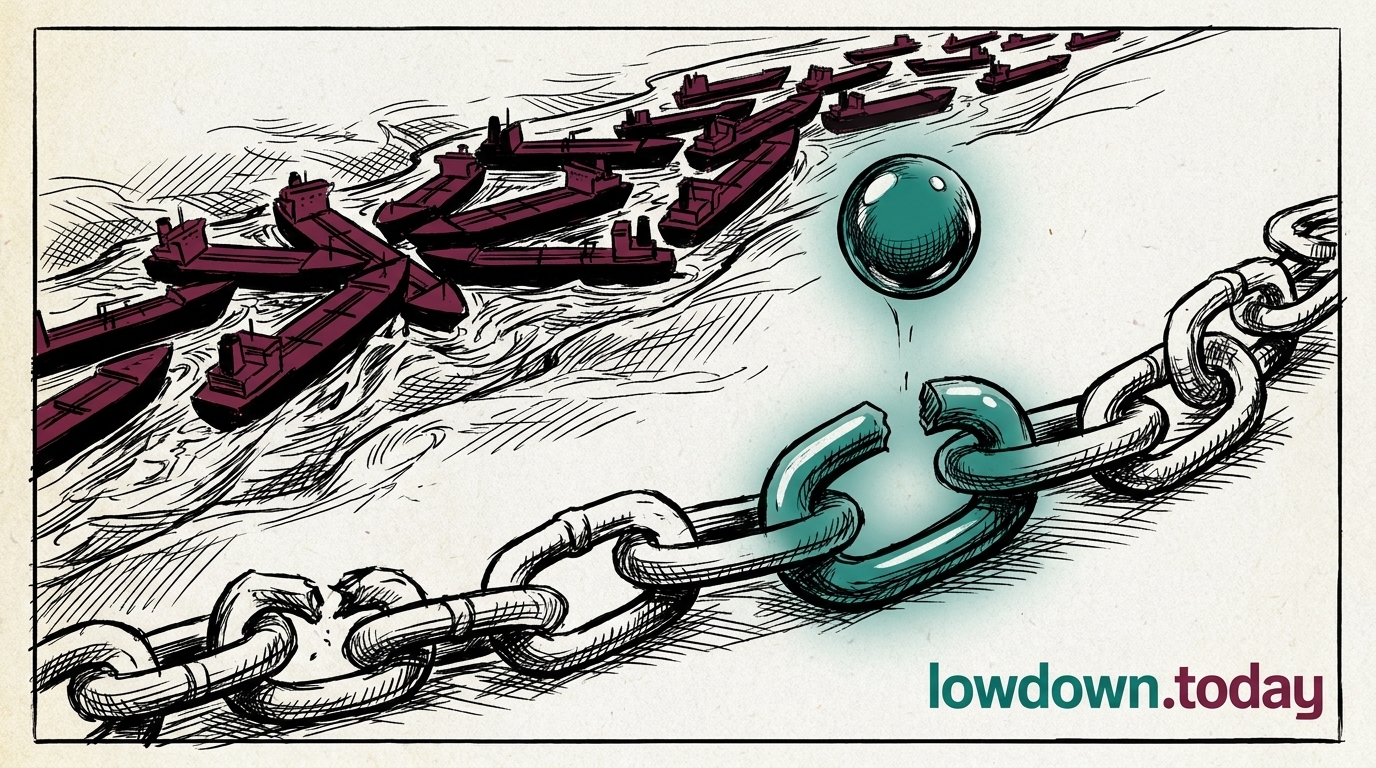
Iran's Revolutionary Guard told Tasnim on 2 May it is on full standby and disclosed that roughly 60% of its small attack-boat fleet remains intact, the first wartime self-quantification of asset survival.

ConflictDeveloping
Key takeaway

The IRGC has put a number on its surviving small-boat flotilla; the negotiation must now price it in.

The Islamic Revolutionary Guard Corps told the Tehran-based wire Tasnim on 2 May that it is on 'full standby' for a return to hostilities and disclosed that roughly 60% of its small attack-boat fleet remains intact⁠1. The IRGC is Iran's ideological military, separate from the regular Artesh and tasked with revolutionary security; its small-boat flotilla is the harassment force that has worked the Strait of Hormuz since the opening days of the war. For 65 days the Guard has briefed only on operations, never on remaining capacity, so the survival figure marks Tehran's first wartime quantification of attrition.

Admiral Brad Cooper, the CENTCOM Commander, told reporters on 30 April that US operations had achieved a '100% halt' to Iran's seaborne economic trade. A halt of vessel intercepts is not a halt of the force that intercepts them, and the IRGC has made that distinction the basis of its negotiating posture. Roughly six in every ten of its asymmetric platforms still float; whatever ceasefire eventually arrives must price that residual capability in.

Tasnim, an IRGC-aligned outlet, ran the figure with no independent OSINT corroboration available; the precision of '60%' rather than 'most' or 'a majority' is itself the signal. Tehran is telling Washington, allies and Gulf insurers that the bargaining surface includes the standing capacity behind the 14-point text, alongside the text itself. The same logic explains the standby declaration: a force on declared standby raises the cost of any US escalation past the verbal threshold Trump set in his Florida pool spray. Together the announcement and the figure read as a single instrument of leverage delivered through state media rather than diplomatic cable.

Deep Analysis

In plain English

Iran's Revolutionary Guard, the military force that controls the strait of Hormuz, announced on 2 May that it is on 'full standby' to resume fighting and that roughly 60% of its small fast-attack boat fleet survived the US-Israeli strikes since February. These small boats are the main tool the IRGC uses to threaten tankers and naval escorts in the narrow strait. The claim matters because the US military commander had said Iran's ability to conduct sea trade was 100% halted; the IRGC is saying its fighting capacity in the strait is far from finished.

Deep Analysis
Root Causes

The IRGC's structural doctrine after 1988 placed small attack boats in dispersed inland waterway staging areas and hardened coastal shelters, specifically to survive sustained US air campaign attrition.

By 2026, the fleet included craft storable in civilian boatyards and shallow-water inlets inaccessible to carrier-based strike aircraft. The 60% figure reflects the physical limitations of air-delivered munitions against targets designed to blend with civilian maritime infrastructure, more than any US decision to hold back.

The 'full standby' declaration is also an internal IRGC message: following the appointment of Mojtaba Khamenei under IRGC pressure and the organisation's operational sideline of the civilian government, the corps needs to demonstrate to its own rank and file that military leverage has not been surrendered in the ceasefire period.

What could happen next?
  • Risk

    If ceasefire talks collapse and the IRGC activates its surviving fleet, the 60% survival figure implies swarm capability sufficient to threaten CENTCOM escort vessels, not merely commercial tankers, representing a qualitative escalation risk above the pre-ceasefire intercept pattern.

  • Consequence

    The IRGC's public quantification of its own attrition directly undermines Admiral Cooper's '100% halt' claim before Congress, complicating the administration's ability to declare the blockade mission accomplished without IRGC capitulation.

First Reported In

Update #87 · China blocks OFAC; Iran writes; Trump tweets

Al Jazeera· 3 May 2026
Read original →
Different Perspectives
Wang Yi
Wang Yi
China's foreign minister and Djibouti's issued a joint communique on 21 October saying the war should not reach the Horn of Africa and stressing free navigation through Bab al-Mandeb. The text names neither Iran nor the Houthis, and Djibouti hosts China's only overseas military base, opposite the Yemeni coast.
Ministry of External Affairs
India's foreign ministry called the attacks on Saudi civilian and energy sites "unacceptable" on 22 October and said they must stop at once. An Indian died at Dammam, Indians were injured there and at Shaybah, and about 4,000 Umrah pilgrims remain stranded by one MP's count.
Iraq
Iraq
Iraq closed the al-Sheeb crossing with Iran to travellers and trucks from 21 October and said other crossings would close gradually. Unlike September's closure, which ended on a staged timetable, this one has none, and Iran's interior ministry said it received no notice.
Abdel Fattah el-Sisi
Egypt's president said on 21 October that Cairo's support would "defend Saudi territory, and does not include an attack on Yemen". Araghchi warned that Egyptian involvement would further complicate the situation, and Cairo's limit matches the one Ankara set on 8 October against attacking another state's soil.
UK Ministry of Defence
The MoD said on 20 October that RAF Typhoons over Saudi Arabia will not strike the Houthis, but extended tanker support to Saudi operations including against Houthi targets in Yemen. The tanker line sets no limit on strikes, so British aircraft may now refuel Saudi jets on bombing runs.
Turkey
Turkey
Ankara sent the Mecca Joint Defence Agreement to parliament around 20 October, and its published text treats an attack on one party as an attack on all. Article 16 brings it into force only on the last ratification, so the 5 October invocation in Riyadh could not yet bind Turkey.

Written with AI from Lowdown's published reporting. Not individually reviewed by an editor. Editorial standards.
