Skip to content
Briefings are running a touch slower this week while we rebuild the foundations.See roadmap
Iran Conflict 2026
29APR

Iran executes karate champion at Dastgerd

3 min read
09:17UTC

Iranian authorities executed Sasan Azadvar, 21, a karate champion from Isfahan, at Dastgerd Prison at dawn on 30 April 2026 on charges of attacking security forces.

ConflictDeveloping
Key takeaway

Sasan Azadvar's dawn execution at Dastgerd Prison is the tenth wartime hanging of a January 2026 protester.

Iranian authorities executed Sasan Azadvar, 21, a karate champion from Isfahan, at Dastgerd Prison at dawn on 30 April 2026 1. Dastgerd Prison is the central detention facility serving Iran's third-largest city. Azadvar had been detained during the 9 January 2026 protests and convicted of attacking State Security Force personnel and inciting riots. His lawyer said no credible evidence supported the charges; Hengaw, the Norway-based Kurdish human rights organisation that documented the case, recorded confessions extracted under torture.

Azadvar is the tenth protester from the December 2025 and January 2026 protests to be executed during wartime, an emerging sub-category within the wider execution register Hengaw had documented through 29-30 April . His profile as a karate champion distinguishes him from prior cases. The torture pattern is consistent with the documented record in earlier wartime executions including those of Erfan Kiani and Jafar Fakhrabadi , which Hengaw cited as part of its broader corroboration framework.

Hengaw has flagged the next 7 days as the operational watch window. The three Pakdasht mosque-fire defendants, Shahab Zahdi, Abolfazl Salehi Siavoshani and Yaser Rajaeifar, remain on death row after the Supreme Court upheld their sentences on 27 April . The Azadvar pattern, dawn execution following Supreme Court confirmation, sets the timeline against which their cases will now be read.

Deep Analysis

In plain English

Sasan Azadvar was a 21-year-old karate champion from Isfahan, central Iran. He was arrested on 9 January 2026 during anti-government protests and held at Dastgerd Prison. His lawyers said there was no credible evidence against him; human rights groups documented that his confession was extracted under torture. On 30 April 2026, he was executed at dawn. He was the tenth person executed in connection with the December 2025 and January 2026 protests since the Iran war began on 28 February. His case stands out partly because of his age and his public sporting profile, karate champions are known to their communities in a way ordinary young men are not. The **Hengaw** human rights organisation, which monitors Iranian political prisoners, confirmed the execution and the torture claims.

Deep Analysis
Root Causes

The wartime execution programme accelerated after the 28 February strikes decapitated the senior IRGC command. The successor leadership under Mojtaba Khamenei faces a legitimacy deficit, the first dynastic Supreme Leader succession, and the execution of protest-era prisoners serves to signal that the new leadership will be more, not less, severe than the old one.

The internet blackout is structurally enabling: with general-public connectivity at 2% of pre-war levels, families learn of executions days late, international monitoring organisations have degraded real-time access, and the domestic psychological deterrence effect of executions is suppressed for the general population who cannot share or amplify the news.

What could happen next?
  • Consequence

    Azadvar's execution as the tenth protest-era prisoner since 28 February establishes a documented pattern that international human rights bodies will use to argue for ICC referral if Iranian territorial jurisdiction ever becomes available.

  • Risk

    The wartime emergency sentencing procedures being used against protest-era prisoners bypass normal appeal timelines; the three Pakdasht mosque-fire defendants remaining on death row face the same accelerated process.

First Reported In

Update #85 · "Not at war": three claims, no treaty

Iran International· 1 May 2026
Read original
Different Perspectives
Gulf shipping and insurance markets
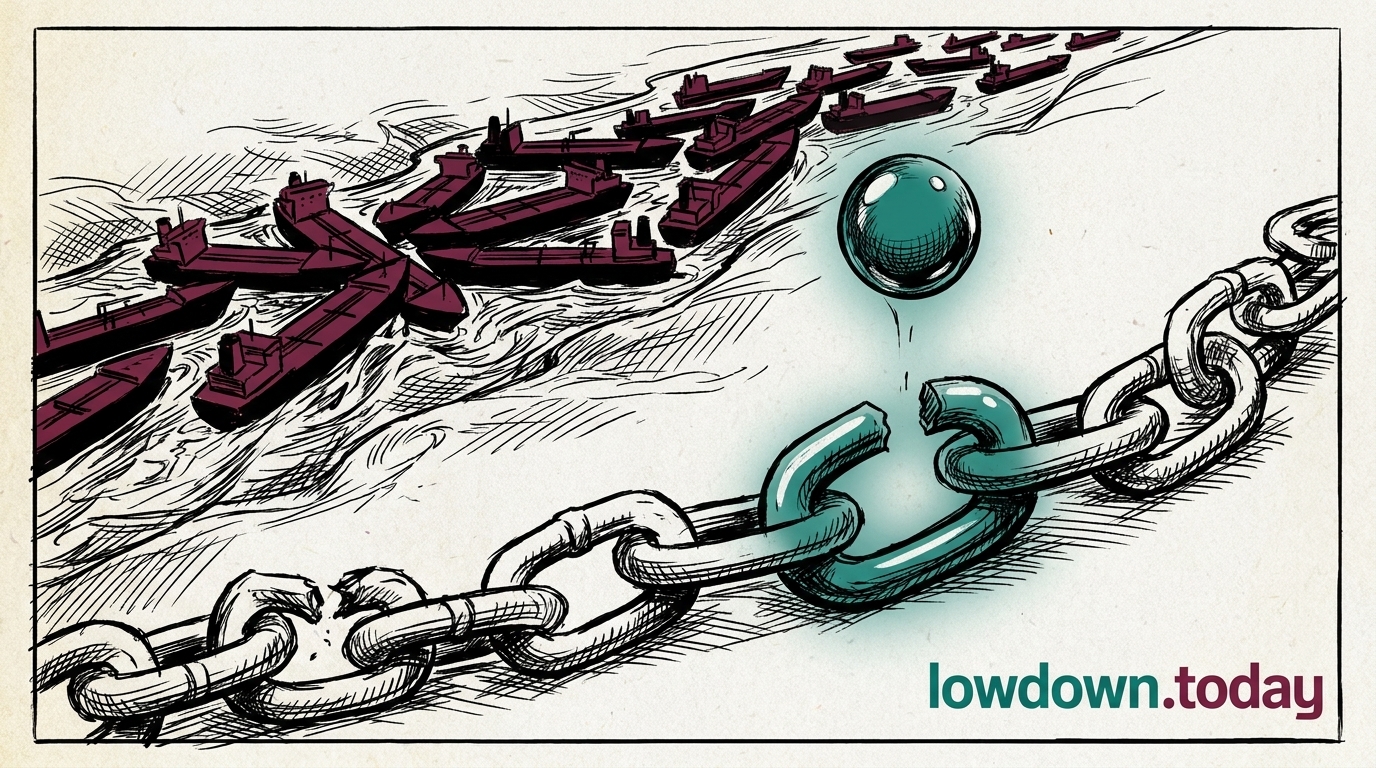
With Hormuz and Bab el-Mandeb both hostile at once, war-risk underwriters face their first dual-chokepoint pricing problem; the rerouting hedge that absorbed one closure is gone for Israeli-linked hulls. Any deal that reopens Hormuz without a Houthi stand-down clause delivers only partial shipping relief.
Russia and China
Russia and China
Russia and China met IAEA chief Grossi jointly in Geneva on 5 June to coordinate an advance blocking position against Washington's censure resolution, the first documented instance of proactive pre-session obstruction rather than reactive post-vote dissent. Beijing's move came four days after OFAC designated Shanghai Qianye Energy under Iran energy sanctions.
Saudi Arabia
Saudi Arabia
Saudi Arabia was left out of the emergency $4.01 billion Patriot waiver Qatar received on 2 May as its own PAC-3 stocks ran near-empty from intercepting Iranian salvoes over Aramco facilities. Riyadh is on a standard 18-month FMS queue behind a production line booked through 2030, with no equivalent priority to Qatar's Al Udeid basing role.
Houthis (Ansar Allah)
The Houthis declared a complete ban on Israeli Red Sea navigation on 8 June and struck Jaffa, their first attack on Israeli territory since April, seven days after the Tasnim authorisation to activate other fronts including Bab el-Mandeb. The declaration put both chokepoints under hostile authority simultaneously.
Iran
Iran
Iran agreed the 9 June mutual halt after the Mahshahr exchange and coordinated with Russia and China to block Washington's IAEA censure resolution, using the Board as a second front while the bilateral pause held on the military one. Tehran's acceptance of the Lebanon carve-out contradicts the linkage position it stated on 1 June.
Benjamin Netanyahu and the IDF
Israel struck the Karun Petrochemical plant at Mahshahr on 8 June over Trump's explicit objection, then agreed a halt with Iran the following day scoped on Israeli terms with Lebanon carved out. Netanyahu's posture is that the IDF will not accept Iranian missile factories as off-limits regardless of US diplomatic timelines.