Skip to content
Briefings are running a touch slower this week while we rebuild the foundations.See roadmap
Iran Conflict 2026
22APR

GL-U lapses with no renewal at 00:01 EDT

3 min read
10:22UTC

The authorisation covering 325 tankers and $31.5 billion of Iranian crude in transit expired at one minute past midnight, Washington time, with no replacement instrument and no Federal Register notice.

ConflictDeveloping
Key takeaway

GL-U's lapse is a sanctions decision executed by omission rather than by signed paper.

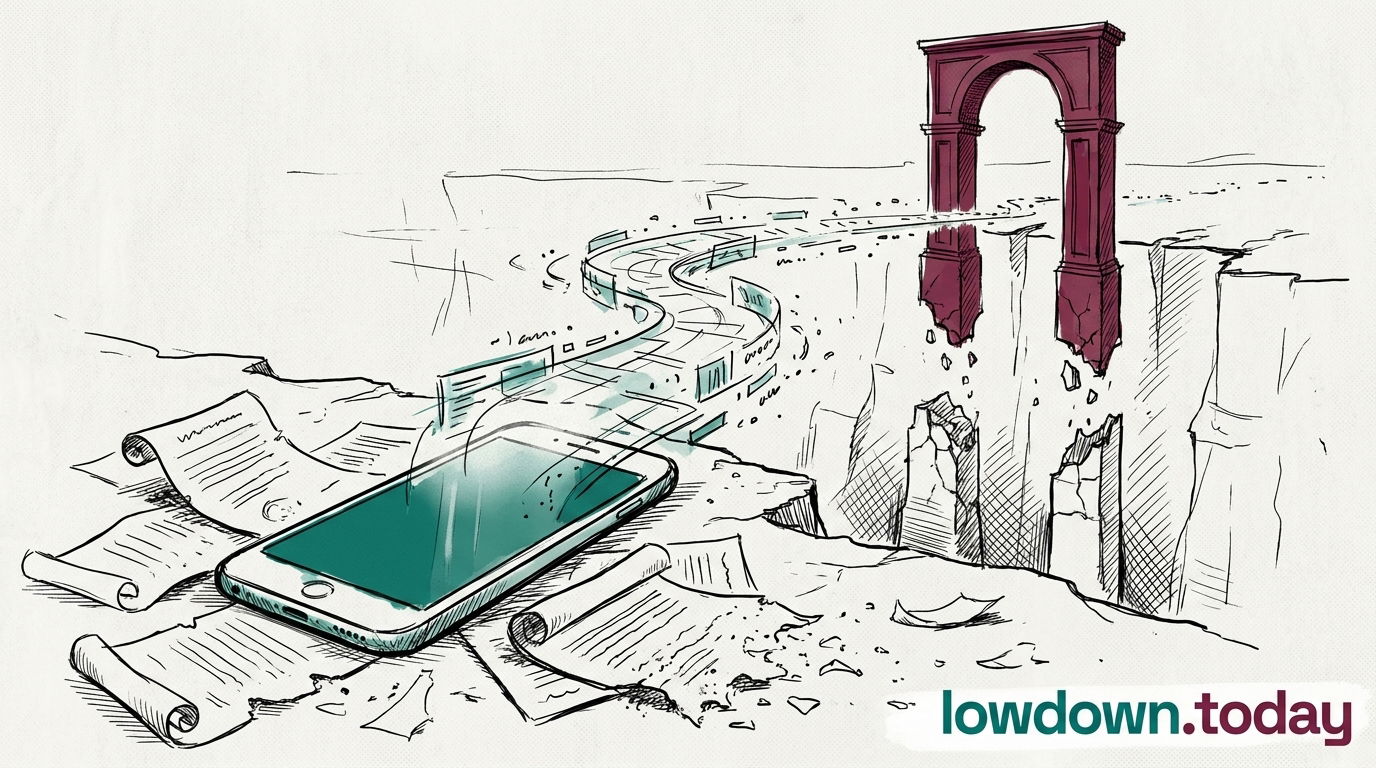
OFAC's General License U (GL-U, the authorisation that kept 325 tankers carrying roughly $31.5 billion of Iranian crude legally tradeable in transit) lapsed at 00:01 EDT on 19 April 2026 with no renewal, no replacement General License, and no Federal Register notice 1. The US Treasury Office of Foreign Assets Control, which administers Iran and Russia sanctions, neither extended the instrument nor terminated it by signed action; it simply did not sign.

The lapse had been on the board since Update #283, when Treasury's 25-day post-expiry silence first made non-renewal the base case . Treasury Secretary Scott Bessent told cable television on 15 April that GL-U would not be renewed and OFAC issued no designations alongside the statement . He repeated the non-renewal on 16 April without attaching a Federal Register instrument . The 19 April lapse is the execution of a path Bessent had already narrated on camera.

On a shipping compliance desk, the change reads starkly. Cargoes loaded before 00:01 EDT sit in a legal twilight where secondary-sanctions exposure depends on buyer jurisdiction and bank appetite rather than a written carve-out. Indian state refiners hold an estimated 60 to 70 per cent of that uncovered crude; Chinese terminals hold most of the rest. No document tells either where the line is, because Treasury did not publish one.

An OFAC lapse without a successor General License, without an Executive Order, and without a Federal Register notice is an enforcement event whose author is the gap in the paper trail. Compliance officers price the gap as policy, not administrative drift. With no replacement instrument on the page at the time of lapse, the 50-day no-Iran-instrument pattern now extends into the sanctions regime itself.

Deep Analysis

In plain English

Before this conflict began, the US government issued a special legal permission ; called General License U, or GL-U ; that allowed about 325 tanker ships already carrying Iranian oil to complete their journeys without breaking US sanctions rules. Think of it like a hall pass that said 'these ships are already on their way, so they can finish the trip legally.' That hall pass expired at midnight on 19 April, and the US government chose not to renew it. No paperwork was published, no announcement was made in the official government record ; it simply ran out. With the hall pass gone, any company that buys the oil, insures the ships, or processes the payments could now face US financial penalties. That affects the ships' crews, the refineries waiting for the oil, and the banks handling the transactions ; most of whom are not Iranian.

Deep Analysis
Root Causes

GL-U was created on 20 March 2026 as a 30-day legal bridge for cargoes already at sea when the blockade began ; a carve-out designed to avoid stranding crew and cargo simultaneously. Its lapse was structurally predetermined by its own sunset clause; the policy choice was whether to renew it.

The 50-day pattern of zero signed Iran instruments means the non-renewal was not transmitted through the normal published-instrument channel. Treasury Secretary Bessent confirmed non-renewal verbally on 16 April, but verbal confirmation creates no legal instrument and no Federal Register enforcement standard ; leaving counterparties unable to read the exact scope of their new exposure.

The Trump administration's preference for rhetorical pressure over signed instruments created the structural gap: sanctions pressure was ratcheted through a lapsing GL rather than a new EO, producing legal ambiguity that benefits neither consistent enforcement nor clear compliance.

What could happen next?
  • Consequence

    Indian state refiners holding 60-70% of affected crude face immediate secondary-sanction exposure that could restrict their dollar-clearing access.

    Immediate · 0.85
  • Risk

    Without Federal Register text, tanker owners and buyers face legal ambiguity about the exact scope of their exposure ; creating compliance uncertainty that prolongs market dislocation.

    Short term · 0.78
  • Precedent

    Allowing a sanctions instrument to lapse silently, without a published replacement, establishes a template for opaque regulatory escalation that bypasses the notice-and-comment framework.

    Long term · 0.72
First Reported In

Update #73 · Russia yes, Iran no: Treasury signs only one waiver

The White House· 19 Apr 2026
Read original
Different Perspectives
Israel
Israel
The IDF struck a Lebanese army unit on 6 June, killing a colonel, and privately told Moscow that shelling near Bushehr was accidental, per Putin's SPIEF disclosure. Israel is advancing in Lebanon past an unenforced ceasefire text while maintaining a back-channel to Russia on nuclear-site deconfliction.
Lebanon
Lebanon
President Aoun told CNN on 5 June that Iran uses Lebanon as a bargaining chip and urged Hezbollah toward diplomacy; on 6 June an IDF strike killed a Lebanese army colonel on the Khardali-Nabatieh road. The Lebanese state is publicly rejecting Iranian tutelage while the army sustains casualties from Israeli fire and the Washington framework remains unenforced.
Bahrain
Bahrain
Bahrain's US Fifth Fleet headquarters was among the targets in the 5-6 June two-country salvo; its PAC-3 magazine stands at 87 per cent depletion with an 18-month resupply gap and no comparable arms sale has been announced. The state is defending a critical US regional command on a thinning interceptor stock.
Kuwait
Kuwait
Kuwait received a $1.98bn US counter-drone sale approval on the same day IRGC missiles targeted its bases; it expelled two Iranian diplomats on 4 June and filed a formal protest. The arms approval gives Kuwait a future capability but leaves a 6-18 month delivery gap that the salvo tempo is already pressing.
Russia
Russia
Putin reaffirmed Russia's offer to hold Iran's 440.9 kg HEU at SPIEF on 6 June, said Russia is not arming Iran, and disclosed that both the US and Israel privately told Moscow that shelling near Bushehr was accidental. The restatement casts Moscow as the only remaining mediator both sides call, a position serving Russian interests whatever the nuclear file produces.
Iran
Iran
The IRGC, per Iranian state media, fired seven ballistic missiles at US bases in Kuwait and Bahrain, the largest two-country salvo of the war, and framed the launches as lawful retaliation; Foreign Minister Araghchi rejected Aoun's bargaining-chip accusation and Velayati warned Beirut against diplomatic naivety. Tehran has sent no HEU counter-proposal since Araghchi confirmed no progress on 4 June.