Skip to content
Briefings are running a touch slower this week while we rebuild the foundations.See roadmap
Iran Conflict 2026
21APR

Omani Vessels Bypass IRGC Corridor, Disable Trackers

2 min read
10:51UTC

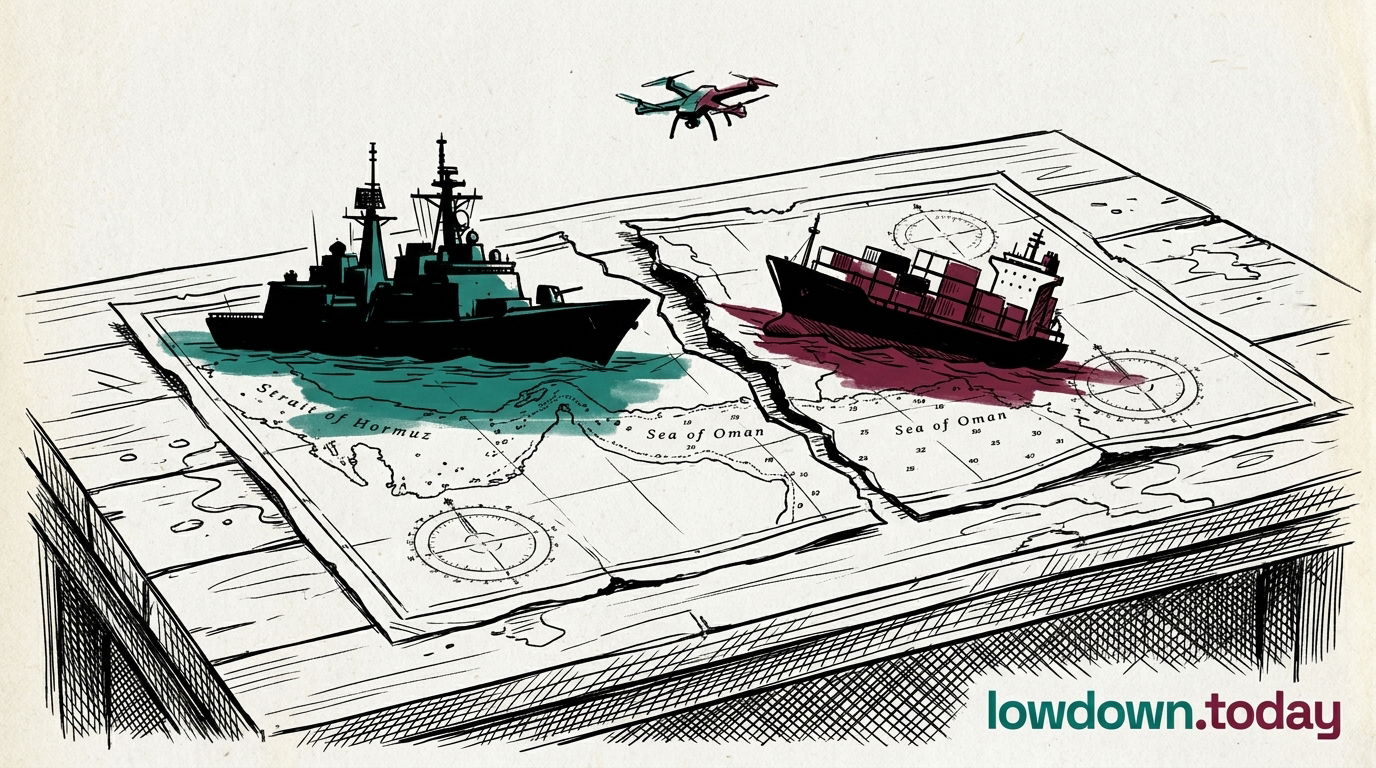
Three Omani vessels bypassed the IRGC's Larak Island toll corridor on 2 April, using the traditional international channel before disabling their AIS transponders, per Windward AI maritime intelligence.

ConflictDeveloping
Key takeaway

Oman's AIS-dark bypass suggests an undisclosed bilateral exemption from Iran's Hormuz toll, unconfirmed by either side.

Windward AI maritime intelligence tracked three Omani vessels using the traditional international Hormuz channel on 2 April, bypassing the IRGC's Larak Island toll corridor entirely. After completing the transit, the vessels disabled their Automatic Identification System (AIS) transponders, removing themselves from public tracking.

The Philippines deal and the Omani bypass occurred on the same day. The Philippines deal was announced through official diplomatic channels. The Omani manoeuvre was not. The deliberate AIS blackout after a corridor bypass is a signature of vessels that have received clearance through back-channels rather than the official toll mechanism. Vessels that have paid the IRGC toll have no reason to disable their transponders.

Oman has served as the primary Iran-West diplomatic backchannel for decades, facilitating the initial nuclear talks that led to the JCPOA. That history means Muscat's vessels bypassing the IRGC corridor is not an act of defiance; it is more likely an act of arrangement. An undisclosed bilateral exemption is consistent with both the AIS behaviour and Oman's established diplomatic pattern.

If confirmed, Oman's undisclosed deal and the Philippines' announced deal represent two distinct flavours of the same structural problem: the IRGC toll is already operating as a differentiated licensing framework rather than a blunt blockade, with exemptions allocated selectively across a fracturing coalition of former opponents.

Deep Analysis

In plain English

Three ships from Oman took a different route through the strait — one that avoids Iran's checkpoint — and then turned off their tracking systems. This strongly suggests Oman has a quiet deal with Iran that it has not announced publicly.

Deep Analysis
Root Causes

Oman's energy export dependency on Hormuz (it exports roughly 800,000 bpd through the strait) gives it both the motive and the leverage to negotiate a corridor arrangement with Iran.

Unlike the Philippines, which had to negotiate as a supplicant, Oman operates from a position of geographic leverage: its territory flanks the strait, and its cooperation with either side is operationally valuable.

Escalation

Stabilising for Oman-Iran relations; neutral for the broader conflict. Oman's backchannel function is a net positive for the prospect of indirect talks, as evidenced by the Axios report of US-Iran communication via Pakistan.

What could happen next?
  • Opportunity

    Oman's bilateral arrangement preserves its backchannel utility; Washington and Tehran are both likely to protect it as a communication line.

  • Meaning

    The IRGC's willingness to grant Oman an exception confirms the toll is a discretionary licensing system, not an absolute blockade — which creates negotiating space.

First Reported In

Update #57 · Bridge strike kills eight; Army chief fired

Windward AI· 3 Apr 2026
Read original
Causes and effects
Different Perspectives
Israel
Israel
The IDF struck a Lebanese army unit on 6 June, killing a colonel, and privately told Moscow that shelling near Bushehr was accidental, per Putin's SPIEF disclosure. Israel is advancing in Lebanon past an unenforced ceasefire text while maintaining a back-channel to Russia on nuclear-site deconfliction.
Lebanon
Lebanon
President Aoun told CNN on 5 June that Iran uses Lebanon as a bargaining chip and urged Hezbollah toward diplomacy; on 6 June an IDF strike killed a Lebanese army colonel on the Khardali-Nabatieh road. The Lebanese state is publicly rejecting Iranian tutelage while the army sustains casualties from Israeli fire and the Washington framework remains unenforced.
Bahrain
Bahrain
Bahrain's US Fifth Fleet headquarters was among the targets in the 5-6 June two-country salvo; its PAC-3 magazine stands at 87 per cent depletion with an 18-month resupply gap and no comparable arms sale has been announced. The state is defending a critical US regional command on a thinning interceptor stock.
Kuwait
Kuwait
Kuwait received a $1.98bn US counter-drone sale approval on the same day IRGC missiles targeted its bases; it expelled two Iranian diplomats on 4 June and filed a formal protest. The arms approval gives Kuwait a future capability but leaves a 6-18 month delivery gap that the salvo tempo is already pressing.
Russia
Russia
Putin reaffirmed Russia's offer to hold Iran's 440.9 kg HEU at SPIEF on 6 June, said Russia is not arming Iran, and disclosed that both the US and Israel privately told Moscow that shelling near Bushehr was accidental. The restatement casts Moscow as the only remaining mediator both sides call, a position serving Russian interests whatever the nuclear file produces.
Iran
Iran
The IRGC, per Iranian state media, fired seven ballistic missiles at US bases in Kuwait and Bahrain, the largest two-country salvo of the war, and framed the launches as lawful retaliation; Foreign Minister Araghchi rejected Aoun's bargaining-chip accusation and Velayati warned Beirut against diplomatic naivety. Tehran has sent no HEU counter-proposal since Araghchi confirmed no progress on 4 June.