Skip to content
Briefings are running a touch slower this week while we rebuild the foundations.See roadmap
Iran Conflict 2026
21APR

Majlis approves Hormuz toll bill

2 min read
10:51UTC

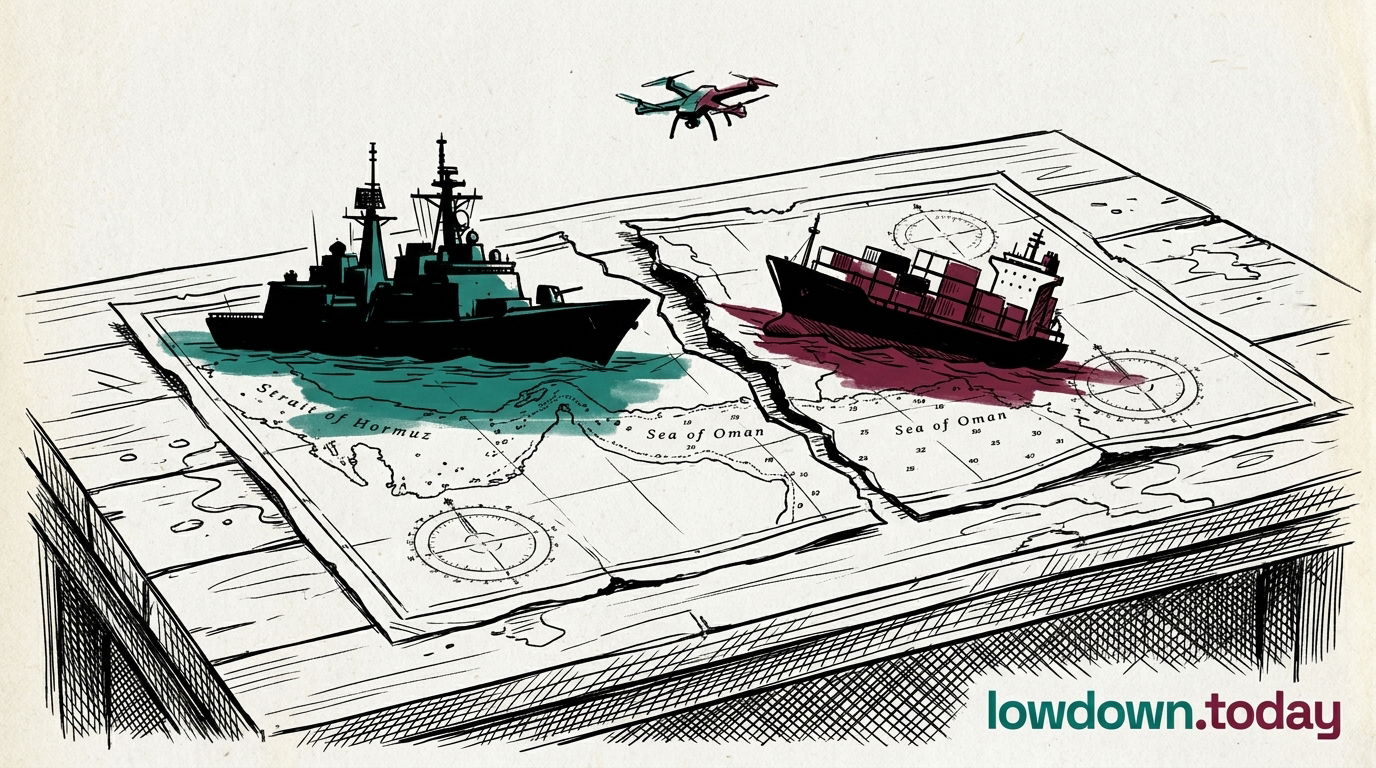
A key Majlis committee approved the Hormuz toll bill, advancing legislation that would permanently ban US and Israeli vessels and require fees in Iranian rial from all other shipping. Once codified, the toll becomes reversible only through domestic political process ; no future ceasefire can unwind it.

ConflictDeveloping
Key takeaway

Committee approval advances legislation that would make Hormuz's contested status a matter of Iranian domestic law, not merely military posture.

The Majlis committee approved the Hormuz toll legislation on 1 April, advancing a bill that permanently bans US and Israeli vessels from the strait and requires fees in Iranian rial from all other shipping. The bill had been drafted in parliament on Day 25, moved to committee stage on Day 32, and has now cleared committee. Full parliamentary vote, Guardian Council review, and presidential signature remain.

There is a fundamental difference between the IRGC imposing a toll because it controls a strait and the Iranian parliament enacting a law that makes the toll a statutory requirement. The first is a military fact reversible by military defeat. The second is a legal instrument reversible only by domestic political process. Iran had already demanded Hormuz sovereignty as a formal peace condition ; the legislation converts that negotiating demand into permanent law.

The bill bans US and Israeli vessels explicitly and requires fees in Iranian rial, forcing buyers to transact in a sanctioned currency. The NPT withdrawal bill is advancing on the same legislative track . Both bills are designed to survive any ceasefire: a ceasefire can stop the shooting, but it cannot repeal domestic Iranian legislation.

The IRGC's toll system had already been operating since around Day 12, with Chinese state ships paying and crossing . Codifying the practice into permanent law removes any ambiguity about whether a future Iranian government could unilaterally rescind it. If Trump withdraws in two to three weeks without securing this bill's reversal, the US leaves behind a legal architecture that makes Hormuz permanently contested.

Deep Analysis

In plain English

The Iranian parliament is voting on a law that would permanently charge ships money to use the Strait of Hormuz ; a narrow channel through which about one in five barrels of the world's oil passes. Right now, Iran is blocking the strait militarily during the war. This law would make that blockade permanent and legal under Iranian law, even after the war ends. American and Israeli ships would be banned outright. This matters because there is a big difference between Iran blocking the strait with soldiers, which can be reversed, and Iran blocking it with a law, which can only be reversed by Iran itself choosing to change the law.

Deep Analysis
Root Causes

The toll bill was drafted as a direct response to US and Israeli strikes on Iranian infrastructure. It converts an emergency military response into a permanent economic instrument, institutionalising the leverage Iran discovered it holds over global energy markets.

What could happen next?
  • Precedent

    First instance of a state attempting to codify transit fees for an international strait into domestic law, potentially triggering a global UNCLOS legal challenge.

    Long term · Assessed
  • Consequence

    A ceasefire that leaves the Hormuz toll law in place fails to address the economic cause of the oil price spike.

    Medium term · Assessed
  • Risk

    Guardian Council and presidential signature stages create multiple veto points, but each ratification stage makes repeal politically harder.

    Short term · Reported
First Reported In

Update #54 · Trump declares victory and withdrawal

CNN· 1 Apr 2026
Read original
Different Perspectives
Israel
Israel
The IDF struck a Lebanese army unit on 6 June, killing a colonel, and privately told Moscow that shelling near Bushehr was accidental, per Putin's SPIEF disclosure. Israel is advancing in Lebanon past an unenforced ceasefire text while maintaining a back-channel to Russia on nuclear-site deconfliction.
Lebanon
Lebanon
President Aoun told CNN on 5 June that Iran uses Lebanon as a bargaining chip and urged Hezbollah toward diplomacy; on 6 June an IDF strike killed a Lebanese army colonel on the Khardali-Nabatieh road. The Lebanese state is publicly rejecting Iranian tutelage while the army sustains casualties from Israeli fire and the Washington framework remains unenforced.
Bahrain
Bahrain
Bahrain's US Fifth Fleet headquarters was among the targets in the 5-6 June two-country salvo; its PAC-3 magazine stands at 87 per cent depletion with an 18-month resupply gap and no comparable arms sale has been announced. The state is defending a critical US regional command on a thinning interceptor stock.
Kuwait
Kuwait
Kuwait received a $1.98bn US counter-drone sale approval on the same day IRGC missiles targeted its bases; it expelled two Iranian diplomats on 4 June and filed a formal protest. The arms approval gives Kuwait a future capability but leaves a 6-18 month delivery gap that the salvo tempo is already pressing.
Russia
Russia
Putin reaffirmed Russia's offer to hold Iran's 440.9 kg HEU at SPIEF on 6 June, said Russia is not arming Iran, and disclosed that both the US and Israel privately told Moscow that shelling near Bushehr was accidental. The restatement casts Moscow as the only remaining mediator both sides call, a position serving Russian interests whatever the nuclear file produces.
Iran
Iran
The IRGC, per Iranian state media, fired seven ballistic missiles at US bases in Kuwait and Bahrain, the largest two-country salvo of the war, and framed the launches as lawful retaliation; Foreign Minister Araghchi rejected Aoun's bargaining-chip accusation and Velayati warned Beirut against diplomatic naivety. Tehran has sent no HEU counter-proposal since Araghchi confirmed no progress on 4 June.