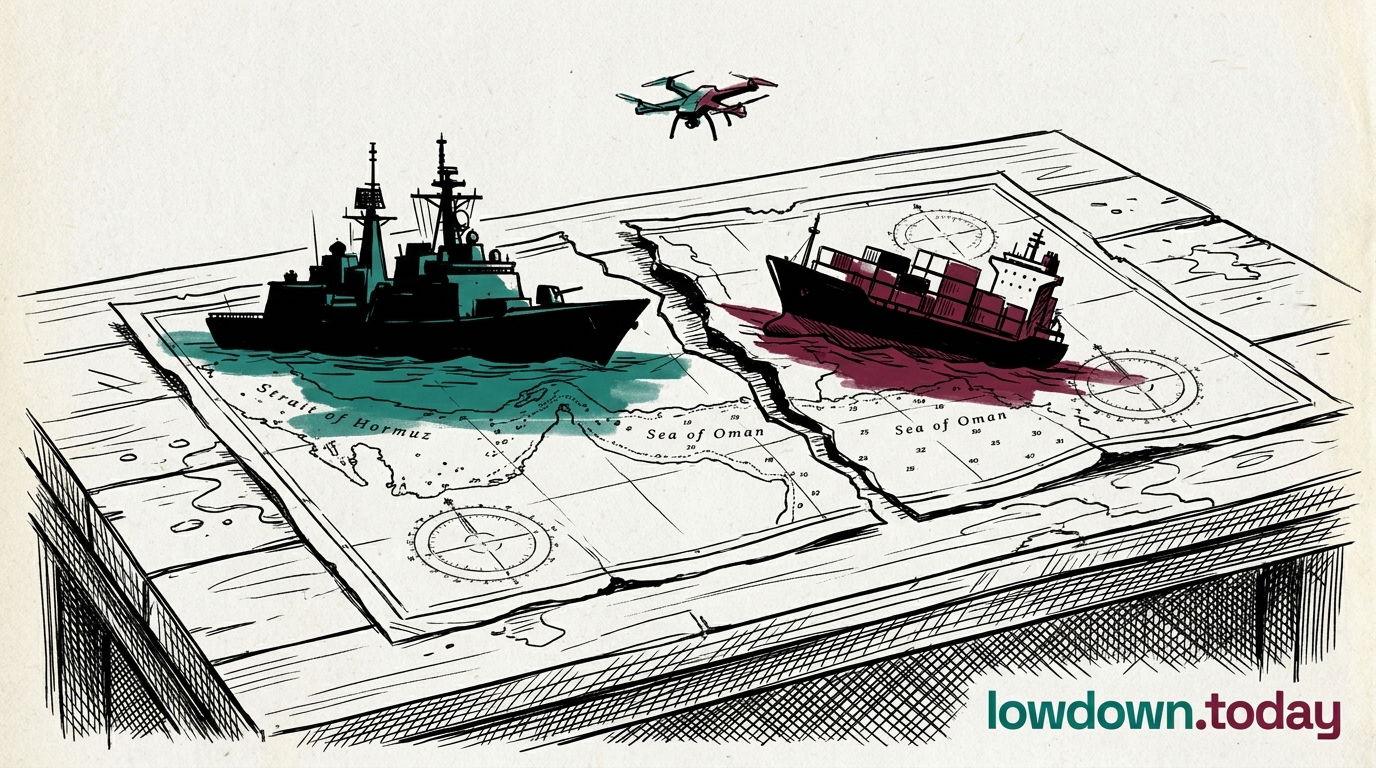
At the G7 summit in Évian-les-Bains on Wednesday 17 June, Narendra Modi raised with Donald Trump directly the killing of three Indian seafarers who died under US Navy fire in the Hormuz zone. India had already lodged two formal protests over the deaths. "Their safety is of utmost importance to us," Modi said at their bilateral. The day before, seated beside Trump at a summit session, he had said that "many Indian citizens have lost their lives", without naming the United States1. Before the war, 90 per cent of India's liquefied petroleum gas and 55 per cent of its crude transited Hormuz.
Asked for condolences, Trump said: "It's a tough profession. There's no question about it." He praised Modi and said a trade deal was "very close". No apology, investigation or offer of compensation was reported.
On the summit's final day the leaders issued a unanimous statement welcoming the US-Iran deal. India sits outside the G7 but supplies the clearest measure of the blockade's cost, and Modi chose to carry that measure straight to the man who ordered the fleet that caused it. He got a handshake and no instrument in return.



