Skip to content
You can now search across every topic, entity and event.What's new
Iran Conflict 2026
21APR

IRGC fires on two Indian tankers after clearance

3 min read
10:51UTC

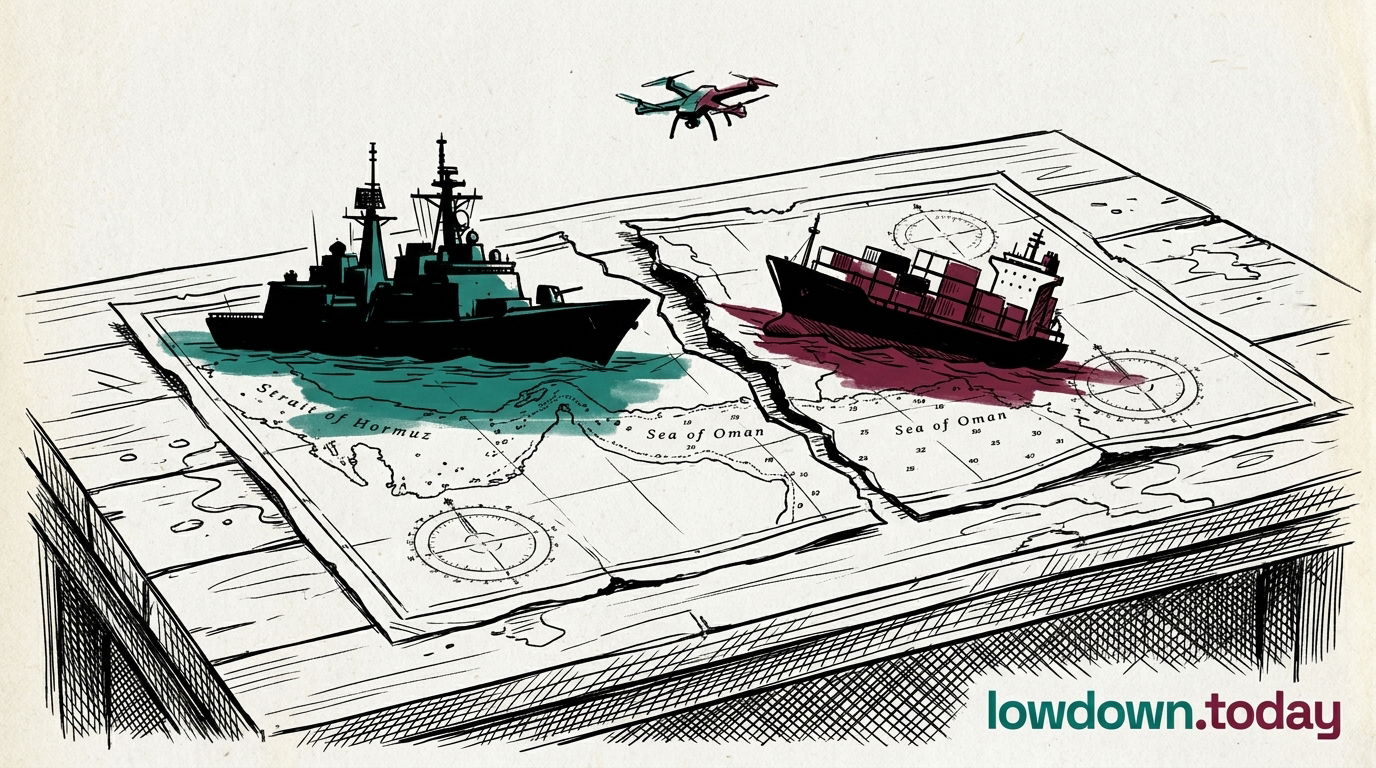
IRGC gunboats opened fire on the Sanmar Herald and Jag Arnav in the Strait of Hormuz on 18 April after Iranian authorities had granted both vessels prior radio clearance to transit.

ConflictDeveloping
Key takeaway

Radio clearance from Iranian authorities now carries no insurable protection value for Hormuz-bound shipping.

Islamic Revolutionary Guard Corps (IRGC) gunboats fired on the Indian-flagged very large crude carrier Sanmar Herald and the tanker Jag Arnav in the strait of Hormuz on 18 April, after both vessels received prior radio clearance from Iranian authorities to transit 1. No warning preceded the fire. Both ships reversed course back through the strait.

An intercepted bridge transmission captured one crew's response in a single radio line: "You gave me permission to go... you are firing now!" 2. The IRGC is Iran's ideological parallel military force, commanding proxy networks, domestic security and Hormuz naval operations alongside the conventional armed forces; gunboat encounters with commercial shipping in the strait are its signature. the strait of Hormuz is the 33-kilometre maritime chokepoint through which roughly a fifth of global seaborne oil passes.

The pattern repeats an earlier fire. On 17 April, Iran's joint military command declared Hormuz reopened for 24 hours, and the IRGC fired on an Indian-flagged vessel the same day after granting clearance . Iran reversed the opening on 18 April, declaring the strait "returned to its previous state under strict management and control", and the Sanmar Herald and Jag Arnav attacks followed inside hours.

For shipping insurers, the IRGC's grant-and-fire sequence prices Iranian radio clearance at zero protection value. Underwriters had been pricing a carve-out in which vessels carrying Iranian permission could transit safely; two incidents inside 24 hours, both on Indian hulls, both preceded by clearance, remove that assumption. The question that replaces it is whether any transit through Hormuz now carries insurable status while IRGC targeting decisions are made at gunboat level rather than by Tehran's foreign ministry.

Deep Analysis

In plain English

Imagine a toll booth operator waves you through, then a guard 100 metres down the road opens fire on your car. That is what happened to two Indian tanker ships in the Strait of Hormuz on 18 April. The Strait of Hormuz is a narrow waterway ; only 33 kilometres wide at its tightest ; between Iran and Oman. About 20% of the world's oil used to pass through it every day before this conflict started. Iranian military forces called the Islamic Revolutionary Guard Corps (IRGC) now control who goes through. On 18 April, two Indian oil tankers ; the Sanmar Herald and the Jag Arnav ; received radio permission from Iranian authorities to transit. Then IRGC gunboats fired on them anyway. A recorded transmission from the Sanmar Herald's bridge crew captured the crew's shock: 'You gave me permission to go... you are firing now!' Both the Sanmar Herald and the Jag Arnav reversed course and retreated. This matters because it shows Iran can deny passage even after granting radio clearance; the IRGC has done this on two consecutive days.

Deep Analysis
Root Causes

Iran's 1982 domestic maritime law, updated in 2024, claims jurisdiction over 'hostile-linked vessels' transiting Hormuz ; a category defined broadly enough to cover any flag state that has sanctioned Iran. India has not formally sanctioned Iran, but its state refiners were the primary buyers of GL-U-covered cargoes.

IRGC naval doctrine under the Decentralised Mosaic Defence delegates launch authority to 31 autonomous provincial units; the disconnect between the radio operator granting clearance and the gunboat commander firing suggests the two functions may sit in separate command chains.

The broader structural root is Iran's contested legal position at Hormuz: Tehran has never ratified the UN Convention on the Law of the Sea (UNCLOS), which grants transit passage through international straits. By operating outside UNCLOS, Iran can claim domestic maritime law governs passage terms ; meaning clearance granted under Iranian domestic procedures can be revoked under the same domestic authority without reference to international law.

Escalation

The grant-and-fire pattern across two consecutive days (17 April on one vessel, 18 April on two) suggests an emerging tactical norm rather than isolated incidents. It converts Indian tankers ; previously partially protected by India's non-aligned status and direct India-Iran diplomatic engagement ; into targets, widening the range of nations directly confronting Iran's Hormuz interdiction.

What could happen next?
  • Risk

    India's diplomatic protest creates pressure on New Delhi to join multilateral Hormuz escort arrangements ; a step that would convert India from non-aligned observer to active participant in the maritime confrontation.

    Short term · 0.72
  • Consequence

    The clearance-then-fire pattern voids the value of direct India-Iran diplomatic channel as a vessel-protection mechanism, which had functioned since March 2026 (ID:1060).

    Immediate · 0.82
  • Precedent

    Firing on vessels after issuing radio clearance sets a documented pattern that European navies drafting Hormuz rules of engagement at Northwood must account for ; any escort mission assumes clearance means something.

    Medium term · 0.78
First Reported In

Update #73 · Russia yes, Iran no: Treasury signs only one waiver

CBS News· 19 Apr 2026
Read original
Different Perspectives
International Group of P&I Clubs
The Group has kept its Hormuz war-risk exclusion in force through the entire shipping recovery, even as London hull war-risk premiums fell to about 2% of vessel value. A burning LNG carrier off Limah is now the fresh case for holding that line, with mutual pooling meaning one hit reprices the strait for every owner at once.
Jordan
Jordan
Jordan's government said no threats existed at Aqaba hours before Iranian missiles landed there, and has not addressed the IRGC's claim that Jordanian civilians and soldiers supplied targeting intelligence for the strike. Amman hosts forces it does not command and is saying as little as it can.
United States (CENTCOM)
The Pentagon named two of the seventeen American dead, 1st Lieutenant Tyler Feehan and Private Isabella Gonzales, both killed at Jordan's Muwaffaq Salti Air Base, days after its Amman embassy had warned citizens away from Aqaba's airport and seaport. Washington is naming its own cost while flagging threats it declines to attribute publicly.
Iran
Iran
Iran said on Monday it disabled two oil tankers crossing the Strait of Hormuz without its permission, asserting a right to license passage through the strait it borders. Tehran named neither vessel, and CENTCOM had already denied a comparable Iranian claim on 18 July.
Qatar
Qatar
Qatar moved from summoning Iran's deputy ambassador on 8 July to a dated written claim at the UN Security Council thirteen days later, citing Resolution 2817 and reserving its Article 51 right of self-defence. Doha is building a permanent record while still hosting CENTCOM's forward headquarters and mediating with Tehran.
CENTCOM
CENTCOM
CENTCOM confirmed a third American service member died in northern Iraq on 19 July clearing unexploded ordnance from a downed Iranian drone, and recovered unidentified remains at Muwaffaq Salti Air Base in Jordan. The Pentagon has framed its Khuzestan strikes as degrading IRGC capacity, a rationale that stretches to explain a reactor foundation with no nuclear material in it.