Skip to content
Briefings are running a touch slower this week while we rebuild the foundations.See roadmap
Iran Conflict 2026
21APR

Iran: only allied ships may pass Hormuz

2 min read
10:51UTC
ConflictDeveloping

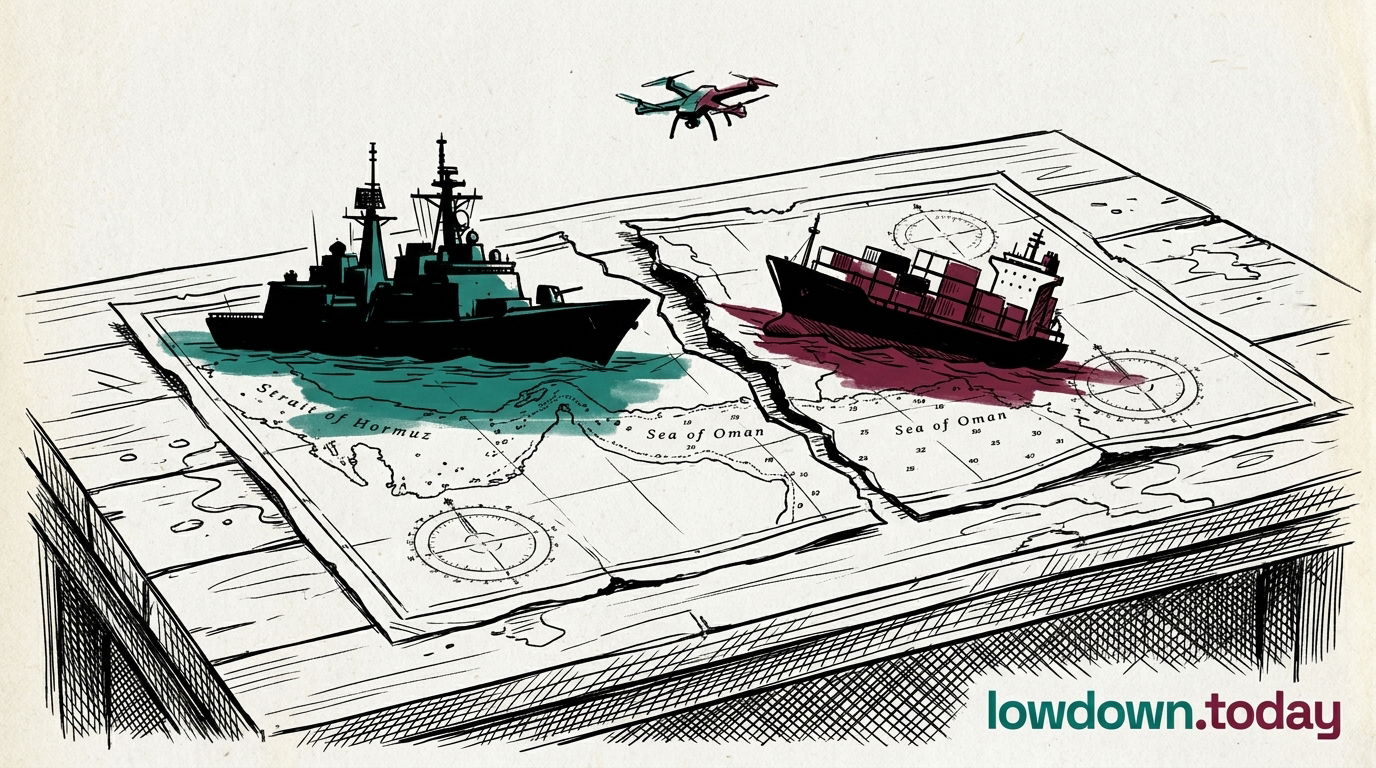
Iran's UN representative Ali Mousavi told the International Maritime Organisation this week that vessels belonging to or linked to 'aggressor parties' forfeit the right of innocent passage through the strait of Hormuz. 1 PressTV, Iran's official state broadcaster, confirmed the statement as Iran's official legal position. Permitted countries under the vetting system are India, China, Russia, Iraq, and Pakistan.

The IMO statement is the formal legal scaffolding for the parliamentary toll bill being drafted simultaneously. Iran is constructing a two-layer legal architecture: domestic statute (the Majlis bill) combined with formal international notification (the IMO submission) that pre-empts claims that Iran is acting without legal notice. The IMO notification mirrors Egypt's communication to the Suez Canal Users Association in 1956 after nationalisation.

Trump had claimed Iran offered Hormuz concessions , and Pakistan confirmed the 15-point US proposal . The IMO statement directly contradicts the framing that Iran is moving toward reopening the strait: Iran is doing the opposite, establishing formal legal grounds for continued selective passage that would survive any ceasefire under the pending domestic legislation. Pentagon planning for a Kharg Island assault continues ; the IMO statement is Iran's legal counter-move to that planning, establishing that any forcible passage would constitute a violation of Iran's defined legal framework rather than merely a military confrontation.

Deep Analysis

In plain English

Iran told the international shipping authority that ships linked to countries attacking it lose the right to pass through the Strait of Hormuz freely. This would let Iran legally charge or block ships from the US, Israel, and their allies. International law says countries cannot block international waterways, but Iran argues it is defending itself.

Deep Analysis
Root Causes

Iran is exploiting a gap in UNCLOS: the convention assumes coastal states will not be at war with the states whose vessels transit their waters. The legal framework was not designed for a scenario where a coastal state is under active military attack.

By framing the toll as a defensive measure rather than an offensive blockade, Iran creates legal ambiguity that is harder to challenge than a straightforward closure.

First Reported In

Update #49 · Hormuz toll into law; Tangsiri killed

Times of Israel / CENTCOM· 27 Mar 2026
Read original
Different Perspectives
Israel
Israel
The IDF struck a Lebanese army unit on 6 June, killing a colonel, and privately told Moscow that shelling near Bushehr was accidental, per Putin's SPIEF disclosure. Israel is advancing in Lebanon past an unenforced ceasefire text while maintaining a back-channel to Russia on nuclear-site deconfliction.
Lebanon
Lebanon
President Aoun told CNN on 5 June that Iran uses Lebanon as a bargaining chip and urged Hezbollah toward diplomacy; on 6 June an IDF strike killed a Lebanese army colonel on the Khardali-Nabatieh road. The Lebanese state is publicly rejecting Iranian tutelage while the army sustains casualties from Israeli fire and the Washington framework remains unenforced.
Bahrain
Bahrain
Bahrain's US Fifth Fleet headquarters was among the targets in the 5-6 June two-country salvo; its PAC-3 magazine stands at 87 per cent depletion with an 18-month resupply gap and no comparable arms sale has been announced. The state is defending a critical US regional command on a thinning interceptor stock.
Kuwait
Kuwait
Kuwait received a $1.98bn US counter-drone sale approval on the same day IRGC missiles targeted its bases; it expelled two Iranian diplomats on 4 June and filed a formal protest. The arms approval gives Kuwait a future capability but leaves a 6-18 month delivery gap that the salvo tempo is already pressing.
Russia
Russia
Putin reaffirmed Russia's offer to hold Iran's 440.9 kg HEU at SPIEF on 6 June, said Russia is not arming Iran, and disclosed that both the US and Israel privately told Moscow that shelling near Bushehr was accidental. The restatement casts Moscow as the only remaining mediator both sides call, a position serving Russian interests whatever the nuclear file produces.
Iran
Iran
The IRGC, per Iranian state media, fired seven ballistic missiles at US bases in Kuwait and Bahrain, the largest two-country salvo of the war, and framed the launches as lawful retaliation; Foreign Minister Araghchi rejected Aoun's bargaining-chip accusation and Velayati warned Beirut against diplomatic naivety. Tehran has sent no HEU counter-proposal since Araghchi confirmed no progress on 4 June.