Skip to content
Briefings are running a touch slower this week while we rebuild the foundations.See roadmap
Iran Conflict 2026
21APR

Iran oil exports fall below 300,000 bpd

3 min read
10:51UTC

Kpler and Lloyd's List data put Iran's oil exports below 300,000 barrels a day in May, down from 1.84m before the war. Some 67m barrels sit stranded in the Gulf.

ConflictAssessed
Key takeaway

Iran's oil exports have collapsed to one-sixth of pre-war volume, with 67m barrels stranded in the Gulf.

Kpler trade intelligence and Lloyd's List maritime data found Iran's oil exports fell below 300,000 barrels per day in May 2026, down from 1.84m bpd before the war began, roughly one-sixth of the pre-blockade flow 1. The lost revenue since April runs to about $5.8bn, and some 67m barrels sit stranded inside the Gulf, unable to clear the blockade.

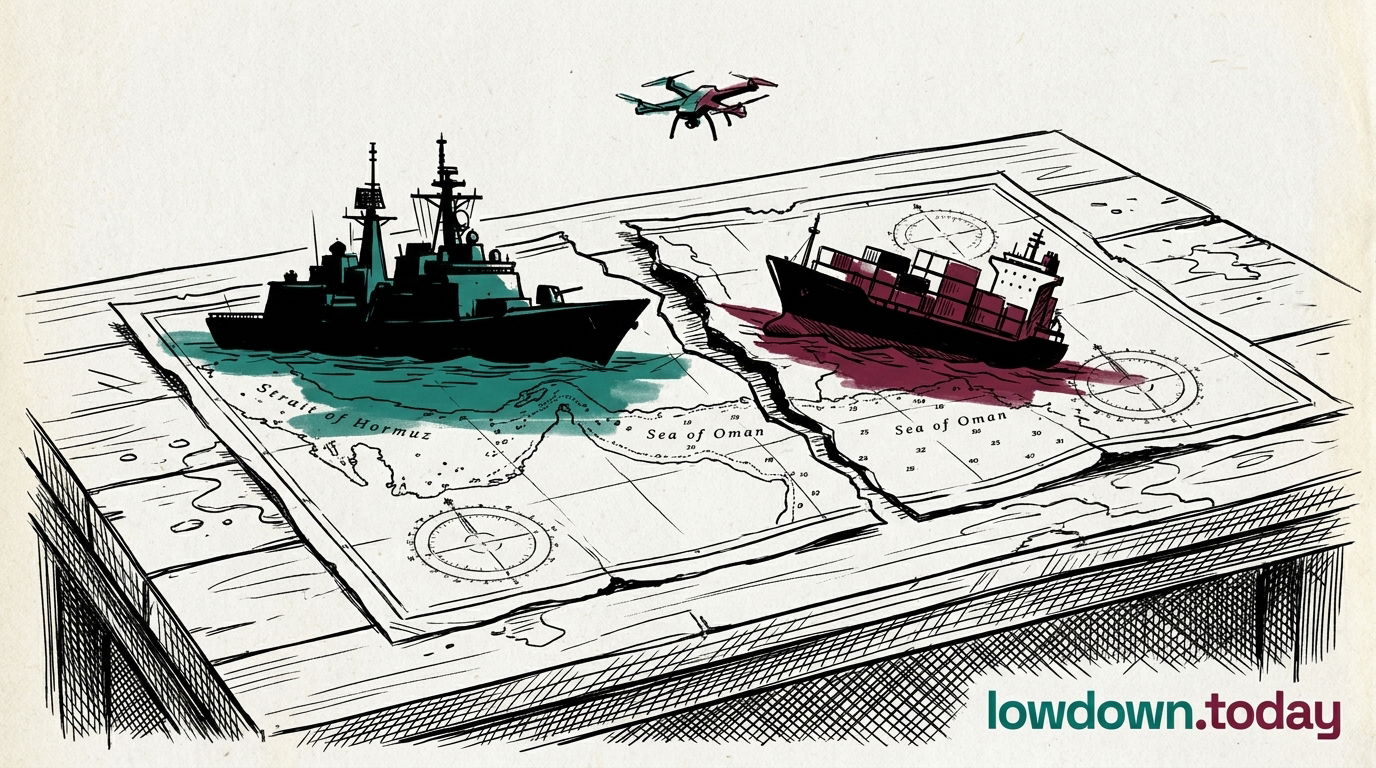
The collapse is the revenue consequence of CENTCOM's 121-vessel naval blockade . Ship-tracking measures cargoes that move, so the figure is anchored outside Tehran's control: hard for Iran to inflate, hard for outsiders to dispute.

At a conservative $90 a barrel, Iran's monthly oil income has now fallen below what Saudi Arabia spends in a single day. Read alongside the 77.2 per cent inflation print, the two numbers approach the squeeze from opposite ends, Tehran's own statistics and independent vessel data, and meet on the same floor under the war's economic cost.

Deep Analysis

In plain English

Before the war, Iran sold roughly 1.84 million barrels of oil per day on the international market. That oil was a major source of government revenue. By May 2026, exports had fallen below 300,000 barrels per day, less than one sixth of the pre-war level, because CENTCOM is blocking most tankers from carrying Iranian oil and buyers are too nervous to participate. As a result, 67 million barrels are sitting in ships and storage inside the Gulf, unable to move. Iran has lost approximately $5.8bn in revenue since April. This does not directly affect most Western consumers because global supply has been partly replaced by Saudi and other OPEC production, but it does keep Brent crude elevated above the pre-war price and contributes to higher fuel bills across the importing world.

What could happen next?
  • Consequence

    Iran's daily government revenue from oil has fallen from roughly $145m to roughly $25m, a structural deficit that makes negotiated settlement economically urgent for Tehran.

    Immediate · Assessed
  • Risk

    The 67 million stranded barrels will create a price-suppression spike when any deal permits their release, potentially dropping Brent by $8-15 per barrel in a single trading session.

    Medium term · Reported
  • Opportunity

    China's pre-war Iranian crude contracts give Beijing leverage in any post-deal commodity arbitrage; Chinese absorption of stranded barrels may accelerate Iran's economic recovery faster than sanctions relief alone.

    Medium term · Reported
First Reported In

Update #119 · Trump's Iran deal: 95% done, 0% signed

Al Jazeera· 6 Jun 2026
Read original
Causes and effects
This Event
Iran oil exports fall below 300,000 bpd
Iran's monthly oil income has fallen below what Saudi Arabia spends in a single day. The figure is anchored in independent ship-tracking, hard for Tehran to inflate or deny.
Different Perspectives
Israel
Israel
The IDF struck a Lebanese army unit on 6 June, killing a colonel, and privately told Moscow that shelling near Bushehr was accidental, per Putin's SPIEF disclosure. Israel is advancing in Lebanon past an unenforced ceasefire text while maintaining a back-channel to Russia on nuclear-site deconfliction.
Lebanon
Lebanon
President Aoun told CNN on 5 June that Iran uses Lebanon as a bargaining chip and urged Hezbollah toward diplomacy; on 6 June an IDF strike killed a Lebanese army colonel on the Khardali-Nabatieh road. The Lebanese state is publicly rejecting Iranian tutelage while the army sustains casualties from Israeli fire and the Washington framework remains unenforced.
Bahrain
Bahrain
Bahrain's US Fifth Fleet headquarters was among the targets in the 5-6 June two-country salvo; its PAC-3 magazine stands at 87 per cent depletion with an 18-month resupply gap and no comparable arms sale has been announced. The state is defending a critical US regional command on a thinning interceptor stock.
Kuwait
Kuwait
Kuwait received a $1.98bn US counter-drone sale approval on the same day IRGC missiles targeted its bases; it expelled two Iranian diplomats on 4 June and filed a formal protest. The arms approval gives Kuwait a future capability but leaves a 6-18 month delivery gap that the salvo tempo is already pressing.
Russia
Russia
Putin reaffirmed Russia's offer to hold Iran's 440.9 kg HEU at SPIEF on 6 June, said Russia is not arming Iran, and disclosed that both the US and Israel privately told Moscow that shelling near Bushehr was accidental. The restatement casts Moscow as the only remaining mediator both sides call, a position serving Russian interests whatever the nuclear file produces.
Iran
Iran
The IRGC, per Iranian state media, fired seven ballistic missiles at US bases in Kuwait and Bahrain, the largest two-country salvo of the war, and framed the launches as lawful retaliation; Foreign Minister Araghchi rejected Aoun's bargaining-chip accusation and Velayati warned Beirut against diplomatic naivety. Tehran has sent no HEU counter-proposal since Araghchi confirmed no progress on 4 June.