Skip to content
Briefings are running a touch slower this week while we rebuild the foundations.See roadmap
Iran Conflict 2026
21APR

Blockade hits 121 ships, one holed

3 min read
10:51UTC

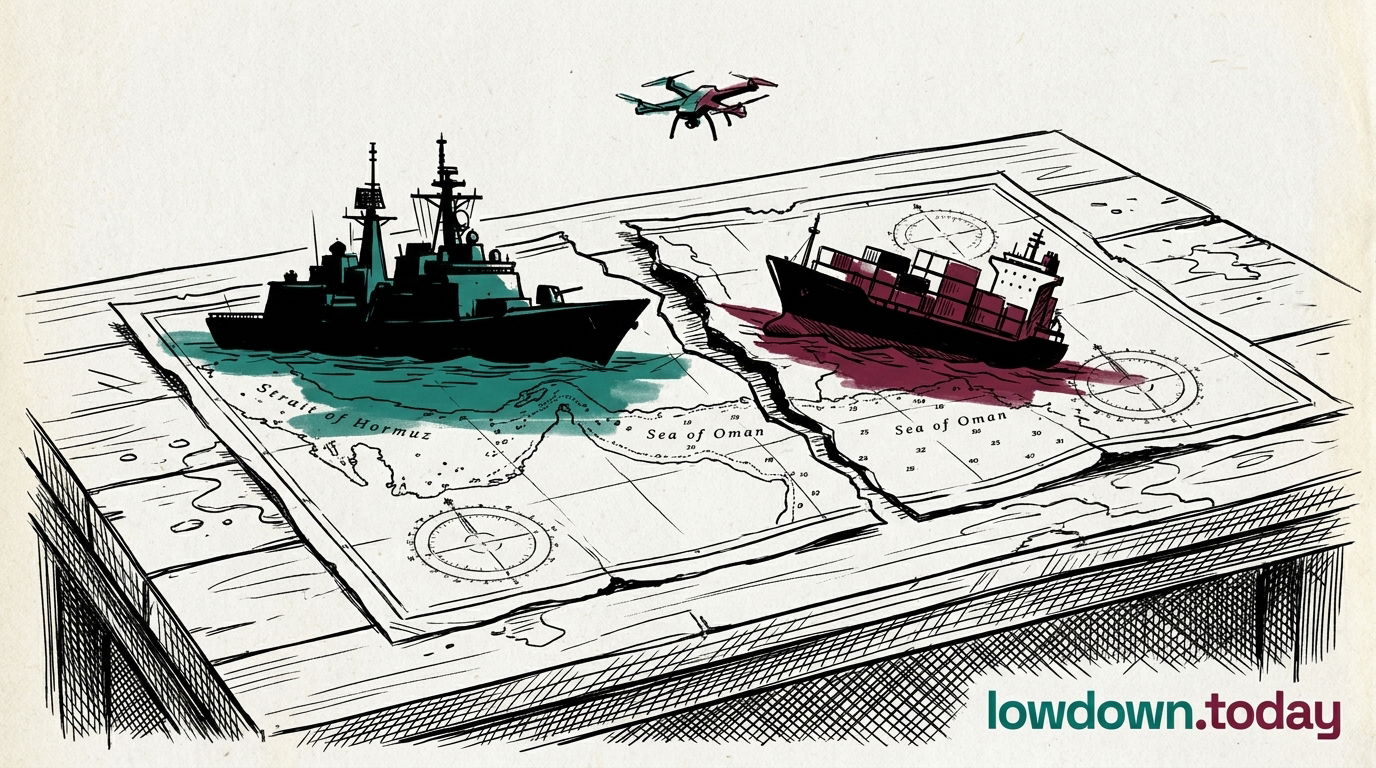
CENTCOM redirected 121 commercial vessels and disabled five to enforce the US blockade on 1 June; the container ship MSC Sariska V was holed by an unidentified projectile in the Gulf.

ConflictDeveloping
Key takeaway

The US naval blockade widened to 121 redirected ships even as the negotiating channel froze.

CENTCOM (US Central Command) confirmed on Monday 1 June that it had redirected 121 commercial vessels and disabled five ships to enforce the US blockade, up from the 116 redirections it logged on 30 May 1. CENTCOM is the US military command running operations across The Gulf. It redirected 121 vessels yet disabled only five, a roughly 4% kinetic share of the ships it stopped, which means most traffic is turned by warning rather than by fire.

The container ship MSC Sariska V was holed by an unidentified projectile in the Persian Gulf on 1 June, a large breach above the waterline, with no claim of responsibility 2. It is the third named commercial vessel struck after the Olympic Life and the Lian Star. No party has claimed the strike, so whether it was the IRGC, a proxy, or stray ordnance stays unconfirmed.

A blockade this wide raises war-risk premiums and, for European and Asian consumers, means dearer goods and slower deliveries. It widened on the precise day diplomacy briefly opened and slammed shut, with Iran's 09:56 talk suspension running in parallel above it. The militaries kept doing what they do regardless of the diplomatic whiplash overhead.

Deep Analysis

In plain English

CENTCOM (US Central Command) is the US military's regional command for the Middle East. It has been stopping commercial ships from entering Iranian ports since mid-April 2026, turning them away and in some cases disabling them. By 1 June it had redirected 121 ships and disabled five. A 'disabled' ship means it cannot move under its own power and must be towed, leaving crew stranded on board. Separately, the container ship MSC Sariska V was hit by an unknown projectile while sailing through the Persian Gulf. No country or group has said they did it. This is the third named civilian cargo ship to be hit in the conflict. When no one claims an attack on a merchant vessel, it complicates insurance claims and leaves the ship's operators, crew and cargo owners in legal limbo.

First Reported In

Update #115 · Iran moves first, Trump moves by phone

CBS News· 2 Jun 2026
Read original
Different Perspectives
Israel
Israel
The IDF struck a Lebanese army unit on 6 June, killing a colonel, and privately told Moscow that shelling near Bushehr was accidental, per Putin's SPIEF disclosure. Israel is advancing in Lebanon past an unenforced ceasefire text while maintaining a back-channel to Russia on nuclear-site deconfliction.
Lebanon
Lebanon
President Aoun told CNN on 5 June that Iran uses Lebanon as a bargaining chip and urged Hezbollah toward diplomacy; on 6 June an IDF strike killed a Lebanese army colonel on the Khardali-Nabatieh road. The Lebanese state is publicly rejecting Iranian tutelage while the army sustains casualties from Israeli fire and the Washington framework remains unenforced.
Bahrain
Bahrain
Bahrain's US Fifth Fleet headquarters was among the targets in the 5-6 June two-country salvo; its PAC-3 magazine stands at 87 per cent depletion with an 18-month resupply gap and no comparable arms sale has been announced. The state is defending a critical US regional command on a thinning interceptor stock.
Kuwait
Kuwait
Kuwait received a $1.98bn US counter-drone sale approval on the same day IRGC missiles targeted its bases; it expelled two Iranian diplomats on 4 June and filed a formal protest. The arms approval gives Kuwait a future capability but leaves a 6-18 month delivery gap that the salvo tempo is already pressing.
Russia
Russia
Putin reaffirmed Russia's offer to hold Iran's 440.9 kg HEU at SPIEF on 6 June, said Russia is not arming Iran, and disclosed that both the US and Israel privately told Moscow that shelling near Bushehr was accidental. The restatement casts Moscow as the only remaining mediator both sides call, a position serving Russian interests whatever the nuclear file produces.
Iran
Iran
The IRGC, per Iranian state media, fired seven ballistic missiles at US bases in Kuwait and Bahrain, the largest two-country salvo of the war, and framed the launches as lawful retaliation; Foreign Minister Araghchi rejected Aoun's bargaining-chip accusation and Velayati warned Beirut against diplomatic naivety. Tehran has sent no HEU counter-proposal since Araghchi confirmed no progress on 4 June.