Skip to content
You can now search across every topic, entity and event.What's new
Iran Conflict 2026
18APR

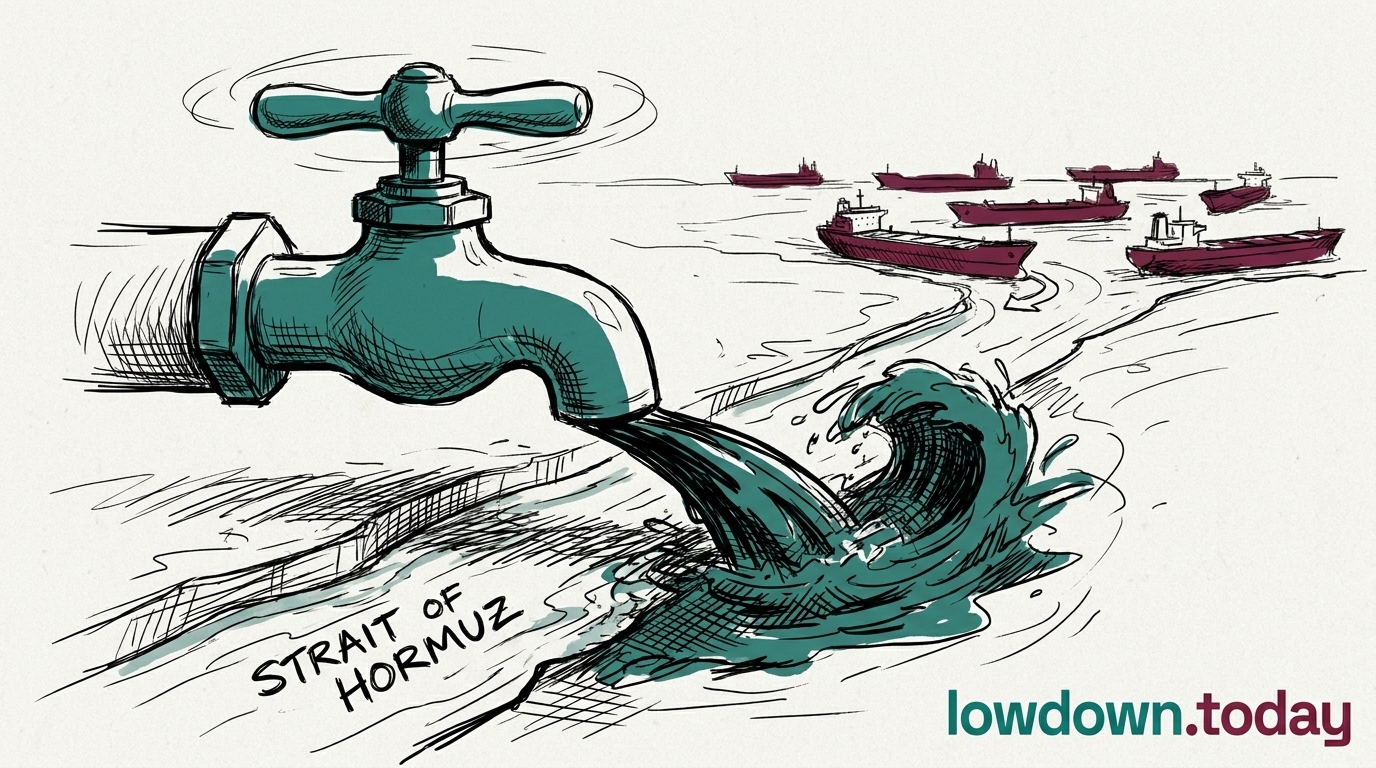
Hormuz toll system carried 20 transits per day before ceasefire

1 min read
14:57UTC

Eleven flag states had paid the toll to transit by 5 April; the ceasefire ratifies the operating model.

ConflictDeveloping
Key takeaway

The toll system Iran built was already running before the ceasefire; the ceasefire just labelled it.

The 20 daily transits across 11 flag states are the operational reality the Ceasefire's 'coordinated passage' clause now ratifies. Iran's permanent customs authority over the strait, legislated in late March , turned out to be the architecture both sides have now signed onto.

The recovery from near-zero transits in late March to 20/day by 5 April happened through individual bilateral toll deals, not through any US enforcement action. Trump's Truth Social formulation that the US 'will be helping with the traffic buildup in the strait of Hormuz' aligns the rhetoric with the operating reality.


Deep Analysis

In plain English

Eleven countries had already been paying Iran for permission to send ships through the Strait of Hormuz before the ceasefire was signed. Twenty ships went through per day on 5 April, compared to about 138 a day before the war. The deal Trump just signed says Iran will keep doing exactly this for two weeks.

What could happen next?
  • Precedent

    The toll system is operating practice and now codified in the ceasefire.

First Reported In

Update #62 · Two victories, two different lists

Seatrade Maritime· 8 Apr 2026
Read original
Different Perspectives
Hengaw and Iranian protest detainees
Hengaw documented three secret executions of protest-linked detainees at Isfahan and Karaj on 15 and 16 July, including Mohammad Amini Dehaghani, hanged over a January arson charge with no public trial record. Tehran is carrying out capital punishment against 2026 protesters while global attention stays fixed on the war with the US.
Russia
Russia
OFAC named Moscow aviation firm Avratek OOO and its principals Mariya Selina and Vadim Druzhbin directly for the first time in this war's Iran arms track, under an Executive Order 13382 designation issued 15 July. The designation converts years of rhetorical claims about Russian arms supply to Iran into named, sanctionable individuals and a documented company.
Bahrain
Bahrain
Bahrain sounded air-raid sirens during Iran's 14 July Gulf-wide barrage and was struck again in the 16 July Artesh claim against Sheikh Isa air base, home to the US Fifth Fleet. Manama's air-defence stocks were already reported near-exhausted before this second strike claim against the same base in a week.
Kuwait
Kuwait
Kuwait's armed forces intercepted the drones Iran's Army claimed against Ali Al Salem air base on 16 July and separately reported intercepting missiles and drones in Iran's Gulf-wide barrage on 14 July. Kuwait now absorbs strikes from two rival Iranian commands while hosting Camp Arifjan, the US logistics base Iran also claims to have destroyed.
Iran (Artesh and IRGC)
Iran's regular Army claimed the 16 July drone strikes on Kuwait's Ali Al Salem and Bahrain's Sheikh Isa air bases under its own banner, Operation Saeqeh phase ten, while the IRGC separately claimed a mine strike closing Hormuz on 18 July. Two Iranian institutions are now claiming parallel operations, with neither claim confirmed by Kuwait, Bahrain or CENTCOM.
United States
United States
CENTCOM bombed the interior cities of Ahvaz and Yazd for the first time overnight into 17 July, Marines began boarding vessels including the tanker Wen Yao, and Treasury let General License X1 lapse at 12:01am the same day. Washington closed every remaining channel for de-escalation without a new executive action, a posture of attrition rather than a wind-down.



