Skip to content
You can now search across every topic, entity and event.What's new
Iran Conflict 2026
8APR

General License U expires inside the ceasefire window

2 min read
09:27UTC

The OFAC instrument authorising Iranian-origin crude expires 11 days into the diplomatic pause.

ConflictDeveloping
Key takeaway

The first material test of Trump's 'workable basis' framing falls 11 days into the ceasefire window.

OFAC's General License U was issued on 20 March, the first OFAC general license ever to broadly authorise transactions involving Iranian-origin crude. Its expiry on 19 April falls eleven days into the two-week ceasefire window the SNSC announced today. No Treasury renewal signal has been issued at time of filing.

The expiry timing is the first concrete test of whether the ceasefire's economic components survive contact with the existing sanctions architecture. The Iranian 10-point plan (relayed via Pakistan) demands removal of 'all primary and secondary sanctions'; today's framework accepts Iran's text as 'workable basis on which to negotiate'. Whether OFAC extends GL U on 19 April is the first material data point on that acceptance, against the IEA/IMF/World Bank supply-shortage backdrop .

Deep Analysis

In plain English

There is a special US Treasury permission slip that lets Iranian oil already at sea get sold without American banks getting in trouble. It expires on 19 April, eleven days into the two-week ceasefire. If the Treasury extends it, that means the ceasefire is real for oil traders. If it doesn't, the deal stops working in practice even while the bombs stay still.

Deep Analysis
Escalation

A GL U lapse without renewal would reverse the ceasefire's economic component while the diplomatic component continues.

What could happen next?
  • Consequence

    GL U renewal is the first material test of whether the ceasefire has economic substance.

  • Risk

    A lapse without renewal would create an immediate compliance shock for Asian buyers using dollar settlement.

First Reported In

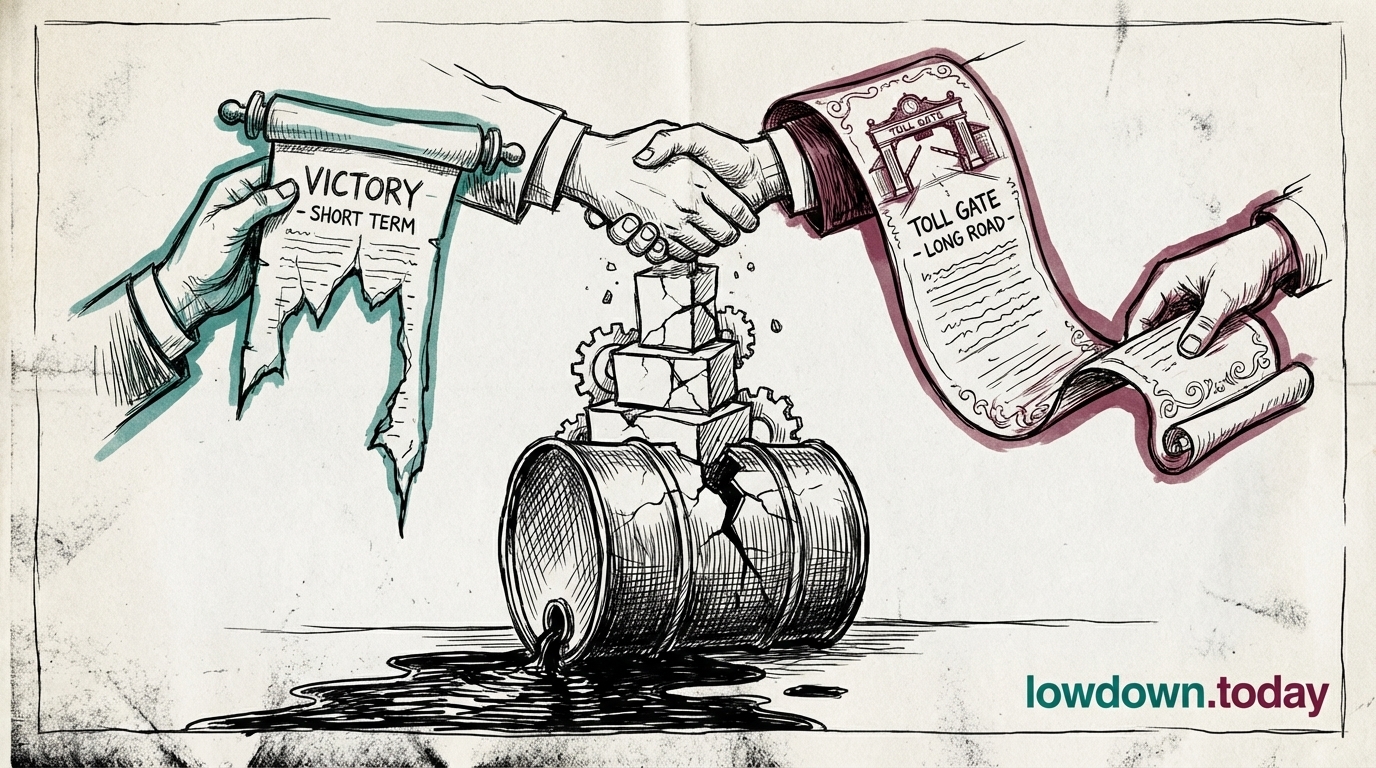
Update #62 · Two victories, two different lists

Baker McKenzie Sanctions Blog· 8 Apr 2026
Read original
Causes and effects
This Event
General License U expires inside the ceasefire window
The first material Treasury test of whether Trump's 'met and exceeded' framing survives contact with sanctions architecture.
Different Perspectives
Oil market and P&I insurers
Brent cleared $87 intraday only once CENTCOM's blockade became physical rather than declared, even though P&I Clubs had already excluded Hormuz war risk a week earlier on 7 July: capital hedged ahead of enforcement, but prices moved only after it.
UAE reporting
UAE reporting
UAE reporting placed the Omani tanker deaths at one seafarer against the International Maritime Agency's count of two, the first time in this war that a Gulf state's casualty figures have diverged from an international monitor's.
Jordan
Jordan
Iranian strikes reached Jordan again on 14 July as part of the Gulf-wide retaliation for the Hormuz blockade, extending the conflict's geographic footprint to a state with no direct stake in the strait itself.
Bahrain
Bahrain
Bahrain sounded air-raid sirens on 14 July during Iran's Gulf-wide retaliation, the same day CENTCOM's blockade order and fourth night of strikes pushed the conflict's physical reach into the wider Gulf littoral.
Kuwait
Kuwait
Kuwait intercepted Iranian missiles and drones on 14 July as Tehran's blockade retaliation reached Gulf states beyond Iran's immediate shoreline, confirming Kuwaiti airspace now sits inside Iran's retaliatory envelope.
Oman
Oman
Oman absorbed the war's first tanker casualties in its own waters on 14 July, with two supertankers disabled and seafarers killed, putting the sultanate's shipping lanes directly in the path of the blockade fight for the first time.