Skip to content
Briefings are running a touch slower this week while we rebuild the foundations.See roadmap
Iran Conflict 2026
14APR

Baltic Terminals Stay Offline; Russia Reroutes Through Arctic

2 min read
09:22UTC

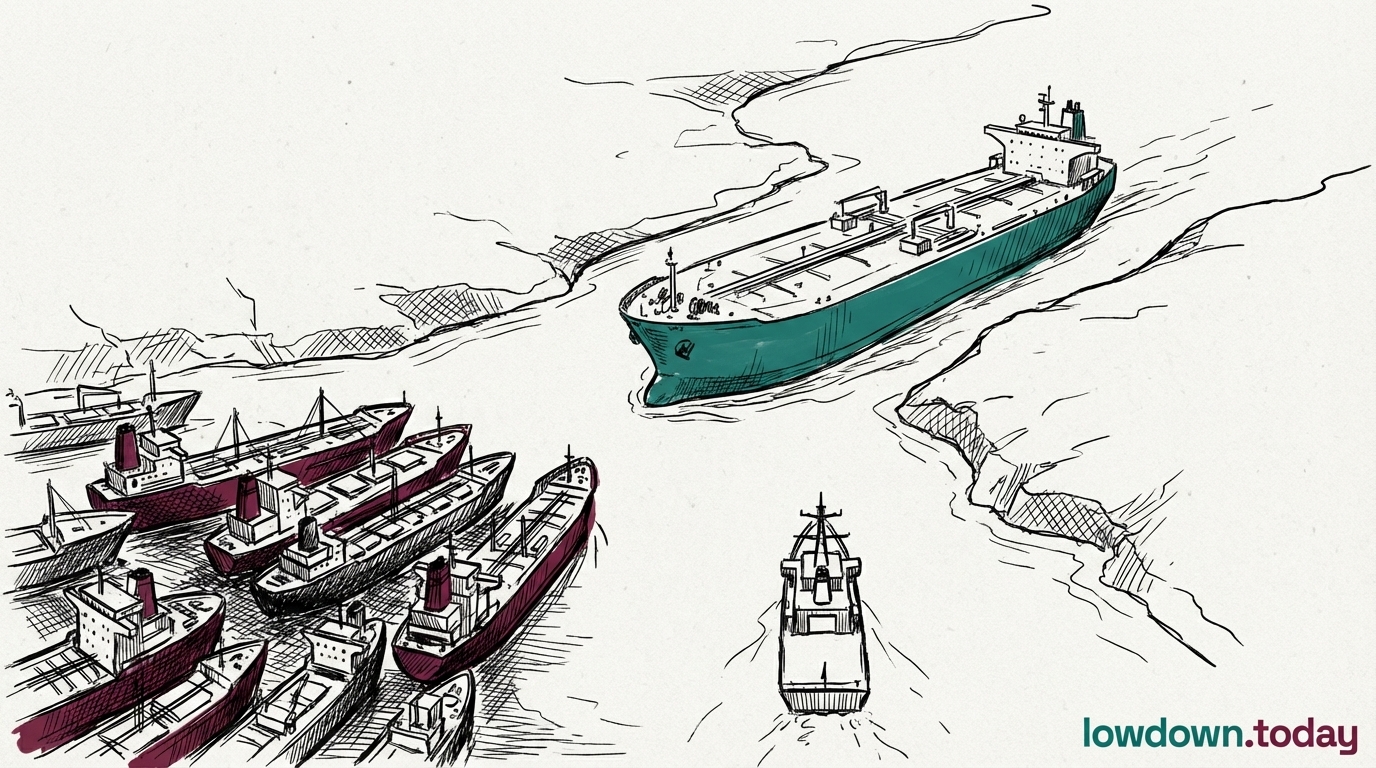
Both Ust-Luga and Primorsk remained closed for petroleum products into a second week, with Primorsk's 40% storage loss confirming lasting physical damage as Russia attempts Arctic rerouting.

ConflictDeveloping
Key takeaway

Ust-Luga's crude terminal is intact, pointing to faster crude recovery; Primorsk's 40% storage loss constrains product exports for weeks.

Planet Labs satellite imagery from 1 April confirmed Ust-Luga's crude terminal is physically intact, while fuel and product terminals bear fire traces from Ukraine's four-strike Baltic campaign . Primorsk suffered more lasting damage: eight 50,000 cubic metre reservoir losses represent permanent storage reduction until repairs complete.

Transneft CEO Nikolai Tokarev publicly acknowledged that rerouting volumes to Murmansk at short notice is difficult. Ice-class vessels are not abundant and Arctic transit times nearly double those from the Baltic (15 to 20 days versus 8 to 10). Russia's earlier refinery strikes at Promsintez and YANOS compounded the logistics challenge by reducing inland processing capacity.

Eighty-five sanctioned shadow tankers have sailed along Norwegian coastal waters since October 2025. Norwegian security officials describe a monitoring gap in their territorial waters. The Arctic logistics infrastructure was not built to absorb Baltic volumes at short notice, and each week of delay brings Russia closer to the storage saturation threshold that would force production cuts.

Deep Analysis

In plain English

Russia's main oil export terminals on the Baltic Sea are still shut down for fuel products two weeks after Ukrainian drone strikes. Russia is trying to redirect oil shipments through Arctic routes near Murmansk, but those routes are slower and require specialist ice-capable ships that are in short supply.

Deep Analysis
Root Causes

Russia built its seaborne export infrastructure around Baltic terminals — Ust-Luga and Primorsk handle roughly 60% of seaborne crude — with no equivalent Arctic alternative at scale. The shadow fleet expansion since 2022 added volume capacity but not port infrastructure.

Arctic ice-class vessel supply is a structural constraint: Russia commissioned fewer than 30 vessels capable of sustained Arctic routing, against demand requiring 50+. Primorsk's eight damaged reservoirs represent a storage bottleneck that rerouting cannot bypass — crude must still pass through terminal storage before loading.

What could happen next?
  • Consequence

    Crude terminal structural integrity at Ust-Luga suggests faster recovery for crude exports than for petroleum products.

  • Risk

    Norway faces a monitoring gap as 85+ sanctioned shadow tankers transit its coastal waters en route to Arctic export routes.

First Reported In

Update #11 · Russia Sells Less Oil but Earns More

Reuters via US News· 5 Apr 2026
Read original
Causes and effects
This Event
Baltic Terminals Stay Offline; Russia Reroutes Through Arctic
Partial physical recovery is underway but Arctic rerouting constraints mean full restoration will take weeks, creating a window for Ukraine to sustain the production squeeze if strike tempo continues.
Different Perspectives
Qatar
Qatar
Qatar holds approximately $12 billion in frozen Iranian assets that Tehran named as the precondition for any Hormuz reopening sequence; with Oman sidelined and no agreed HEU custodian, the asset-routing architecture that any deal requires has no operational channel and no neutral financial intermediary to run it through.
Hengaw and Iranian civilian population
Iranians face an internet capped at 40 per cent by hardware their president cannot dismantle, field killings that leave no court record, and judicial executions running in parallel; Hengaw, based in Norway, is the primary remaining monitor of a repression system the IRGC is deliberately moving beyond auditable records. The real toll is higher than any single monitor's count.
China
China
China supplied deep-packet-inspection hardware that caps Iran's internet at 40 per cent and enables an instant on-demand blackout, and was barred by Trump as a potential HEU custodian on 27 May. Beijing gains from Iran's continued non-alignment with the West while the DPI sale extends Chinese surveillance-technology exports as a geopolitical instrument.
Pakistan
Pakistan
Foreign Minister Ishaq Dar met Rubio in Washington on 29 May, formally inheriting the role of sole active mediator after Oman's forced withdrawal. Pakistan lacks Oman's banking infrastructure for frozen-asset routing and carries its own regional stakes, making it a less structurally neutral broker for the Qatar-held $12 billion sequencing.
Kuwait
Kuwait
Kuwait invoked Article 51 of the UN Charter after absorbing an Iranian ballistic-missile strike on Ali Al Salem Air Base on 28 May, becoming the first Gulf state to make a formal individual self-defence claim in the war. The invocation creates a legal record enabling a future bilateral defence-pact activation without yet triggering it.
Oman
Oman
Oman denied any Hormuz toll plan within hours of Bessent's 28 May threat, absorbing a sanctions warning from the country it has brokered for since 1981. The rapid capitulation preserved the channel formally, but Tehran now knows Washington will threaten its own mediator, which changes Muscat's calculus on how far it can lean into any joint-management architecture.